

Why emerging markets deserve their own playbook
If you search for “best iGaming platform” today, most comparisons focus on mature territories like the UK, Malta, or Sweden. Yet the fastest-growing regions for online gambling in 2025 are Latin America, sub-Saharan Africa, Southeast Asia, and parts of Eastern Europe. Regulators are opening up, smartphone penetration is exploding, and players are skipping desktop straight to mobile wallets and crypto.
Operating in these markets is not just a matter of translating your lobby into Portuguese or Vietnamese. Everything — from payment preferences to data-hosting requirements — works differently. This guide walks you through the criteria that really matter when selecting an iGaming platform aimed at high-growth, still-maturing jurisdictions. Whether you are an ambitious entrepreneur or a land-based casino looking to go online, use it as a checklist before signing your next platform contract.
1. Compliance first: can the platform keep up with shifting regulations?
Emerging markets are known for “regulatory whiplash”: rules can appear, disappear, and tighten within months. Choose a platform that handles:
- Modular licensing: The ability to ring-fence data and player wallets per jurisdiction, making it easier to unplug a territory if lawmakers change course.
- Built-in KYC and AML flows aligned with FATF and local watchdogs. For example, Brazil now demands CPF validation for every new account, while the Philippines requires video verification for large deposits.
- Configurable responsible-gaming limits — session timeouts, deposit caps, self-exclusion APIs — that you can activate market-by-market.
Platforms that rely on third-party plug-ins for these essentials often struggle to update in time. Look for providers with an in-house compliance team and a public changelog. (Spinlab’s Fullhouse platform, for instance, publishes fortnightly compliance patches and lets you trigger them with a single toggle.)
2. Payment flexibility: meet players where their money lives
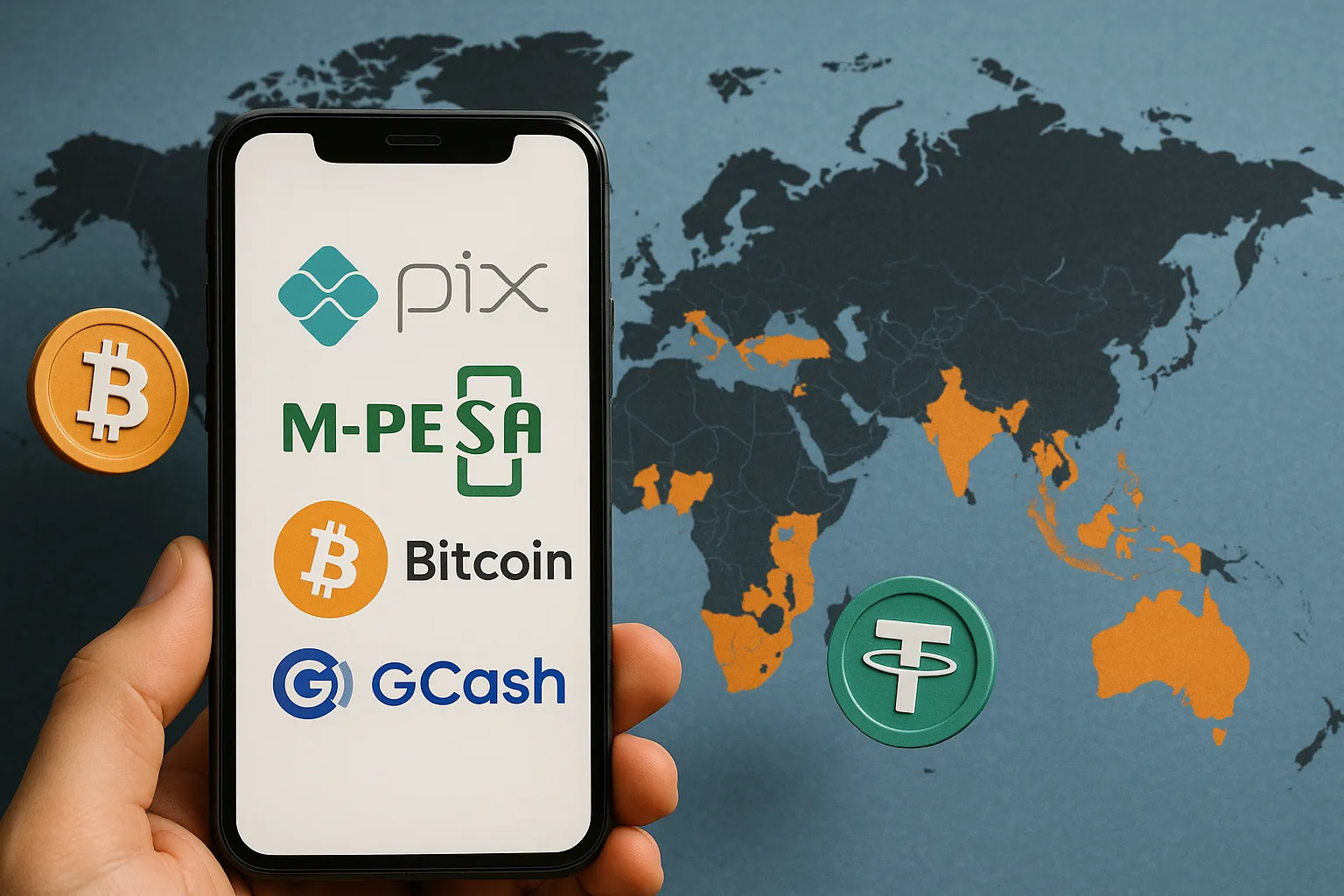
Card penetration in Nigeria is below 4 %. In Argentina, monthly spending limits on credit cards make large deposits almost impossible. Meanwhile, USDT and TRON transfers are booming from Turkey to Vietnam. Your platform must support:
- Local payment methods: PIX (Brazil), Oxxo (Mexico), M-Pesa (Kenya), GCash (Philippines), Bank Slip (Argentina).
- Crypto wallets and on-ramp services with automated KYT (Know Your Transaction) screening to stop illicit flows.
- Multi-currency cashier that displays real-time FX rates and lets users keep balances in their preferred tender.
Time-to-cashout is a decisive KPI in new markets. Aim for a solution that settles e-wallet withdrawals in minutes, not days. Fullhouse, for example, integrates more than 50 PSPs and flags high-risk transactions to its fraud engine before they leave the cashier.
3. Content strategy: aggregated games, local flavor
Players in Colombia love scratch cards and crash games. In India, teen patti outranks blackjack. Choose an aggregator that lets you curate per region without hefty minimum guarantees. Evaluate:
- Number of studios and in-house exclusives relevant to your target market.
- Latency — games hosted on servers geographically close to players reduce buffering on 3G networks.
- RNG certifications accepted by local regulators (BMM for Africa, GLI-19 for Latin America).
- Language and currency packs built into each game.
A modular aggregator means you pay only for the portfolios you activate. Spinlab’s marketplace model lets operators unlock or pause individual providers with one click, avoiding dead costs when a title underperforms.
4. Mobile-first UX: data-light, finger-friendly
Remember that a large share of users will be on entry-level Android devices with limited storage and expensive data bundles. Ask potential suppliers:
- Can the lobby load under 3 MB on first visit?
- Are game thumbnails compressed in WebP?
- Does the cashier integrate biometric pay methods like Apple Pay and fingerprint wallets where available?
- Is there an installable PWA for repeat usage without forcing an APK sideload (banned in many app stores)?
A/B testing tools built into the platform will help you iterate swiftly. In Brazil, a yellow “Deposit” button might convert better than green; in Kenya it could be the opposite. Data beats intuition.
5. Marketing and retention stack
Acquiring traffic is expensive when Facebook bans gambling ads in certain areas and Google SERPs are crowded with affiliates. Your platform’s CRM must be as sharp as your acquisition budget is tight.
Core components to demand:
- Affiliate engine with multi-tier, net-gaming-revenue tracking and promo code attribution — crucial for influencer partnerships on TikTok and Telegram.
- Bonus constructor capable of cashbacks in multiple currencies, wager-free spins, and risk-free sports bets (if you plan to add sportsbook later).
- Real-time segmentation for push notifications, SMS, and WhatsApp campaigns — the primary engagement channel in many emerging markets.
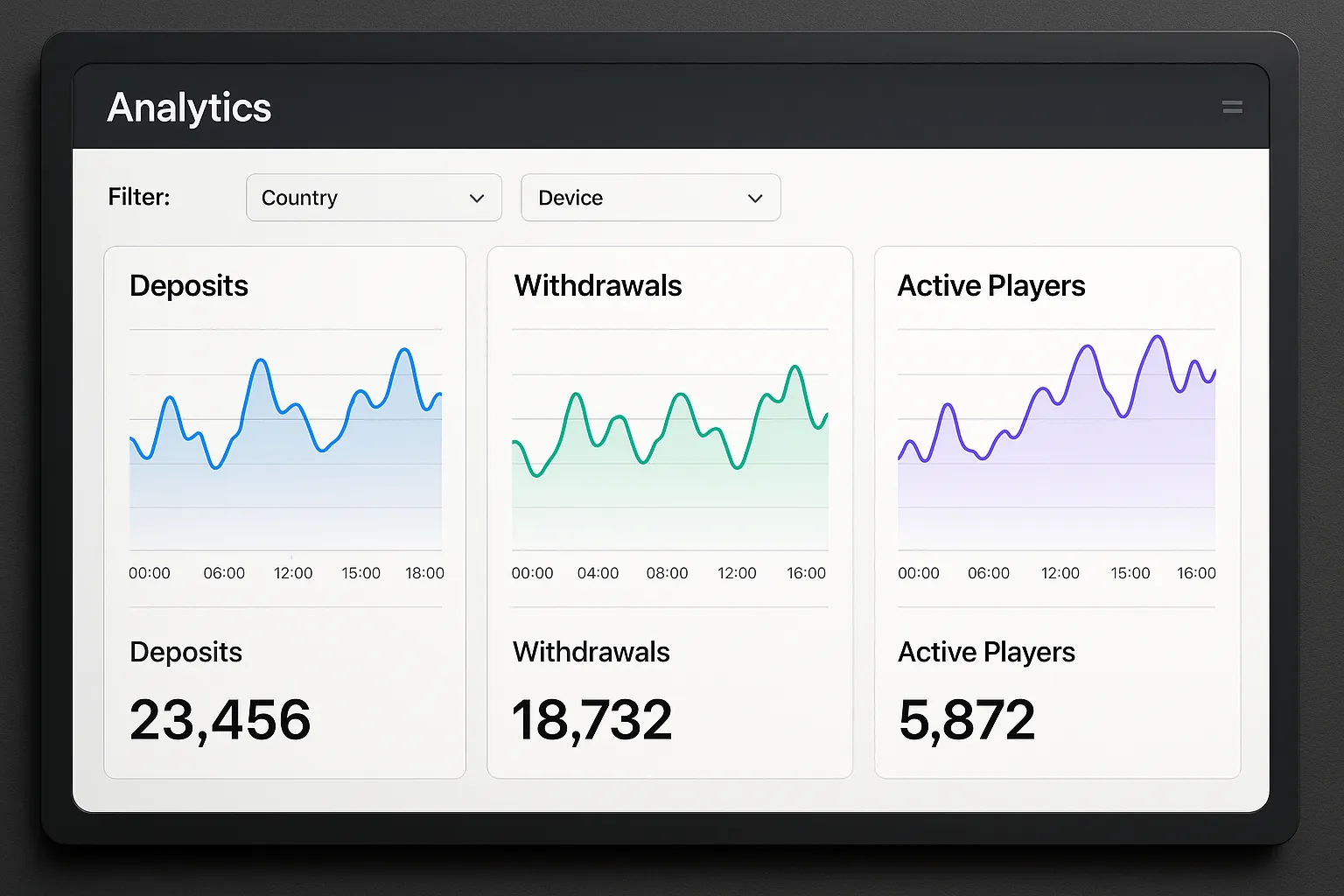
- Analytics dashboard that breaks down KPI by device, payment rail, and acquisition source. Look for live retention cohorts rather than static daily exports.
Fullhouse’s built-in BI suite, for instance, streams all raw events to BigQuery so growth teams can run Looker reports without waiting for a nightly batch.
6. Scalability and uptime under spotty internet conditions
High concurrency spikes occur during football championships or local lotteries. Meanwhile, telecom outages are still common in rural regions. A resilient platform offers:
- Edge caching to serve static assets even if the core cluster is momentarily unreachable.
- Microservice architecture with auto-healing containers and multi-region failover. Ask for hard SLA numbers (99.9 % is table stakes; 99.95 % with regional redundancy is better).
- Graceful session recovery so players returning after a drop are placed back into the same round.
7. Transparent pricing and contract terms
Beware of hidden fees: setup charges, game provider pass-through costs, minimum monthly GGR, or support tiers that lock critical help behind a higher slab. For emerging-market ventures, cash flow is king. Negotiate:
- Revenue-share caps: A sliding scale that decreases once your NGR passes certain thresholds.
- No-penalty exit clauses if regulations ban operations overnight.
- Staging environment access free of charge for continuous deployment.
8. Support and localization
Operating across time zones means issues can arise at 3 am GMT+5. Insist on 24/7 multilingual technical support with ≤15-minute initial response. Bonus points if the provider maintains on-site teams or certified partners in your region for hands-on training and compliance workshops.
9. Security and fraud prevention
Chargeback fraud, bonus abuse, and identity theft are rampant where credit bureau coverage is low. A state-of-the-art platform ships with:
- Behavioral risk scoring based on device fingerprints, betting patterns, and velocity checks.
- Automated document verification that can read low-resolution ID photos in poorly lit environments.
- Crypto tracing to flag deposits linked to sanctioned wallets.
Spinlab’s fraud layer sends alerts straight to the admin portal and can freeze suspicious accounts automatically, saving operators from manual spreadsheets.
How to run an apples-to-apples comparison in 15 days
- Define core markets and timeline: Example — launch in Brazil Q4 2025, Colombia Q1 2026.
- Shortlist three suppliers whose technology and compliance footprint already cover those countries.
- Request sandbox access and integrate one payment method plus one studio before signing NDA — this reveals how developer-friendly the API and documentation truly are.
- Run a live load test simulating at least 5,000 concurrent users on a mobile-only network.
- Review commercial terms side by side: rev-share, setup, migration, and data ownership clauses.
- Speak to existing clients in similar jurisdictions. Ask about time-to-market, support quality, and hidden costs.
- Present findings to stakeholders with a weighted scoring model. Prioritize compliance adaptability and payment breadth over vanity features.
Operators who rush this process often spend more time re-platforming than marketing.
The Fullhouse angle (and why we built it this way)
At Spinlab we engineered Fullhouse specifically for high-growth markets where flexibility beats one-size-fits-all templates. The platform offers:
- Crypto-ready cashier with over 50 local PSPs.
- Real-time analytics down to the player event.
- Open API and headless front-end options for custom UX.
- Weekly compliance updates and jurisdictional presets.
If you’re evaluating suppliers, book a 30-minute discovery call and get sandbox credentials the same day.
Key takeaways
- Regulation is fluid: Pick a platform that can adapt, not just react.
- Payments make or break retention: Local rails + crypto is the winning combo.
- Mobile experience rules: Lightweight, offline-friendly interfaces convert better.
- Data-driven CRM is your moat when advertising channels are restricted.
Choosing the right iGaming platform for emerging markets isn’t about having the longest features list; it’s about having the right features wired for volatility and scale. Treat this guide as your due-diligence blueprint and you’ll be ready to capture the next billion mobile-first players.