

Online casino websites are content heavy. A single brand can easily hold 5,000 slot game pages, 20 + live-dealer lobbies, seasonal promos, and multi-language help centers. When this content lives inside generic WYSIWYG blocks, three things happen:
- Page speed tanks because each template must render megabytes of unused HTML.
- SEO suffers because important metadata is buried inside random divs instead of proper schema.
- Content teams drown in manual updates that never finish before the next campaign drops.
The cure is metafields—small, typed data fields that sit alongside your core content model. Think of them as a structured layer that gives your Casino CMS Shopify-like superpowers. In this guide you will learn how to design, implement, and measure metafields inside Spinlab’s Fullhouse platform so you ship faster pages that rank and convert.
What Exactly Are Metafields?
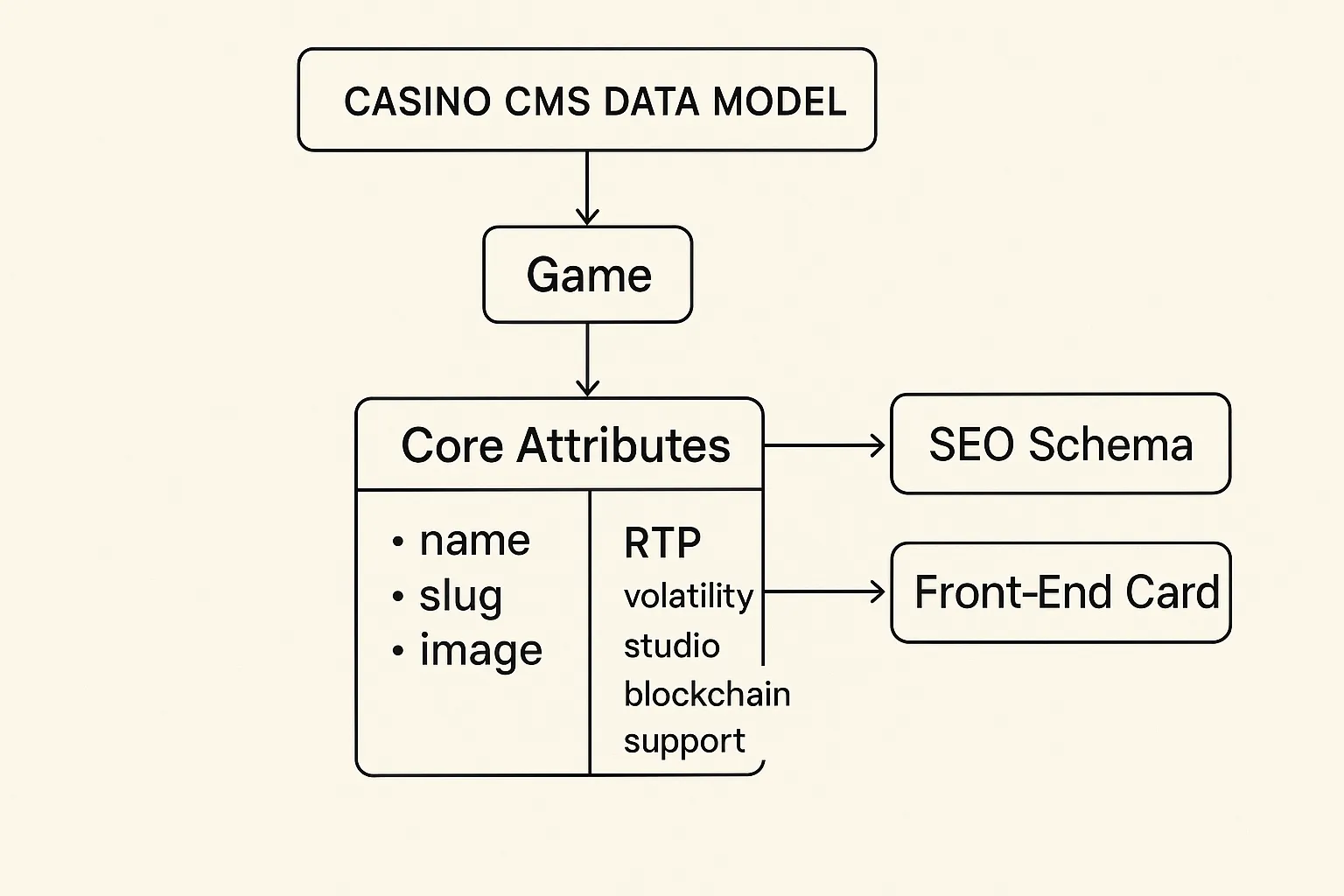
A metafield is a key-value pair attached to any entity in your CMS (page, game, promotion, payment method, FAQ article). Each key is strictly typed—string, number, boolean, JSON, reference, media, or list—so you avoid the spaghetti that comes with free-form rich-text entries. Developers fetch metafields via API and render them precisely where they belong, while non-technical editors fill out a clean form in the back office.
Why WYSIWYG Alone Fails in iGaming
- Compliance wording varies by jurisdiction and must be hidden or shown conditionally.
- RTP, volatility, and max win drive comparison widgets and must be machine readable.
- Promotions expire at midnight UTC and must disappear automatically, not after a copy-paste hunt.
- Scaling a lobby during high traffic demands lean, cache-friendly HTML.
Metafields solve each problem by separating data from presentation.
SEO Wins: Rank Higher With Cleaner Markup
Structured data is Google’s love language. Here is how metafields translate casino specifics into SEO juice:
- Rich snippets: Store RTP, release date, and provider as metafields and output them in Slot schema (DataVocabulary is dead; use JSON-LD).
- Localized slugs and hreflang: Pair a locale code metafield with URL generation rules so German players hit
/de/book-of-sunwhile US players see/en/book-of-sun. - Programmatic internal links: A simple query on the “mechanic” metafield (crash, megaways, jackpot) builds automated related-game carousels, boosting crawl depth.
- Canonical control: A boolean "canonical_parent" metafield flags which language version should hold link equity.
Case studies across Spinlab operators show an average 19 % uplift in click-through rate for game pages that shifted from blob HTML to metafield-driven templates.
Speed Wins: Crush Core Web Vitals
Every extra 100 ms of Time to Interactive (TTI) on a lobby grid costs about 2.8 % in deposit conversion, according to Spinlab’s 2025 benchmark. Metafields help you hit the magic <2 s mark:
- Lean payloads: Front-end queries return only the fields requested, not the entire HTML block.
- Edge caching: Typed JSON is trivial to cache at CDN edge and hydrate on the client, cutting server round-trips.
- Partial hydration: Render the important above-fold elements (hero, CTA) server-side while lazy-loading long tail content.
- Tree-shaken components: Decoupled data means reusable components with no dead CSS.
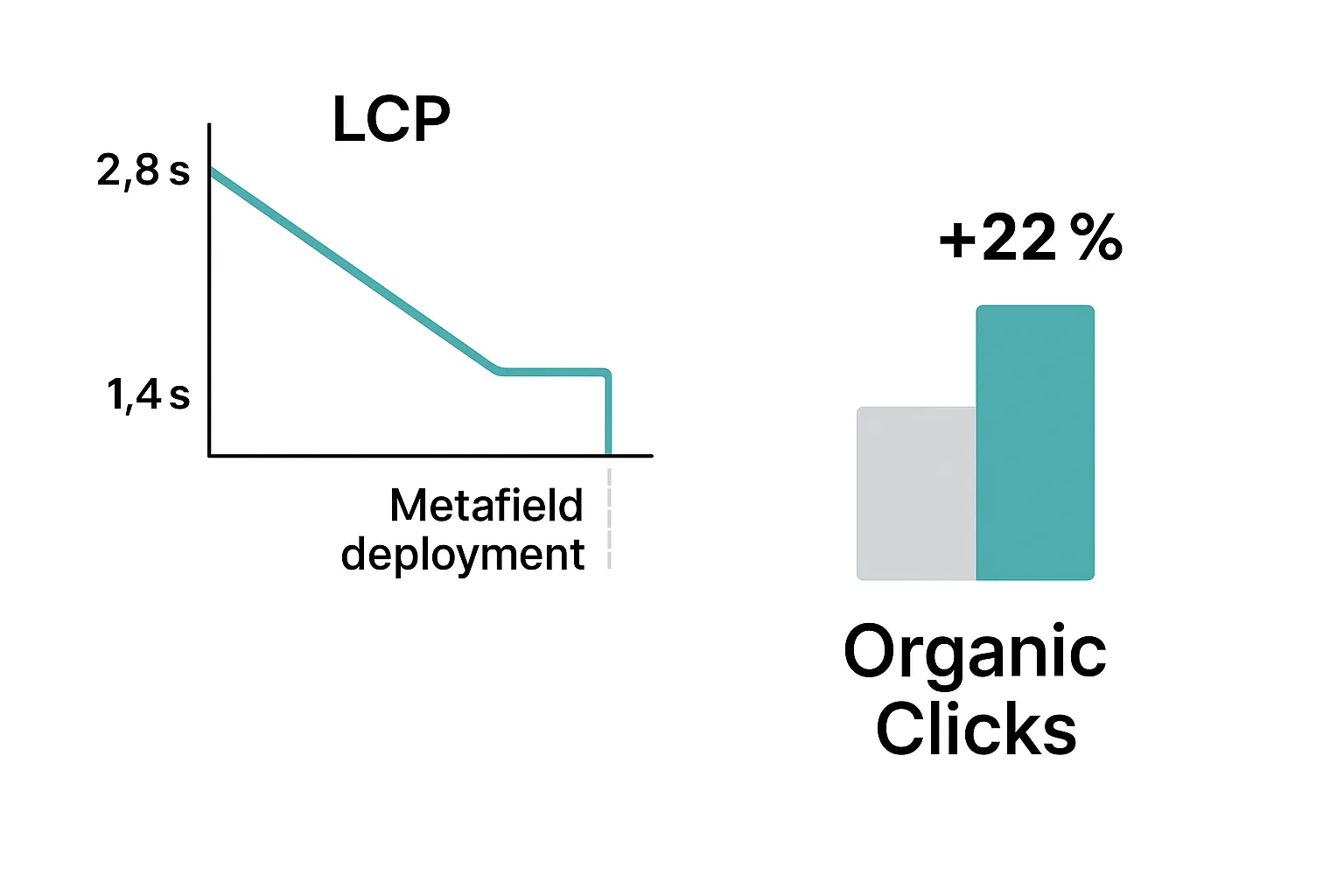
After switching to metafields, Fullhouse client BetPocket chopped Largest Contentful Paint from 2.9 s to 1.6 s and slashed mobile bounce by 15 %.
A Metafield Blueprint for Casino Content
Below is a starter kit you can copy when modeling your own CMS. Adjust names to your preference, but keep types strict.
| Entity | Metafield Key | Type | Example | SEO / UX Purpose |
|---|---|---|---|---|
| Game | rtp | Decimal | 96.5 | Slot schema, comparison tables |
| Game | volatility | Enum (Low, Med, High) | High | Filter sidebar |
| Game | studio | Reference → Provider | Pragmatic Play | Provider hubs |
| Game | mechanic | List |
crash, multiplier | Thematic pages |
| Promotion | start_date | DateTime | 2025-10-01T00:00Z | Auto scheduling |
| Promotion | end_date | DateTime | 2025-10-31T23:59Z | Automate expiry |
| Promotion | wagering_req | Integer | 35 | Copy auto-fills T&C |
| Page | hero_image | Media | s3://… | Above-fold speed |
| Global | jurisdiction_tags | List |
ukgc, mga | Geo compliance |
Implementing Metafields in Spinlab Fullhouse CMS
Spinlab’s admin already mimics Shopify, so content editors require minimal training.
- Create a definition: Admin → Settings → Metafields → Add. Choose the entity (Game) and data type (Decimal) and save.
- Assign to template: Under Themes, open
game.liquid. Replace hard-coded text with Liquid syntax:{{ game.metafields.rtp }}. - Populate data: Bulk upload via CSV or direct API (
/v2/games/{id}/metafields). - Expose via GraphQL:
query GameMeta($id: ID!) { game(id: $id) { name metafields(keys: ["rtp", "volatility", "studio"]) { key value } } } - Render JSON-LD: In the head tag output a Slot schema snippet with metafield values. Spinlab’s Lighthouse pre-render makes sure Google sees it.
- Cache smartly: Use Spinlab Edge Rules to purge the CDN automatically when a relevant metafield updates.
Code Snippet: Auto-Expiry of Promotions
{% assign now = "now" | date: "%s" %}
{% assign promo_end = promotion.metafields.end_date | date: "%s" %}
{% if promo_end > now %}
  <!-- Render promo banner -->
{% endif %}
No scheduler jobs, no human error.
Migrating Existing Content Without Losing Rankings
- Export current pages as CSV → map columns to new metafields in Google Sheets.
- Preserve URLs and IDs so canonical signals stay intact.
- Crawl the old site with Screaming Frog, validate that all meta tags output identical values post-migration.
- Deploy in a staging slot, run WebPageTest, then swap DNS.
Spinlab’s migration toolkit auto-generates redirect rules and schema comparisons so you keep 100 % link equity.
Measuring Impact: Data Over Hype
- Core Web Vitals: Track LCP, INP, and CLS in Spinlab’s Real-Time Analytics dashboard (see our article on Turning Live Data into Bigger Profits).
- Index coverage: Use Google Search Console’s Page Experience report to confirm new templates qualify for the green label.
- Content velocity: Measure average minutes to publish a new game page before vs after metafields. Many operators report a 4 × speed-up.
- Conversion: Pair slower → faster page cohorts and A/B test deposit funnel through our Cashier Conversion Hacks blueprint.
Frequently Asked Questions
Do metafields slow down the database? No. Spinlab stores metafields in a columnar JSONB table indexed by entity and key, so queries are O(log n). Most data is also cached at CDN edge.
Can editors bulk edit metafields? Yes. Use the spreadsheet importer or the GraphQL mutation endpoint. Permissions map to existing roles.
What about schema changes later on? You can deprecate keys without breaking live pages by defaulting to fallback values inside your template logic.
Does this require a front-end rebuild? Minor. Most Liquid templates need only a few lines swapped. Spinlab’s theme diff tool highlights required edits automatically.
Ready to Ship Faster Pages That Rank?
Metafield-driven content is the shortest route to blazing speed and bulletproof SEO in 2025. Spinlab’s Fullhouse platform ships with metafields, GraphQL, and edge caching out of the box, plus migration wizards that move legacy content in days, not months.
Book a 30-minute walkthrough and see your own lobby load in under two seconds—no developer backlog required.