

Mobile is no longer a smaller version of desktop casino gaming. For many new operators, it is the whole business. Players discover brands through social feeds, affiliate reviews, Telegram communities, influencer clips, and search results, then they expect to register, deposit, claim a bonus, and launch a game from one hand.
That creates a challenge for budget-conscious founders. A mobile casino brand must feel fast, trustworthy, and complete, but every custom feature, payment integration, game contract, and compliance workflow can add cost before the first player deposits.
The practical answer is not to build less quality. It is to build less scope.
If you are launching on a tight budget, your goal is to create the smallest credible mobile casino experience that can prove demand. That usually means a browser-first online casino, a narrow market focus, a curated game portfolio, a reliable cashier, clear compliance flows, and a white label casino platform that removes the need for a large technical team.
Start with a mobile-first launch thesis
A tight-budget launch fails when the founder tries to copy mature casino brands too early. Established operators can afford native apps, multi-language teams, dozens of payment methods, thousands of games, VIP departments, and constant promotion calendars. A new brand cannot win that way.
Instead, define a simple launch thesis:
- Who is the player you want to serve first?
- Which jurisdiction or market segment can you operate in compliantly?
- What is the one reason a mobile player would try your brand instead of a larger competitor?
- Which payment method is most important for that first audience?
- Which game categories must be available on day one?
The narrower the thesis, the cheaper the launch. A crypto-friendly slots brand for one region is easier to launch than a global multi-currency casino with sportsbook, live casino, tournaments, VIP ladders, and custom native apps. You can expand after the first cohort proves retention and deposits.
Global mobile adoption also supports this approach. The GSMA Mobile Economy report continues to show mobile internet as a major driver of digital access worldwide, which means new entertainment brands often reach users through mobile before desktop. For casino operators, that makes the mobile journey the core product, not an afterthought.
Choose browser-first before native app development
Native apps sound attractive, but they are rarely the best first move for a new casino brand on a limited budget. App store rules, review cycles, compliance requirements, device-specific QA, and ongoing maintenance can slow the launch and increase cost.
A mobile-optimized web casino is usually the leaner path. It lets you acquire players from search, affiliates, paid campaigns, communities, and direct links without forcing an app download. It also makes iteration faster because lobby changes, bonus updates, content edits, and cashier improvements can be deployed without asking players to update an app.
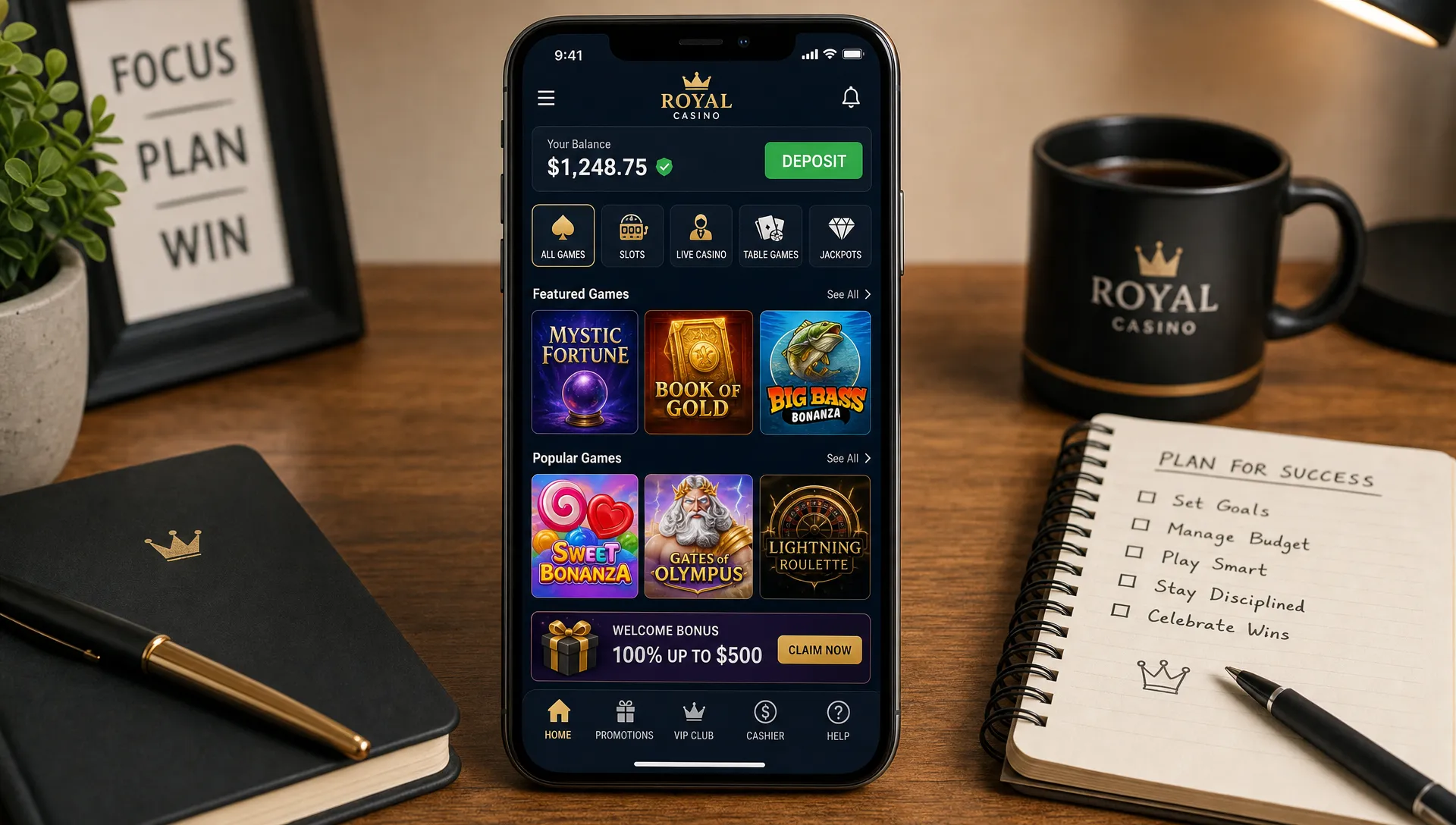
This does not mean your mobile web product can be mediocre. It needs to feel app-like where it matters: fast loading, thumb-friendly navigation, clean registration, simple deposit flows, and quick game launch. But the underlying delivery model should protect your budget.
Decide what not to build at launch
Budget control is mostly subtraction. Before you pick vendors or design a homepage, write down the features you will not launch with.
For most early mobile casino brands, the following can wait:
- Native iOS and Android apps
- Fully custom front-end development
- Proprietary casino engine development
- Complex VIP programs
- Multiple unrelated brands
- Too many countries at once
- Hundreds of bonus variations
- Custom tournaments and missions
- In-house game development from day one
This discipline keeps your first budget focused on what players actually need to trust and use the casino: licensing and compliance, stable platform infrastructure, payments, fraud prevention, a strong mobile lobby, and enough quality games to make the brand feel real.
A useful rule is simple: if a feature does not help a new player register, deposit, play, withdraw, or come back, it probably should not be part of version one.
Use white label software to reduce fixed costs
Building an iGaming platform from scratch is expensive because the visible casino site is only one layer. Underneath it, you need user accounts, wallets, payment gateway connections, KYC and AML workflows, game aggregation, bonus logic, fraud controls, reporting, admin tools, content management, and ongoing maintenance.
White label casino software compresses that cost and timeline. Instead of paying developers to build core infrastructure, you configure a proven platform around your brand, market, payment strategy, and game portfolio.
For small teams, the biggest benefit is not only lower upfront cost. It is operational simplicity. A good white label setup gives you a backoffice, player management, game controls, payment tools, and reporting in one place, which means fewer vendors to coordinate and fewer technical issues to manage.
If you are comparing models, Spinlab’s guide to white label casino software for small budgets breaks down the cost-control logic in more depth. The key point is that your early budget should buy speed, compliance readiness, and flexibility, not unnecessary custom code.
| Budget area | Spend where it matters | Save by avoiding |
|---|---|---|
| Platform | Mobile-optimized white label casino software with backoffice controls | Custom platform development before validation |
| Payments | Reliable fiat and crypto payment flows for your target market | Too many payment methods on day one |
| Compliance | KYC, AML, fraud controls, and jurisdiction-specific advice | Launching first and fixing compliance later |
| Games | Curated slots, live casino, and a few standout titles | Paying for a huge catalog with no lobby strategy |
| Design | Clean mobile UX, fast lobby, clear cashier, trust signals | Expensive custom visuals across every page |
| Marketing | One or two measurable acquisition channels | Spreading budget across every channel at once |
| Operations | Lean support, clear processes, analytics review | Hiring a large team before player volume exists |
Build the cashier and compliance flows before the lobby gets fancy
The cashier is the commercial heart of a mobile casino. If registration, KYC, deposit, bonus crediting, wallet balance, and withdrawal requests feel confusing, players will leave even if your homepage looks polished.
For a tight-budget brand, prioritize the payment methods that fit your first market. That may mean card and bank options in one region, crypto payments in another, or a hybrid cashier with fiat and digital assets. A crypto-ready solution can be useful when your audience already understands wallets, stablecoins, or crypto onramps, but it should still be supported by proper risk controls and clear user education.
Compliance must be treated as a launch requirement, not a later upgrade. Depending on your operating model and target jurisdictions, this may include identity verification, age checks, AML monitoring, sanctions screening, responsible gaming tools, transaction limits, recordkeeping, and suspicious activity workflows. Regulatory expectations vary, so operators should get qualified legal and licensing advice before accepting players.
The FATF guidance on virtual assets is also worth understanding if crypto payments are part of your strategy. It is not casino-specific launch advice, but it highlights why digital-asset flows need serious AML controls.
Curate a small game portfolio that feels complete
New operators often assume they need thousands of titles to compete. In practice, a mobile player rarely judges a new casino by total game count. They judge it by how quickly they can find something familiar, exciting, and playable on their device.
A lean launch portfolio can still feel complete if it includes several clear layers:
- Popular slot games from recognized providers
- New or trending releases, where available for your market
- A small live casino section if your target players value real-time tables
- High-retention casual games or instant-win titles
- A few original games if they support your brand positioning
Game aggregation helps here because it gives access to multiple providers through a more manageable integration model. The budget mistake is not aggregation itself. The mistake is adding games without a lobby strategy.
A mobile lobby should guide players. Feature a small number of strong categories, such as top slots, new games, live casino games, jackpots, originals, and recently played. If your market responds to specific providers, you can highlight familiar titles or fresh releases, such as new Pragmatic slots or new Hacksaw slots, as long as they are available and approved for your operating setup.
Design the mobile journey around five conversion moments
A mobile casino brand lives or dies on micro-friction. Each extra field, slow load, unclear bonus term, or broken payment step can reduce the chance that a player completes the journey.
Focus your first design budget on five moments:
| Player moment | Budget-friendly optimization |
|---|---|
| First landing | Clear offer, fast page load, visible licensing or trust information |
| Registration | Minimal required fields, mobile-friendly forms, clear next step |
| Deposit | Local payment method, transparent limits, few distractions |
| Game launch | Fast lobby search, clear categories, quick provider loading |
| Withdrawal | Simple status, clear verification requirements, responsive support |
Performance is part of trust. Google’s Core Web Vitals provide a useful framework for thinking about loading speed, responsiveness, and visual stability. For casino brands, these metrics matter because players often arrive from mobile networks, older devices, or in-app browsers.
If you want a deeper technical checklist, Spinlab’s guide on building a mobile casino that loads fast covers the player journey from landing page to game launch and cashier performance.
Keep the team lean and operationally clear
A tight-budget mobile casino should not require a large internal department. With the right platform and vendor setup, the early team can stay small while still covering the critical functions.
At minimum, someone must own the business, compliance coordination, payments, marketing, player support, and daily performance review. These do not all need to be full-time hires at the start. Some can be handled by founders, contractors, agencies, or platform support, depending on your structure.
| Function | Lean launch approach |
|---|---|
| General management | Founder or operator owns roadmap, vendors, and KPIs |
| Compliance | External legal or compliance support plus internal process owner |
| Payments | One operator monitors deposits, withdrawals, disputes, and reconciliation |
| Marketing | One acquisition lead focuses on a narrow channel mix |
| Support | Small coverage window at launch, expanded as volume grows |
| CRM and bonuses | Simple campaigns managed from the backoffice |
| Analytics | Daily review of registrations, deposits, retention, and payment issues |
This is where a Shopify-like casino operations model becomes valuable. Non-technical teams need to adjust offers, review players, manage bonuses, see analytics, and update content without opening a developer ticket for every small change.
Launch marketing with one message, one market, and one metric
Marketing can drain a tight budget faster than software. The safest early strategy is controlled acquisition, not broad awareness.
Pick one market segment, one main promise, and one primary success metric. For example, your first campaign might target mobile slots players in a specific region with a simple welcome offer and measure first-time deposits. Another brand might target crypto-native players and measure wallet-connected registrations that complete KYC and deposit.
Avoid large bonus promises that your economics cannot support. Aggressive offers may increase signups, but they can also attract bonus abuse, multi-accounting, and low-retention traffic. Your fraud prevention and bonus rules need to be ready before campaigns go live.
For budget-friendly acquisition, consider a small mix of channels:
- SEO pages targeting your niche and supported game categories
- Affiliate partnerships with clear CPA or revenue-share terms
- Retargeting for registered players who did not deposit
- Community marketing where compliant and appropriate
- CRM campaigns for depositors and churn-risk players
The goal is not to win the whole market in month one. The goal is to learn which player source produces verified registrations, successful deposits, real gameplay, and repeat activity.
Use a phased launch plan instead of one big reveal
A big-bang launch is risky because every mistake becomes public at once. A phased mobile launch lets you test the core journey, fix friction, and scale spend gradually.
| Phase | Main objective | What to validate |
|---|---|---|
| Days 1 to 10 | Define market, licensing path, brand promise, and platform requirements | Can this brand operate compliantly and reach a specific audience? |
| Days 11 to 25 | Configure platform, payments, KYC, game aggregation, bonus rules, and backoffice | Can a player register, deposit, play, and request withdrawal on mobile? |
| Days 26 to 40 | QA the full journey across devices, payment methods, and edge cases | Are there blockers, slow pages, unclear terms, or support gaps? |
| Days 41 to 60 | Soft launch with limited traffic and controlled promotions | Which channels produce valuable players and where does friction remain? |
| After day 60 | Improve retention, expand games, optimize payments, and scale marketing | Can the unit economics support more acquisition spend? |
If you want to compress the first version further, the same principle appears in Spinlab’s guide to launching a casino MVP in 30 days: narrow the scope, validate the player journey, then expand based on evidence.
Watch the hidden costs that hurt new casino brands
The visible platform fee is not the only cost to plan for. Tight-budget launches often get into trouble because they underestimate operational and risk-related expenses.
The most common hidden costs include legal review, licensing support, payment reserves, chargeback handling, fraud losses, KYC checks, translation, customer support coverage, affiliate commissions, bonus abuse, game provider minimums, and additional reporting requirements.
None of these should scare you away from launching. They should push you to build a realistic model. A cheaper launch is not one that ignores costs. It is one that sequences costs in the right order.
Spend first on the requirements that protect the business: compliance, payments, platform stability, player security, fraud prevention, and a usable mobile experience. Delay the items that only matter after traction: advanced loyalty systems, broad localization, custom game development, elaborate campaigns, and non-essential design polish.
The tight-budget formula
A mobile casino brand can launch lean if the plan is disciplined. The formula looks like this:
- Narrow market before broad ambition
- Browser-first mobile experience before native apps
- White label iGaming platform before custom development
- Curated game portfolio before massive catalog
- Reliable cashier before complex promotions
- Compliance process before paid acquisition
- Soft launch before full-scale marketing
- Daily analytics before gut-feel expansion
This approach does not guarantee success. Casino is a competitive, regulated, risk-sensitive market. But it does give a new operator the best chance to learn quickly without burning the entire budget on infrastructure before the brand has proof of demand.
Frequently Asked Questions
Can I launch a mobile casino without building a native app? Yes. Many new operators start with a mobile-optimized web casino because it is faster to launch, easier to update, and less expensive than native iOS and Android apps. The experience still needs to be fast, secure, and designed for mobile behavior.
What is the cheapest way to launch an online casino brand? The lowest-risk path is usually a white label casino platform with integrated payments, game aggregation, backoffice tools, and compliance workflows. This avoids the high fixed cost of building core casino infrastructure from scratch.
How many games do I need for a mobile casino launch? You do not need thousands of games at launch. A focused portfolio with recognizable slots, selected live casino games, trending releases, and a few standout categories can feel complete if the mobile lobby is easy to navigate.
Should a tight-budget casino accept crypto payments? Crypto can be useful if your target audience wants it and your platform supports proper controls. You still need AML processes, fraud prevention, transaction monitoring, and clear compliance guidance for your operating model.
What should I measure after launch? Track mobile registration completion, KYC completion, deposit success rate, payment failures, first-time deposit cost, game launch rate, withdrawal friction, bonus abuse, retention, and net gaming revenue by acquisition channel.
Launch lean with a mobile-ready iGaming platform
If you want to launch a mobile casino brand without overspending on custom development, Spinlab offers a modular iGaming platform built for fast onboarding and lean operations. It supports mobile-optimized casino experiences, crypto and fiat payments, game aggregation, KYC and AML workflows, fraud prevention, real-time analytics, bonus tools, a customizable backoffice, open API integration, multi-currency support, crypto onramp solutions, merchant custodial wallets, and custom-designed original games.
For founders who want a Shopify-like way to build and operate a whitelabel casino, Spinlab gives you the infrastructure to start focused, validate demand, and scale when the numbers justify it.