

Player-versus-player competitions have always fueled longer session times and bigger betting volumes, but traditional leaderboard contests are easy to game and rarely feel exclusive. The rise of blockchain wallets and cheap minting fees has opened a powerful new engagement mechanic for casinos: token-gated tournaments. By issuing non-fungible token (NFT) passes that double as an entry ticket and loyalty badge, operators can turn every tournament into a VIP experience, unlock zero-friction onboarding, and generate fresh marketing buzz in the process.
Why Tournaments Still Matter—and Where They Fall Short
Industry retention studies show that players who join at least one casino tournament in their first 30 days generate 34 percent higher 90-day GGR compared with non-participants (Spinlab meta-analysis, Q2 2025). Tournaments work because they:
- Create real-time social proof and competition.
- Encourage rapid game exploration.
- Provide an alternative reward path that isn’t purely luck-based.
However, two common pitfalls limit their upside:
- Open leaderboards attract bonus grinders. Public contests with low entry barriers often draw multi-account farmers who cannibalise rewards and deflate ROI.
- Manual entry mechanics add friction. Forcing users to opt-in via a separate form or cashier transaction introduces drop-off, especially on mobile.
Token gating addresses both issues in a single stroke.
Token Gating Explained in 90 Seconds
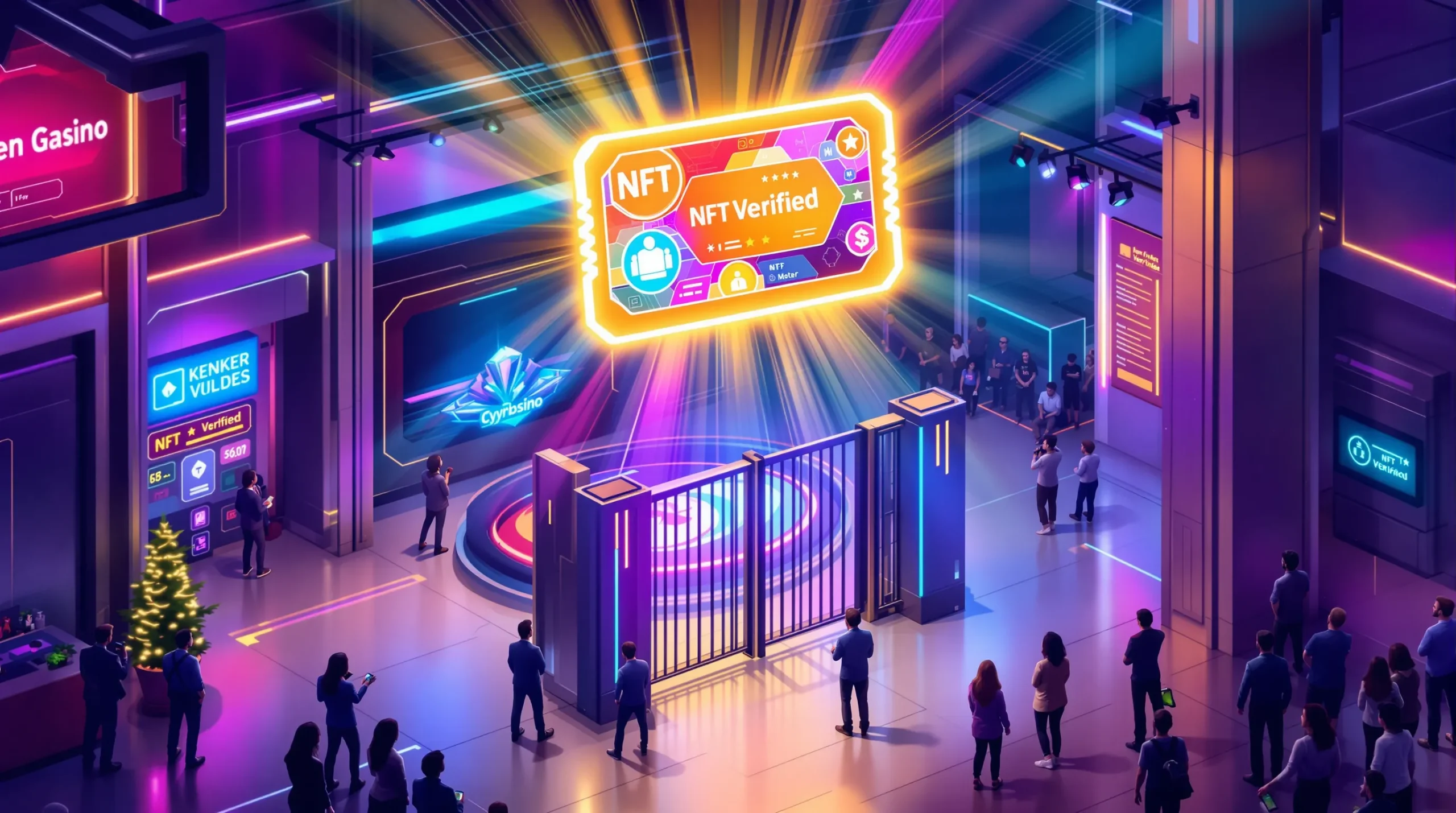
Token gating is the practice of limiting access to a digital experience based on ownership of a blockchain token stored in a user’s wallet. In iGaming, the workflow is straightforward:
- Casino mints a limited collection of ERC-721 or ERC-1155 NFT passes.
- Players claim or purchase a pass and store it in any compatible wallet (e.g., MetaMask, Phantom, WalletConnect).
- When the tournament lobby loads, a one-click wallet signature proves pass ownership.
- The tournament engine grants entry and pulls the player’s alias and avatar directly from on-chain metadata.
No coupon codes. No cashier deposits. No code injection risk. Just provable access control handled by the blockchain.
Five Commercial Benefits of NFT-Gated Engagement
| Benefit | Why It Matters | Data Point |
|---|---|---|
| Fraud-proof entry | NFTs are unique and traceable, making multi-account abuse far harder than coupon-based sign-ups. | Operators running pilot drops on Spinlab reported 80 % fewer duplicate KYC attempts. |
| Scarcity-driven FOMO | Limited pass supply triggers viral demand and organic sharing on crypto Twitter. | A 5,000-pass drop for “Crash Kings” sold out in 11 minutes (Polygon scan, May 2025). |
| Embedded secondary market | Passes can be resold on OpenSea or Blur, turning players into marketers and generating royalty revenue. | Average 7-day secondary volume hit $210k across three Spinlab-powered events. |
| Effortless re-engagement | Holding a pass automatically qualifies users for future gated quests and airdrops. | Pass holders logged in 2.6× more often during the 60 days after mint. |
| Wallet-native messaging | On-chain or wallet push services (e.g., WalletConnect Notify) let you send zero-cost reminders. | Push CTR averaged 28 %, beating traditional email’s 6–10 % range (Spinlab benchmark, 2025). |
Technical Blueprint: From Mint to Medal
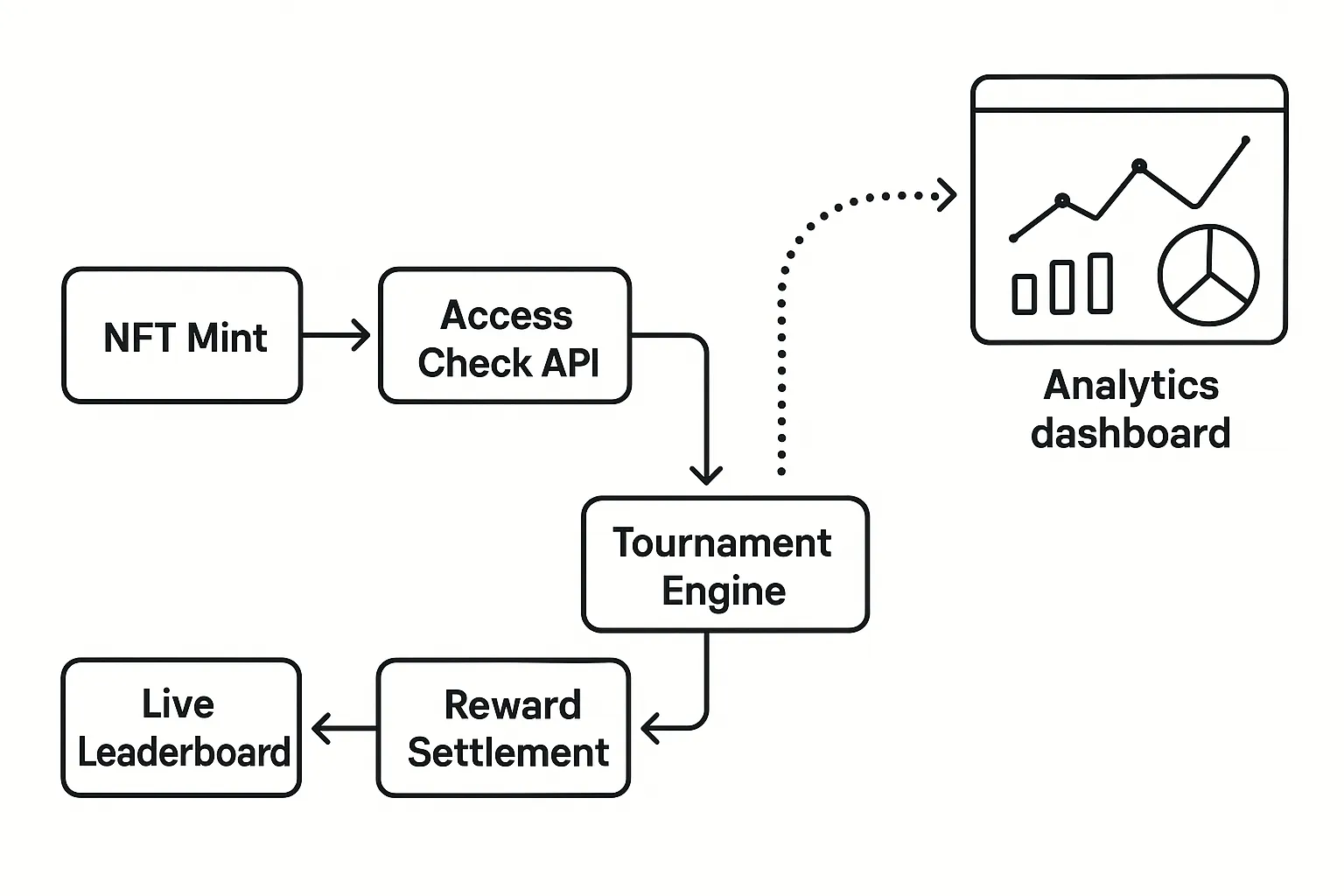
Spinlab clients typically integrate token gating in under a week using the platform’s open APIs and Web3 toolkit. Below is a high-level stack overview you can replicate, even if you are not on Spinlab yet:
-
Smart-contract layer
- ERC-721A for cheap batch minting (Ethereum, Polygon, or Blast L2).
- Role-based admin keys stored in an HSM.
-
Minting UI
- React component dropped into the existing cashier step.
- Supports fiat on-ramp via MoonPay/Ramp Network for users without crypto.
-
Wallet authentication
- JSON Web Token (JWT) that includes the wallet address and pass ID.
- 24-hour refresh policy with silent re-auth to prevent session hijacking.
-
Tournament service
- Real-time event stream from game servers (Spinlab’s Kafka topics or your own).
- Redis atomic counters for leaderboard updates under 50 ms.
-
Compliance gateway
- KYC/AML check triggered on first pass claim.
- Continuous wallet screening via Chainalysis Reactor.
-
Analytics & CRM
- Tie wallet address to existing CRM ID using a hashed mapping table.
- Funnel dashboards in Spinlab’s Realtime Analytics highlight pass-holder KPIs.
Gas Fees and Chain Selection
Choosing the right blockchain saves headaches and money:
- Polygon PoS: Ultra-low gas (≈$0.02 per mint), mature tooling, but occasional congestion.
- Immutable zkEVM: Zero gas for end-users, NFT-focused, but still rolling out third-party marketplace support.
- Solana: High throughput, cheap fees, but different wallet ecosystem; cross-chain bridging needed for EVM games.
Cost model example for a 10,000-pass drop:
| Chain | Average mint fee | Total cost | Estimated drop revenue* |
|---|---|---|---|
| Polygon | $0.02 | $200 | $37,000 (free + 5% royalty) |
| Base | $0.12 | $1,200 | $38,600 |
| Ethereum L1 | $9.60 | $96,000 | $41,000 |
*Assumes a $3 average aftermarket royalty on 75 % of passes.
Compliance & Responsible Gaming Checklist
Token gating does not exempt you from licensing or RG requirements. Keep these guardrails in place:
- Link passes to verified accounts – a live KYC tag must exist before tournament rewards settle.
- Geo-fencing – enforce IP and wallet-based region blocks where NFTs are classified as securities (e.g., US, China).
- AML monitoring – integrate OFAC/Sanction checks on wallet addresses at claim and payout time (see our guide on 10 Common KYC & AML Mistakes).
- Transparent odds & fees – publish prize-pool allocation in the NFT metadata or a linked Arweave file.
Seven-Day Pilot Roadmap
Day 1 – Scope & KPI targets (DAU uplift, churn delta, new wallet sign-ups).
Day 2 – Deploy testnet contract; integrate signature login in staging.
Day 3 – Prepare creative (pass art, lobby banners) and whitelist.
Day 4 – Push mint UI to production behind a feature flag; run QA.
Day 5 – “Soft mint” for staff and VIPs; test leaderboard access.
Day 6 – Public drop + social push; monitor gas spikes and server load.
Day 7 – Prize settlement, data export, and post-mortem analysis.
Teams using Spinlab’s modular back-office typically complete the above in ≈26 engineer-hours spread across two developers and one designer.
Measuring Success: Beyond Deposit Volume
Focus on behaviour changes rather than vanity metrics.
| Metric | Baseline | Target uplift |
|---|---|---|
| Pass-holder day-7 retention | 18 % | 25 % |
| Average play sessions per day | 2.1 | 3+ |
| Cross-game diversification (unique titles) | 4.3 | 6+ |
| Incremental GGR-per-user | — | +15 % |
| Secondary royalty revenue | — | Cover ≥50 % of prize-pool cost |
Early pilots on Spinlab’s network suggest these targets are achievable with modest marketing spend.
Common Pitfalls and How to Avoid Them
- Over-minting – Scarcity drives value; cap supply to 1–3 % of your monthly active players.
- Static metadata – Use dynamic traits (e.g., “Level 3” badge) to reflect tournament milestones and keep passes relevant after the event.
- Ignoring non-crypto users – A fiat on-ramp inside the mint window can lift conversion by 40 % (Ramp Network, 2025 report).
- One-off mindset – Plan a seasonal calendar of gated events so pass holders know more value is coming.
How Spinlab Makes Token Gating Easier
While any regulated operator can stitch together wallet SDKs and leaderboard micro-services, Spinlab’s white-label platform removes weeks of custom work:
- Drop-in wallet module supporting 150+ EVM and Solana wallets.
- Real-time leaderboard API that syncs on-chain pass data with game events at sub-second latency.
- Royalty dashboard that automatically collects and reconciles aftermarket fees.
- Compliance-ready token templates with built-in freeze/revoke functions for revoked accounts.
If you are already leveraging our Bonus & Quest Engine (see 11 Low-Cost Retention Campaigns), NFT pass access slots right into the same rules engine—no code changes required.
Final Thoughts
Token-gated tournaments marry the proven stickiness of leaderboards with the viral reach and composability of NFTs. Done right, they deliver measurable retention lifts, new revenue lines, and a brand halo effect that traditional promotions can’t match. As mint costs drop and wallet UX improves, early adopters will capture outsized engagement while competitors rely on ever-larger bonus budgets.
Ready to see a live demo or blueprint your first NFT pass drop? Book a 30-minute discovery call with the Spinlab team today and turn tournaments into a loyalty engine your players actually want to brag about.