

Player loyalty wheels are the modern answer to punch cards and point ladders. They add suspense, a burst of dopamine, and a share-worthy moment that puts your brand in front of friends on social feeds. Yet for casino operators the real magic is sustainable economics. A loyalty wheel that pays out too much erodes gross gaming margin, while one that feels stingy drives churn. The trick is to engineer a wheel whose Return to Player (RTP) is low enough to protect profit but volatile enough to feel generous and exciting.
Why Loyalty Wheels Still Work in 2025
- Instant gratification: A tap plus a two-second spin animation delivers the reward immediately, no complicated wagering math needed.
- Social currency: Short screen-recordings of big hits spread on TikTok and X, acting as zero-cost user-generated marketing.
- Daily habit loop: A recurring spin anchored to deposit or login streaks conditions players to return, boosting retention KPIs such as D30 and D90.
- Data collection: Each spin event generates high-resolution behavioral data that feeds recommendation engines and risk models.
Global operators using Spinlab’s Bonus & Quest Engine report a 42 percent uplift in second-month retention when a wheel is embedded into the cashier journey compared with a traditional deposit bonus.*
*Internal cohort study, July 2025, 14 operators, N = 1.8 million players.
RTP vs Perceived Value
Before drawing colorful slices, clarify two concepts:
- Economic RTP – the true cost of the wheel to the house. Sum of (payout × probability) for every slice.
- Perceived Value (PV) – what the average player thinks the reward is worth. A package of 20 free spins on a new Pragmatic release might feel like €4 but only cost €0.40 if you negotiate low promo CPMs with the studio.
Balancing both variables lets you create a low-RTP wheel that still feels generous. Aim for PV ≈ 3× RTP for mainstream segments and PV ≈ 5× RTP for VIP tiers that get comped anyway.
Quick Formula
Wheel_RTP (€) = Σ( Probability_i × House_Cost_i )
Perceived_Value_Index = Σ( Probability_i × Player_Perceived_Value_i ) / Wheel_RTP
An index above 2.5 is usually enough to produce excitement without red-lining your margin.
Set Your Business Constraints First
- Target RTP Ceiling – most operators cap promo spend at 1.5 percent of net gaming revenue (NGR).
- Regulatory Limits – some regulators (for example UKGC and MGA) require transparent odds for random promotions. Publish RTP in your T&Cs.
- Fraud Guardrails – enforce 1 account = 1 spin rules with device fingerprinting and on-chain address clustering for crypto users.
- Content Strategy – tie wheel rewards to new content drops (new Hacksaw slots, live shows) to multiply marketing impact.
A Step-by-Step Design Blueprint
1. Segment the Audience
- New depositors – low balance, low trust.
- Established core – make up 60-70 percent of GGR.
- VIPs/Whales – high turnover, personal managers.
Run separate wheels or probability profiles for each. Spinlab’s Rule Engine lets you assign weight sets by player tag in minutes.
2. Build the Reward Catalog
| Reward Type | Player Perceived Value | House Cost | Notes |
|---|---|---|---|
| 10 Free Spins (new Pragmatic slot) | €2 | €0.20 | Studio-sponsored CPM |
| €5 Bonus Cash (10× wagering) | €5 | €1.25 | Breakage reduces cost |
| Cashback Token 5 percent | €5 | €2.50 | Only if player loses further |
| Deposit Match Booster 25 percent | €25 | €4 | Paid from future margin |
| Mystery Box Entry | €15 | €1 | Deferred cost event |
| €50 Cash (no strings) | €50 | €50 | Anchor prize, <0.1 percent chance |
3. Assign Probabilities
Below is an example wheel for the Established Core segment with an RTP target of €1.50.
| Slice | Reward | Probability | House Cost (€) | Slice RTP (€) |
|---|---|---|---|---|
| 1 | 10 Free Spins | 45 % | 0.20 | 0.09 |
| 2 | €5 Bonus Cash | 30 % | 1.25 | 0.375 |
| 3 | Cashback Token | 15 % | 2.50 | 0.375 |
| 4 | Deposit Match Booster | 9.9 % | 4 | 0.396 |
| 5 | €50 Cash | 0.1 % | 50 | 0.050 |
| Total | 100 % | 1.29 |
RTP comes in below the 1.5 euro ceiling, leaving buffer for potential variance and abuse write-offs.
4. Simulate Volatility
High variance triggers emotion. Use a Monte Carlo run (10k spins) to plot loss streaks and big wins. Ideal outcome:
- Median spin value: €0.20
- 99th percentile win: ≥ €10
- Average streak without win > €5: 8 spins
Spinlab’s sandbox lets you upload a CSV of probabilities and instant-simulate both wallet impact and projected player LTV delta.
Crafting Excitement without Blowing Up RTP
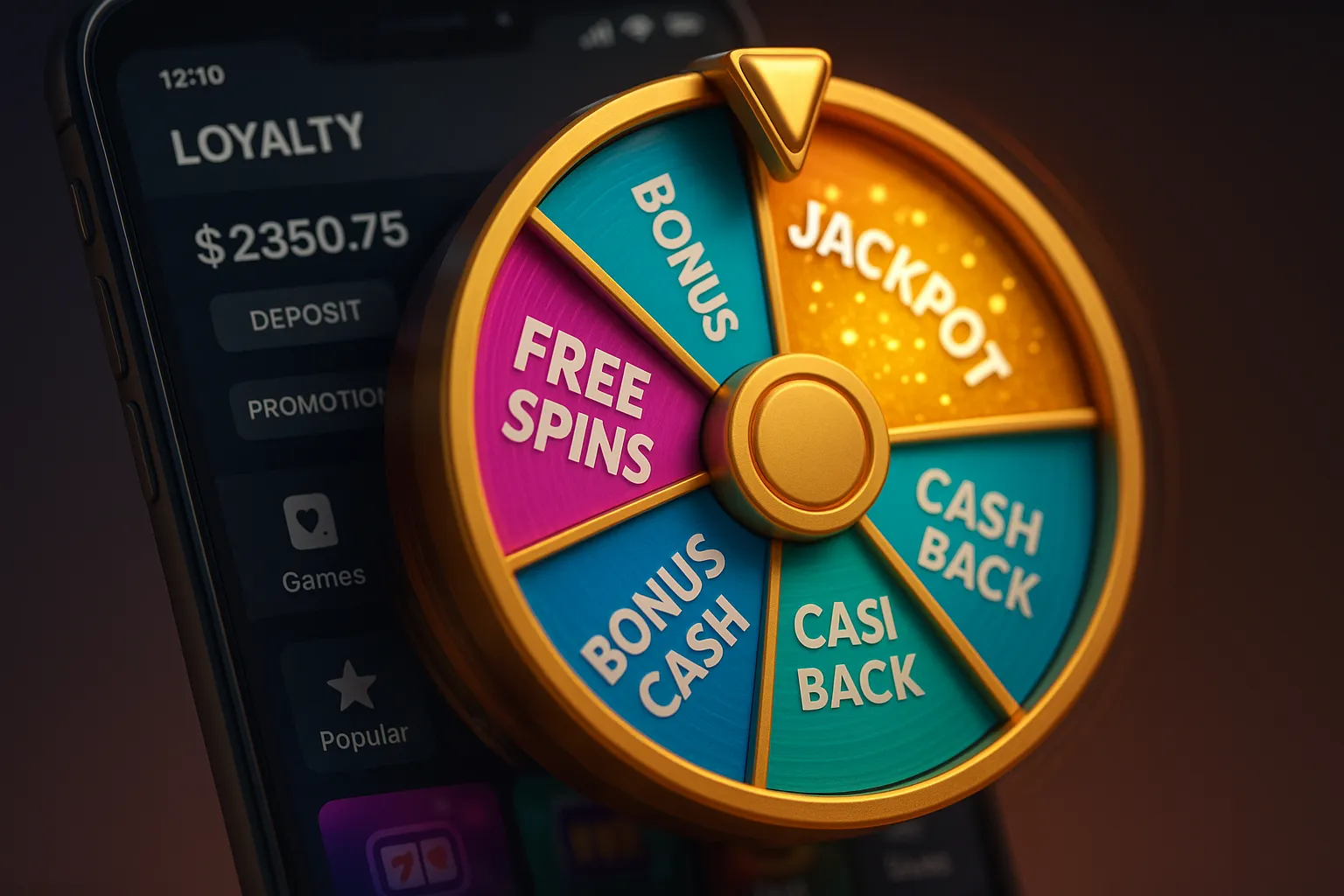
- Jackpot Slice – One oversized cash slice creates buzz. Keep probability ≤ 0.1 percent.
- Progressive Wheels – Unlock higher-value wheels after X spins or Y net losses. RTP per wheel stays flat but PV rises.
- Near-Miss Animation – Stop the wheel one tick past the jackpot slice. Harvard research shows near misses light up reward circuitry almost as much as actual wins.
- Soft Currency Multipliers – Use points or XP that later convert to real bonuses at a fixed rate. Players overvalue points by 2-3× according to 2024 eCOGRA studies.
UX Details That Make Spins Feel Epic
- Physics-based easing: Slight wobble on stop increases perceived randomness.
- Dynamic confetti: Trigger only on rewards above your 90th percentile value.
- Haptics and sound: Short bass bump on jackpot slice even when missed (regulations permitting) to heighten near-miss tension.
- One-hand mobile ergonomics: Thumb-reachable spin button at the bottom third of the screen.
- Instant crediting: Rewards appear in wallet within 300 ms. Anything slower blunts the dopamine spike.
Real-Time Controls and A/B Testing
Tie every spin to your event stream (Kafka, Kinesis) and monitor:
- Spin count per daily active user (DAU)
- Reward uptake vs brand cost
- Post-spin session length
- Net deposits in 24 hours post-reward
- Fraud signals: multi-account, VPN, velocity
With Spinlab’s Real-Time Analytics dashboard you can pause a wheel instantly if promo burn exceeds threshold or clone it into an A/B test. Operators typically test:
- High variance vs flat payouts
- Sound on vs sound off by default
- 24-hour cooldown vs deposit-triggered spins
Expect meaningful readouts after 5,000–10,000 spins per variant.
Compliance and Fairness Checklist
- Display odds or at least prize frequencies in the T&Cs. UKGC LCCP SR 5.1.7 requires “sufficient information for informed choice.”
- Use RNG certified to ISO/IEC 17025. If your wheel derives from the same RNG powering games it simplifies audits.
- Provide full spin history in player account area for transparency.
- Allow opt-out and self-exclusion hooks to responsible-gaming tools.
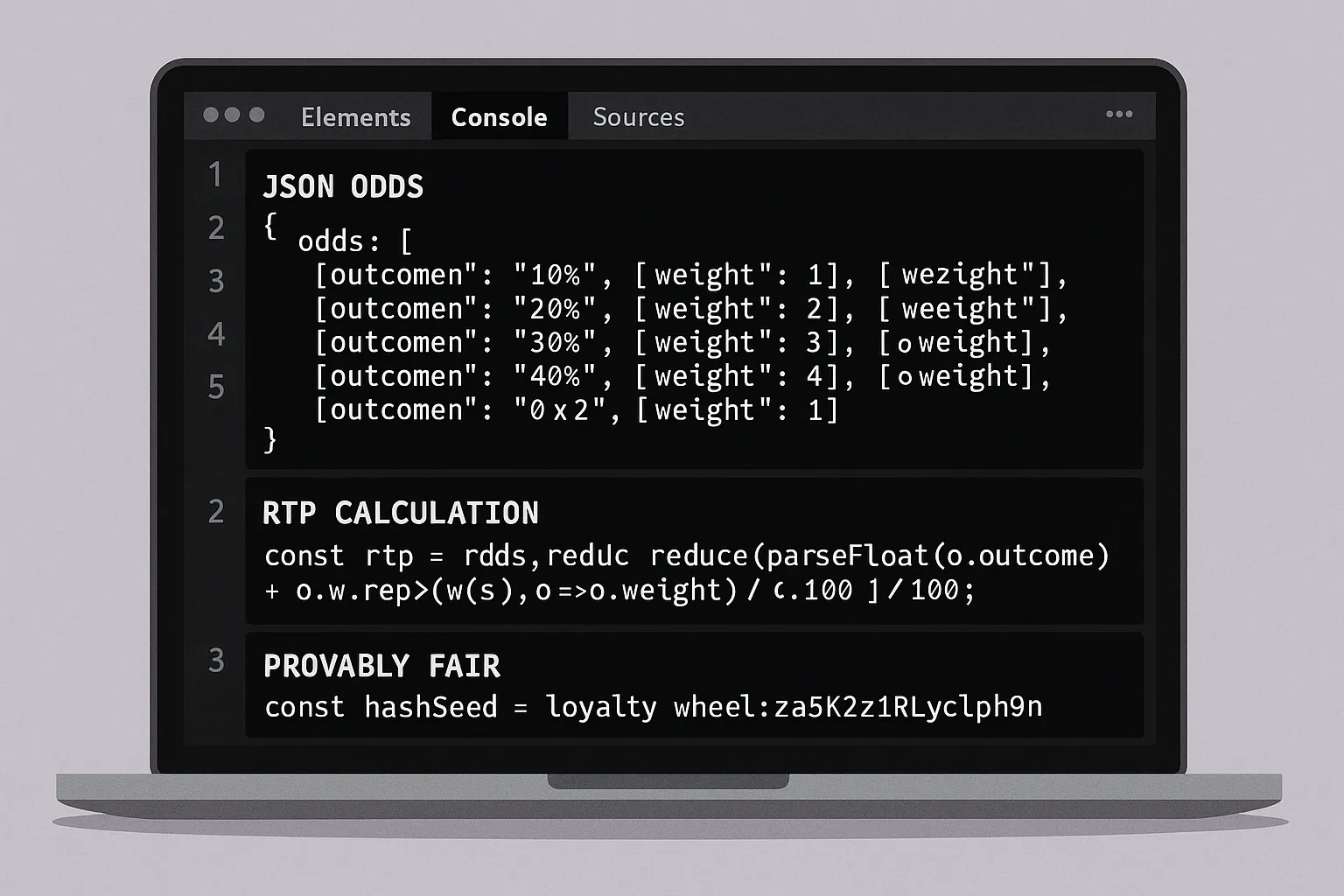
- For crypto casinos publish hash seeds so players can verify outcome via provably fair scripts.
Implementation with Spinlab’s Platform
Spinlab’s Bonus & Quest Engine comes with a drag-and-drop wheel builder:
- Upload reward catalog and house costs.
- Auto-calculate RTP, perceived value index, and variance.
- Generate slice art automatically to match your brand palette.
- Bind wheels to triggers (first deposit, daily login, VIP anniversary) via no-code rules.
- Push outcomes to player ledger through the unified wallet (fiat and crypto) with sub-second latency.
- Stream every spin to the Real-Time Analytics module for live monitoring and rollback.
Open APIs mean you can embed the same wheel in your native iOS/Android apps or mirror spins in Twitch overlays for influencer campaigns.
Case Snapshot: Fullhouse Casino
Fullhouse added a three-tier loyalty wheel in Q1 2025 after migrating to Spinlab. Key numbers after 60 days:
| Metric | Before Wheel | After Wheel | Delta |
|---|---|---|---|
| D30 Retention | 32 % | 45 % | +13 pp |
| Average NGR per DAU | €7.80 | €8.90 | +14 % |
| Promo Cost as % of NGR | 1.1 % | 1.3 % | +0.2 pp |
| Cashier Conversion | 54 % | 62 % | +8 pp |
The wheel paid for itself within nine days while amplifying new game launches via themed slices (free spins on new Pragmatic titles each Thursday).
Frequently Asked Questions
Is a loyalty wheel considered gambling in most jurisdictions? It is a promotional game of chance. Regulators still treat it like any other bonus mechanic, so you must disclose odds and integrate responsible-gaming limits.
How often should I refresh slice content? Update at least once a month or when promoting new slots. Stagnant wheels lose novelty and lower click-through rates over time.
What is the optimal number of slices? Between 10 and 16. Fewer slices limit volatility pulses, while too many shrink slice size and make mobile legibility harder.
Can I run different wheels by currency? Yes. Spinlab allows RTP and slice art variations by crypto vs fiat wallet, letting you fine-tune perceived value by market.
How do I stop bonus abuse? Combine IP + device hash checks, tiered KYC, velocity limits, and real-time anomaly alerts. Spinlab’s Fraud Shield can automatically void abusive spins and quarantine funds.
Ready to Build Your Own High-Performing Loyalty Wheel?
Spinlab’s white label iGaming platform gives you the tools to design, launch, and optimize data-driven loyalty wheels without writing a single line of code. Book a 30-minute demo and we’ll show you how operators are boosting retention by double digits while keeping promo spend under control.
Schedule your live demo and start spinning smarter today.
I have been using this site for my daily gaming sessions and it never disappoints. The login process is quick and the platform runs smoothly even during peak hours. Bonuses are straightforward and withdrawal requests get handled without long waits. A trustworthy spot for anyone looking for consistent entertainment. bgt222login
This link has been my daily go to for months now. Payments go through smoothly and I really like how responsive the team is when I have questions. A trusted spot for laid back gaming. phjiliy
Downloading the app was hassle free and the desktop version works beautifully too. I appreciate the detailed match stats and the live streaming feature makes watching games so much better. The bonus structure rewards both newcomers and loyal members equally. A trustworthy platform that consistently delivers on its promises. 1xbetdownloadbd
My favorite place to relax after a long day. The bonuses are fair and never come with confusing rules. I really appreciate how easy it is to deposit and start playing right away. Everything runs perfectly on my phone too. bdcb999
Playing around with the free options here has been such a refreshing break from my daily routine. The games load instantly and I really enjoy how transparent the rules are for each game. It is nice to find a place that values player experience this much. artragamonedasgratis
Slot fans will seriously fall in love with this place. Every spin feels fair and the bonus rounds actually trigger without skipping a beat. I recommend it to all my friends who love classic fruit machines. mm699slots