

In a white label casino launch, speed is often framed as a bragging point: live in days, not months. But the real value of fast onboarding is not simply a shorter calendar. It is a lower-risk path to revenue, learning, and operational control.
For founders, every extra week before soft launch burns budget without producing player data. For operators, slow onboarding delays payment approvals, content tests, affiliate campaigns, and compliance validation. For lean teams using whitelabel iGaming software, the onboarding window often determines whether the brand enters the market with momentum or spends its first quarter chasing integrations.
Fast onboarding does not mean skipping licensing, KYC, AML, responsible gambling, game certification, or payment controls. It means your white label casino platform already has the core workflows, integrations, and admin tools in place, so your team can configure, verify, and iterate instead of building from scratch.
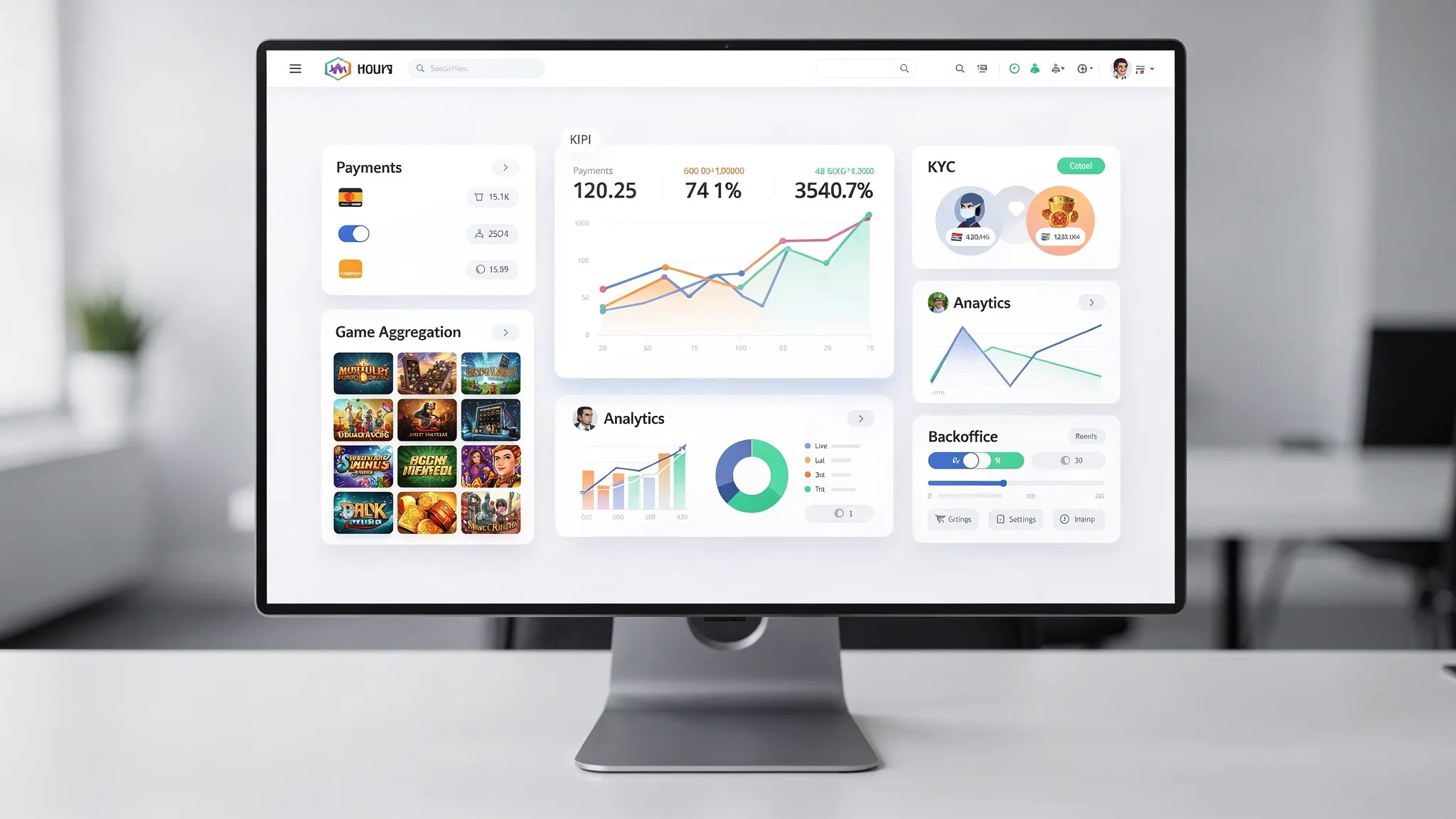
What fast onboarding actually means
Fast onboarding is the process of moving from vendor selection to a controlled, auditable soft launch as quickly as possible. It is broader than spinning up a branded front end.
A real onboarding process should leave the operator with:
- A configured brand, domain, theme, and mobile-first casino lobby
- A game catalog mapped to target jurisdictions and content rules
- Fiat or crypto payment flows connected to a wallet and ledger
- KYC, AML, fraud, responsible gambling, and geo-control workflows
- Backoffice roles, permissions, reporting, and operational training
- Bonus, affiliate, and CRM tools ready for controlled campaigns
- Analytics events, dashboards, and audit logs for launch decisions
If those items are not ready, the casino may look live but still be commercially blocked. A landing page and game demo are not the same as a compliant real-money launch.
For a broader view of what is typically included, see Spinlab’s guide to white label casino setup.
Why onboarding speed has a direct business impact
It protects runway before revenue starts
Casino startups usually spend money before they generate meaningful net gaming revenue. Platform fees, licensing preparation, legal work, design, marketing retainers, affiliate outreach, and payment setup all begin before launch.
A slow onboarding process extends this pre-revenue period. The cost is not only the vendor invoice. The true cost of delay includes:
- Fixed monthly burn from staff, contractors, legal, and marketing
- Missed launch windows around sports seasons, holidays, or content drops
- Delayed learning from real deposit, KYC, and retention data
- Lower confidence from affiliates, PSPs, investors, and internal teams
A simple way to think about it is:
Delay cost = monthly operating burn + lost contribution margin + rework cost + opportunity cost
The longer onboarding takes, the more pressure teams feel to rush later decisions. Ironically, slow setup can create sloppy launches because everyone becomes impatient near the end.
It reduces integration risk
A white label casino has many moving parts: payment gateways, game aggregation, wallets, KYC vendors, fraud tools, bonus rules, player communications, and analytics. If each component needs a separate discovery, contract, integration, QA cycle, and support handoff, onboarding becomes a project management problem before it becomes an operator problem.
Fast onboarding works when the platform has integrated primitives already connected. The cashier talks to the ledger. The bonus engine understands wallet state. KYC events are visible in the backoffice. Game launches are connected to jurisdiction rules. Fraud signals are available before deposits and withdrawals are approved.
That integration density matters because most launch issues appear between systems, not inside a single module. A PSP webhook fails to credit a wallet. A game is available in the lobby but not permitted in a target region. A bonus is granted before KYC status is known. A withdrawal is blocked but the player receives no status update.
Fast onboarding reduces those seams by giving operators fewer disconnected systems to coordinate.
It gets you to real player data sooner
Market research is useful, but casino economics are proven by behavior. You need to know how players actually respond to your registration flow, cashier, lobby, bonus terms, game mix, KYC steps, and withdrawal experience.
Fast onboarding accelerates the path to measurable learning:
| Question operators need to answer | Why fast onboarding helps |
|---|---|
| Which payment methods convert first-time depositors? | You can test real cashier behavior instead of relying on assumptions. |
| Which game categories produce first spin faster? | You can curate the lobby using session and launch data. |
| Where does KYC create drop-off? | You can adjust timing, copy, and vendor routing before scale. |
| Which affiliates bring quality users? | You can compare retention, fraud, and NGR before payout terms expand. |
| Which bonuses drive incremental value? | You can stop expensive offers before they become default behavior. |
In iGaming, the first launch version is rarely the final version. The goal is to shorten the distance between idea, controlled release, measurement, and adjustment.
It improves partner momentum
White label casinos rely on external confidence. Affiliates want to know the brand will pay on time and convert traffic. PSPs want clear flows and risk controls. Game providers want proper integration and content governance. Investors and commercial partners want evidence that the team can execute.
Slow onboarding weakens that confidence because partners cannot see traction. A fast, controlled launch gives the operator something concrete to discuss: test transactions, live content, cohort data, early retention, support metrics, and compliance evidence.
This also affects go-to-market. When you are preparing affiliate, B2B, payment, or content partnerships, warm introductions can shorten the commercial cycle. Tools such as Inroad Engine can help teams identify relationship-based referral paths, which pairs well with a fast platform launch because commercial momentum and technical readiness reinforce each other.
It creates cleaner compliance evidence
Compliance is often seen as the reason onboarding slows down. In reality, the right platform should make compliant onboarding faster by making evidence easier to produce.
Operators need to show that they can manage identity checks, AML monitoring, payment records, bonus rules, game availability, responsible gambling controls, and audit logs. If those controls are scattered across disconnected vendors, the compliance team spends launch week requesting screenshots and CSV exports.
A fast onboarding process should create evidence as a byproduct of setup:
| Compliance area | Evidence that should be ready during onboarding |
|---|---|
| KYC and age checks | Vendor flow, status events, retry logic, review queue, audit logs |
| AML monitoring | Risk rules, transaction triggers, escalation workflow, case records |
| Payments | Ledger entries, PSP references, reconciliation states, failed-payment reasons |
| Responsible gambling | Limits, self-exclusion, reality checks, bonus suppression rules |
| Game availability | Jurisdiction rules, provider certificates, RTP references, content gating |
| Backoffice access | Role permissions, admin activity logs, approval workflows |
Fast does not mean informal. The best onboarding process is both quick and documentable.
Where white label casino onboarding usually gets stuck
Many launch delays are predictable. They happen when teams underestimate operational dependencies or choose a platform that looks complete on the front end but lacks connected workflows behind the scenes.
| Bottleneck | What causes it | How to reduce delay |
|---|---|---|
| Licensing readiness | Missing policies, unclear ownership documents, weak technical evidence | Build an evidence pack before launch and map each requirement to platform controls. |
| Payments | PSP approval delays, unsupported currencies, poor reconciliation design | Prioritize the first two or three rails, then expand after soft launch. |
| Game aggregation | Contract approvals, certification gaps, content metadata issues | Start with a curated catalog and confirm jurisdiction availability early. |
| KYC and AML | Vendor mismatch, unclear thresholds, manual review backlog | Use progressive verification and define review SLAs before traffic starts. |
| Bonus setup | Overcomplicated welcome offers, unclear wagering rules, abuse exposure | Launch with simple offers that are measurable and enforceable. |
| Backoffice training | Admin tools are powerful but hard to use | Require role-based workflows, permission templates, and operator walkthroughs. |
| Analytics | Events are missing or inconsistent | Define launch KPIs before onboarding and verify event capture during QA. |
The pattern is clear: onboarding slows when every feature becomes a custom project. It speeds up when the platform gives operators configurable, tested modules.
The danger of fake-fast launches
Some vendors promise speed by narrowing the definition of launch. They may provide a branded shell, a small demo catalog, or a non-production cashier quickly, but leave the hard operational work for later.
That creates fake speed. The team feels close to launch, but the real blockers are still unresolved.
Warning signs include:
- The demo does not include real payment states, failed deposits, refunds, and reconciliation
- KYC is shown as a checkbox instead of a full workflow with review states
- Game availability is not mapped by jurisdiction or provider approval
- Bonus rules are configured manually by the vendor rather than controlled in the backoffice
- Analytics only show top-level revenue, not funnel events and operational exceptions
- The platform requires developer tickets for basic changes like lobby ordering, payment copy, or promo setup
- Audit logs, role permissions, and admin actions are not visible during the demo
A launch is only fast if the operator can continue operating after go-live without waiting on the vendor for every change.
This is where a Shopify-like casino operations model becomes valuable. Non-technical teams still need strong controls, but they should not need engineers to make routine commercial changes. Spinlab covers this topic in more detail in How to Launch a Casino Brand Without a Tech Team.
What a fast-onboarding white label platform should include
Fast onboarding depends less on slogans and more on platform design. A strong white label casino platform should compress setup time without locking the operator into a rigid product.
A modular core with pre-connected systems
The platform should provide a working operational core: player accounts, wallet, payments, game aggregation, compliance workflows, fraud controls, bonuses, affiliates, analytics, and backoffice. These modules should be connected from day one, but still configurable through APIs and admin tools.
That balance matters. Fully custom builds offer flexibility but can take too long for lean teams. Rigid turnkey platforms launch quickly but may block growth. A modular all-in-one iGaming platform gives operators a faster starting point with room to adapt.
Payment readiness across fiat and crypto
Payments are one of the most common launch blockers. Fast onboarding requires more than adding logos to a cashier page. Operators need wallet integration, ledger correctness, payment status handling, reconciliation, fraud checks, and player-facing recovery states.
A crypto-ready solution adds another layer: supported assets, onramp flows, custodial wallet rules, transaction monitoring, Travel Rule considerations where applicable, and treasury controls. If these are not planned during onboarding, crypto can become an operational risk instead of a conversion advantage.
Game aggregation that is already operational
Game content drives the product experience, but onboarding hundreds or thousands of titles without structure creates clutter. A fast game aggregator setup should normalize metadata, handle launch sessions, connect wallet callbacks, support jurisdictional content rules, and expose performance data.
For many new operators, the fastest path is not the largest possible lobby. It is a focused launch catalog, enough high-quality slots and live casino games to test user behavior, with the ability to expand quickly once the platform is stable.
Backoffice tools operators can actually use
Fast onboarding fails when every post-launch edit requires a developer or vendor support ticket. Admin teams need a backoffice that supports daily work: player review, KYC status, payment exceptions, bonus setup, affiliate tracking, game curation, analytics, and fraud investigation.
The key is not having more buttons. It is giving each role the workflows they need with clear permissions and audit trails.
Real-time analytics from the beginning
Analytics should not be bolted on after launch. During onboarding, operators should define the KPIs that determine readiness and early growth:
| KPI | What it tells you |
|---|---|
| Registration completion rate | Whether the first user hurdle is too heavy |
| First-time depositor rate | Whether onboarding and cashier flows are converting |
| Time to first spin | Whether players reach entertainment quickly |
| Deposit approval rate | Whether payment routing and fraud rules are balanced |
| KYC pass and retry rate | Whether verification is compliant and usable |
| Withdrawal support tickets | Whether payout communication is clear |
| Bonus cost to NGR | Whether promotions are profitable |
| Manual review rate | Whether risk controls are too blunt or too loose |
If these metrics are not available from the start, the operator is flying blind during the most important learning phase.
A practical onboarding sequence that balances speed and control
Fast onboarding works best when the operator avoids trying to launch everything at once. The aim is a minimum viable casino that is compliant, measurable, and commercially real.
| Onboarding stage | What to prove before moving on |
|---|---|
| Lock the operating model | Target markets, licensing path, currencies, payment methods, and game categories are clear. |
| Configure the platform core | Brand, roles, wallet, cashier, KYC, AML, fraud, responsible gambling, and analytics are active. |
| Curate the first catalog | A controlled set of slots, live games, and priority providers is approved for launch markets. |
| Test the money path | Deposits, failed payments, wallet credits, withdrawals, refunds, and reconciliation behave correctly. |
| Run compliance and risk QA | Geo-rules, KYC triggers, AML alerts, admin logs, bonus exclusions, and self-exclusion are verified. |
| Soft launch with limited traffic | A small acquisition cohort tests real conversion, payment approval, support load, and fraud patterns. |
| Scale after evidence | Affiliates, payment methods, promotions, and game content expand once core KPIs are stable. |
For operators that want a timeline-focused breakdown, Spinlab’s guide on how fast you can launch a white label casino covers realistic launch windows and blockers.
Why fast onboarding matters more in 2026
The iGaming market is becoming less forgiving. Payment expectations are higher. Players expect mobile-first flows, instant or near-instant deposits, fast withdrawals, localized content, and transparent verification. Regulators expect clearer evidence, stronger AML controls, and responsible gambling safeguards. Affiliates expect accurate tracking and predictable payouts.
At the same time, startup teams are under pressure to prove traction quickly. A 6-month build cycle can be hard to justify when competitors are testing offers, payment rails, and retention loops in weeks.
Fast onboarding matters because it turns platform selection into an operating advantage. It lets teams move from planning to evidence. It helps founders conserve cash, product teams learn faster, marketers launch with confidence, and compliance teams avoid last-minute chaos.
But speed only creates value when it is paired with control. The winning white label casino is not the one that goes live fastest at any cost. It is the one that reaches a safe, measurable, revenue-ready launch before the market opportunity goes cold.
How Spinlab approaches fast onboarding
Spinlab is built for operators that want the speed of a white label casino platform without giving up the flexibility needed to scale. Its modular iGaming platform brings together core casino operations in one environment, including fiat and crypto payments, game aggregation, KYC and AML workflows, fraud prevention, real-time analytics, affiliate and bonus tools, multi-currency support, open API integration, and a customizable backoffice.
The goal is a Shopify-like operating experience for casino teams: launch lean, configure quickly, manage daily workflows without constant developer dependency, and expand modules as the brand grows.
For first-time founders comparing vendors, the casino platform checklist is a useful way to separate a quick demo from a launch-ready platform.
Frequently Asked Questions
Is fast onboarding the same as a fast public launch? No. Fast onboarding means the platform, workflows, and evidence are ready quickly. A public launch still depends on licensing, payment approvals, game provider permissions, QA, and risk sign-off.
Can a white label casino launch too fast? Yes. If speed comes from skipping payment testing, compliance setup, KYC flows, or analytics, the operator may face failed deposits, blocked withdrawals, bonus abuse, or regulatory issues after launch.
What is the biggest onboarding bottleneck for new casino operators? Payments and compliance are usually the biggest blockers because they involve third parties, risk reviews, evidence, and operational controls. Game content and bonus setup can also slow launch if scope is too broad.
How can operators prepare before onboarding starts? Decide target markets, licensing path, currencies, first payment rails, initial game catalog, bonus strategy, and internal owners. The more decisions made before onboarding, the faster configuration and QA become.
Does fast onboarding matter for experienced operators too? Yes. Experienced teams benefit because faster onboarding supports multi-brand expansion, market testing, new payment rails, localized lobbies, and acquisition experiments without rebuilding the whole stack.
Launch faster without losing control
Fast onboarding is not a shortcut. It is a competitive advantage when your platform already connects the systems that matter: games, payments, compliance, fraud prevention, analytics, bonuses, affiliates, and backoffice operations.
If you want to launch a white label casino with a lean team, a crypto-ready cashier, integrated compliance workflows, and a low-friction admin experience, explore Spinlab and see how a modular all-in-one platform can help you move from idea to controlled launch faster.
The login process is super quick and the bonuses for new members are actually worth it. Love the vibe here at jilibet020login
Super easy registration process and the customer support is very responsive. phxjili is definitely my new favorite spot.