

Why buy original game IP in 2025?
In a lobby packed with 5,000 + reskinned slots from the same handful of studios, a single exclusive title can do more for retention than a 200 % welcome bonus. Operators that own—or at least control—original intellectual property (IP) unlock three tangible advantages:
- True differentiation: Streamers and affiliates love “you-can-only-play-it-here” hooks.
- Better unit economics: No rev-share to third-party studios once the break-even point is hit.
- Strategic agility: Tweak RTP, volatility, or bonus mechanics without waiting in a vendor queue.
But purchasing game IP is riddled with traps: half-baked math models, murky ownership of artwork, or licences that evaporate when you enter a new jurisdiction. Use the 15-point checklist below to keep your lawyers sane and your CFO smiling.
1. Define the commercial goal first
Ask yourself:
- Is the game meant to acquire traffic (loss leader) or monetise VIPs (high-volatility cash cow)?
- Which audience does it serve—slot streamers, crash fans, table purists?
- What KPI will you track: NGR uplift, retention days, or share-of-wallet?
A clear goal narrows the field of suitable engines, math models, and licence terms.
2. Demand a full math dossier
An eye-catching theme is worthless if the underlying model can’t hold engagement.
- RTP & hit rate: Ask for certified simulations over at least one billion rounds.
- Volatility index: Ensure it aligns with your player segmentation strategy.
- Feature frequency: Free spins every 150 spins or every 1,500? This impacts bonus cost dramatically.
If the vendor refuses to share seed files or simulation CSVs, walk away.
3. Verify compliance and certification scope
The game must pass labs where you plan to operate tomorrow, not just today.
- Supported frameworks: GLI-19, BMM-IGO, UKGC RNG, MGA Technical.
- Jurisdictional modules: Some markets (e.g., Spain, Ontario) require separate game build IDs.
- Change management: How fast can patches be re-certified when regulations shift?
A provider that bundles compliance as code—like Spinlab’s on-chain build tracker—saves months of paperwork later.
4. Clarify the exact IP being transferred
Legal wording matters:
- Artwork & audio: Royalty-free or merely licensed from a stock-asset marketplace?
- Characters & trademarks: Are there pre-existing claims, especially with pop-culture parodies?
- Source code: Do you get escrow access or outright ownership?
Insist on a schedule enumerating every third-party asset and its licence status.
5. Check exclusivity and territory restrictions
Common models:
- Global exclusivity (rare, premium price)
- Jurisdictional exclusivity (e.g., LATAM only)
- Timed exclusivity (6-12 months head start)
Make sure the contract spells out what happens if the vendor sells the same mechanic under a different skin.
6. Inspect the engine and API compatibility
Even the best game flops if it lags on mobile or breaks your wallet callbacks.
- Supported transports: WebGL, Phaser, Unity, PixiJS.
- Single wallet vs. session wallet: Needed for crypto casinos.
- Open APIs: Can you feed real-time events into your bonus engine or risk stack?
If you’re on Spinlab’s Fullhouse platform, look for ready-made SDK wrappers to avoid custom glue code.
7. Evaluate performance benchmarks
Request live data or synthetic load tests:
- Load time on 3G Android under 3 MB? (Target <4 s.)
- Crash rate under 0.2 % across top five devices.
- Memory footprint: Heavy React overlays can kill low-end phones in emerging markets.
8. Confirm multi-currency & crypto readiness
A game hard-coded for EUR bets will cause hours of edge-case bugs when you add USDT.
- Dynamic currency conversion with 4-decimal precision.
- On-chain bet IDs for provably fair verification if you serve crypto natives.
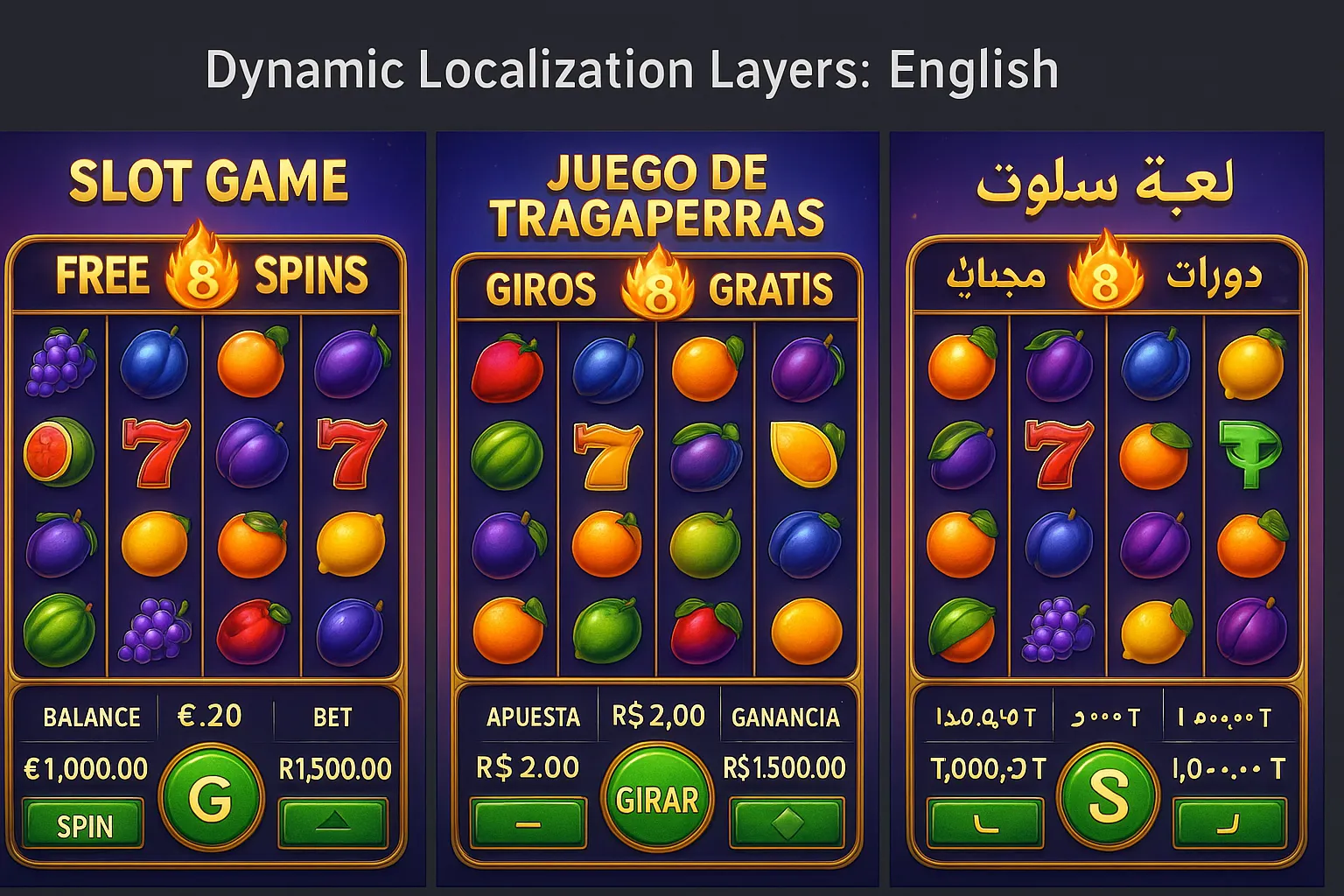
9. Probe localisation depth
- String files separated from logic? Good.
- Hard-coded art with English text? Bad.
- RTL alignment tested for Arabic and Hebrew? Rare, but future-proof.
10. Understand the update and roadmap policy
Bugs happen. Content goes stale.
- Patch SLA: 24-hour hotfix or “next quarterly batch”?
- Feature roadmap: Upcoming bonus buy, jackpot modules, or crash variant?
- Backwards compatibility: Will new features require wallet API changes?
11. Audit security & RNG integrity
- RNG must use a cryptographically secure PRNG (e.g., Fortuna, /dev/urandom seed).
- Server-side weighting? Ensure no hidden house-edge toggles that could void licences.
- Pen-test reports within the last 12 months.
12. Plan the player-facing rollout
- A/B test placement: home-page hero vs. category tab.
- Streamer kits: High-resolution assets, OBS overlays, and press releases ready on day one.
- Cross-promo triggers in your CRM: free-spin drip campaign for churned users.
Tie launch events to real-time analytics (see our live-data guide).
13. Model total cost of ownership (TCO)
Beyond the sticker price:
- Certification fees per market
- Server egress if the engine streams heavy video
- Ongoing royalty vs. flat buy-out
- Opportunity cost of engineering resources if deep integration is needed
A simple spreadsheet comparing TCO to expected NGR delta keeps negotiations grounded.
14. Lock in support & escalation channels
- 24/7 Slack or Jira desk?
- Dedicated technical account manager?
- Bug bounty structure for security researchers?
Lack of clear support escalations can leave a broken release festering for days.
15. Nail the exit and succession clauses
M&A happens. Regulators pull markets. Your contract should state:
- Transferability: Can you sell the IP along with your casino brand?
- Source-code escrow trigger conditions
- Re-certification responsibilities if you migrate platforms
Without these, you may pay twice when switching technology stacks.
Quick-reference checklist (copy-paste for your next procurement call)
- Commercial objective defined
- Math dossier received & verified
- Compliance certificates mapped to all target markets
- Full asset & source-code ownership list signed off
- Exclusivity scope written in plain language
- Engine & API compatibility tested in sandbox
- Performance benchmarks under real mobile conditions
- Multi-currency & crypto support confirmed
- Localisation strings externalised
- Update roadmap & patch SLA agreed
- RNG and security audit up to date
- Launch marketing assets prepared
- TCO spreadsheet approved by finance
- 24/7 support contacts documented
- Exit, transfer, and escrow clauses finalised
Print it, laminate it, and keep it next to your coffee mug.
Case in point: Fullhouse’s upcoming crash title
Fullhouse Casino (see the scaling case study) recently walked through this very checklist when co-designing an exclusive crash game with Spinlab’s studio. The result: a 32 % uplift in day-30 retention and zero surprise costs because every asset, licence, and jurisdiction was locked in upfront.
Final thoughts
Buying original game IP isn’t cheap, but buying the wrong IP is lethal. A disciplined procurement process—anchored by the 15 checkpoints above—turns a risky purchase into a strategic growth lever. If you’re ready to explore bespoke titles engineered for crypto-ready, multi-jurisdictional casinos, reach out to the Spinlab games team for a discovery call.
Differentiate boldly. Certify once. Profit forever.