

By 2025, more than 60 % of global iGaming GGR is generated by operator groups that run at least three brands side-by-side (source: H2 Gambling Capital, April 2025). Whether the strategy is geographic diversification, niche segmentation, or M&A roll-ups, the multi-brand playbook is now mainstream. Yet too many groups still juggle separate backoffices, logins, and inconsistent data models—bleeding time, money, and insight every single day.
The Hidden Cost of Fragmented Backoffices
| Pain Point | Typical Impact (per month, 5-brand group) | Why It Happens |
|---|---|---|
| Manual KPI consolidation | 24–40 analyst hours | Brands export CSVs in different formats that must be stitched in Excel or BI tools. |
| Duplicate fraud reviews | 15–25 risk-team hours | Suspicious players hop brands; teams re-check KYC because data isn’t unified. |
| Marketing mis-fires | Up to 18 % wasted bonus spend | CRM cannot see cross-brand player value, so VIPs receive conflicting or irrelevant offers. |
| License audit delays | 2–3 extra weeks per jurisdiction | Compliance logs are scattered across servers, slowing evidence gathering. |
Multiply those numbers across a 12-month run-rate and the TCO of “backoffice sprawl” easily exceeds six figures. Worse, operators miss upside because growth decisions are made on stale or incomplete data.
What a Modern Multi-Brand Dashboard Must Deliver
- Single Sign-On (SSO) with role-based scopes – Finance sees P&L across brands, while VIP hosts drill into player-level data for their jurisdiction only.
- Real-time, source-of-truth metrics – One event stream powers every widget, ensuring registration counts, deposits, and NGR match the ledger 24/7.
- Cross-brand player graph – A hashed identifier links wallets, KYC files, and game sessions so risk teams instantly spot multi-accounting.
- Unified bonus & quest engine – Configure a cashback once, map it to five sites, or A/B test rewards per skin without code deploys.
- Multi-currency cashier hub – Route EUR, BRL, USDC, or SOL deposits through the same API with brand-level limits and margins.
- Drill-down & roll-up views – Click from group-level GGR to table-level RTP in two taps. Export any slice via REST or WebSocket for your BI stack.
- Audit-ready logging – Immutable trails (PCI-, ISO-, and AML-aligned) cover every admin action, player transaction, and rule change.
Pro tip: If a provider claims “multi-brand” but makes you switch URLs or re-authenticate to change brand, it is not a true single-pane dashboard.
Anatomy of the Spinlab Multi-Brand Admin Panel
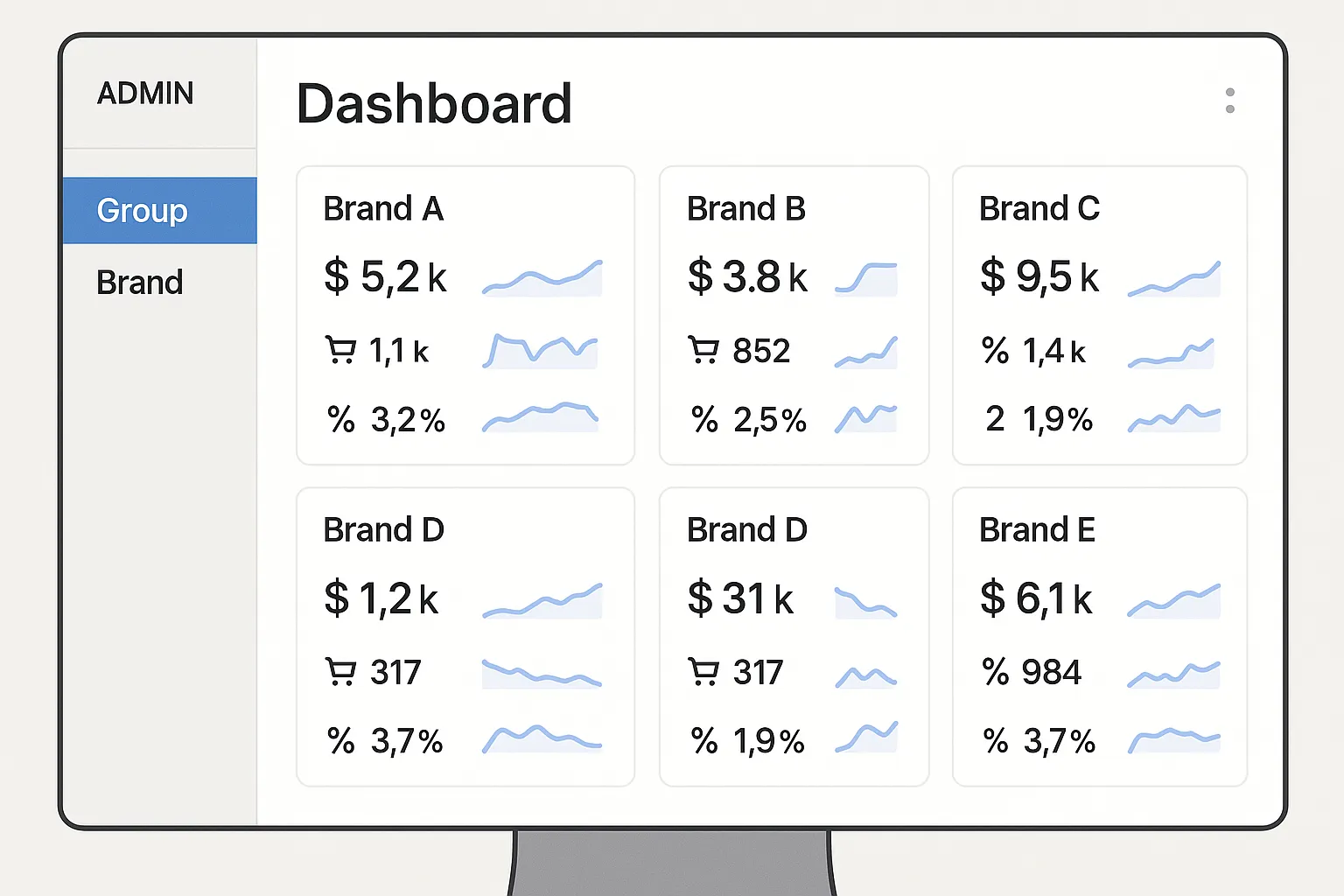
Spinlab’s Fullhouse platform ships with a Shopify-style admin that scales from a single skin to dozens of brands without duplicating code or databases. Below is a feature snapshot relevant to five-brand operators:
| Module | Group View | Brand-Specific View | Key Benefit |
|---|---|---|---|
| Analytics | Aggregate GGR, ARPU, retention, risk scores | Drill into any date range, genre, or provider | Board-level KPIs and granular optimisation in one place |
| Cashier | Global treasury balance, PSP uptime | Deposit/withdrawal queue, fees, limits | Faster finance close; instant PSP issue triage |
| CMS | Global component library | Localised banners, game carousels | Re-use assets but tailor promotions per market |
| Bonus Engine | Multi-brand campaign cloning | Brand-unique reward pools & segmentation | 10× faster go-live for promos, fewer config errors |
| Compliance | Universal KYC/AML rules | Jurisdiction overrides, SAR export | Pass audits faster; avoid duplicating rule sets |
| Support | Cross-brand ticket feed | Player timeline, chat, KYC docs | Agents resolve issues without tab-switching |
Under the Hood: Multi-Tenant But Not Multi-Headache
The platform uses a logical multi-tenant architecture: one event pipeline, one ledger, one promo service. Brands are isolated via namespace keys and scoped JWT tokens, so data separation is cryptographically enforced while infrastructure is shared. Operators avoid the overhead of patching five parallel stacks and still meet regulator segregation requirements with dedicated S3 evidence buckets per licence.
If you need to expose data to external BI tools, Spinlab’s Open Metrics API streams brand-tagged events in real time—no more nightly exports. (See our earlier deep-dive on Real-Time Analytics in iGaming for the tech details.)
Four Day-to-Day Workflows—Simplified
- Morning Executive Check-in
- Open the group dashboard on mobile. Yesterday’s NGR, GGR, and cash-flow at risk display in under 2 s.
- Tap the “anomalies” badge to see a new fraud cluster on Brand #3 and a PSP approval-rate dip on Brand #5.
- Share the anomaly card to Slack; teams have the context instantly.
- Marketing Launches a Network-Wide Tournament
- Clone the ready-made “Weekend Warrior” template.
- Adjust the prize pool per brand (curated by VIP mix) with a slider.
- Schedule push in UTC and set fallback languages; 5-brand rollout complete in <15 min.
- Risk Team Flags a Suspicious Wallet
- Player triggers velocity rule on Brand #2.
- Cross-brand graph reveals two more accounts under the same device fingerprint on Brands #1 and #4.
- KYC status is pending on one brand; all three wallets are locked with one click.
- Finance Reconciles Month-End
- Download P&L statement aggregated or per brand, currency, and PSP.
- Ledger entries tie back to the blockchain tx-hash for USDC deposits (Spinlab’s smart settlement layer).
- Export directly to NetSuite via webhook—no manual CSV.
Quantifying the ROI of One-Screen Ops
| Metric | Before Consolidation (5 disparate panels) | After Spinlab Dashboard | 12-Month Delta |
|---|---|---|---|
| Analyst hours for monthly KPI pack | 40h | 8h | –384h (≈ $25k) |
| Fraud review false-positive time | 15h/week | 4h/week | –572h (≈ $35k) |
| Bonus budget waste | 18 % | 6 % | +$140k net GGR |
| Licence audit prep | 3 weeks | 5 days | –10 days, earlier marketing focus |
| Time-to-launch new brand | 10–12 weeks | 4–6 weeks | +2 extra brand launches per year |
Assumptions: €65 analyst blended rate, €60 risk-analyst rate, €4m annual bonus budget, €60k monthly brand EBITDA.
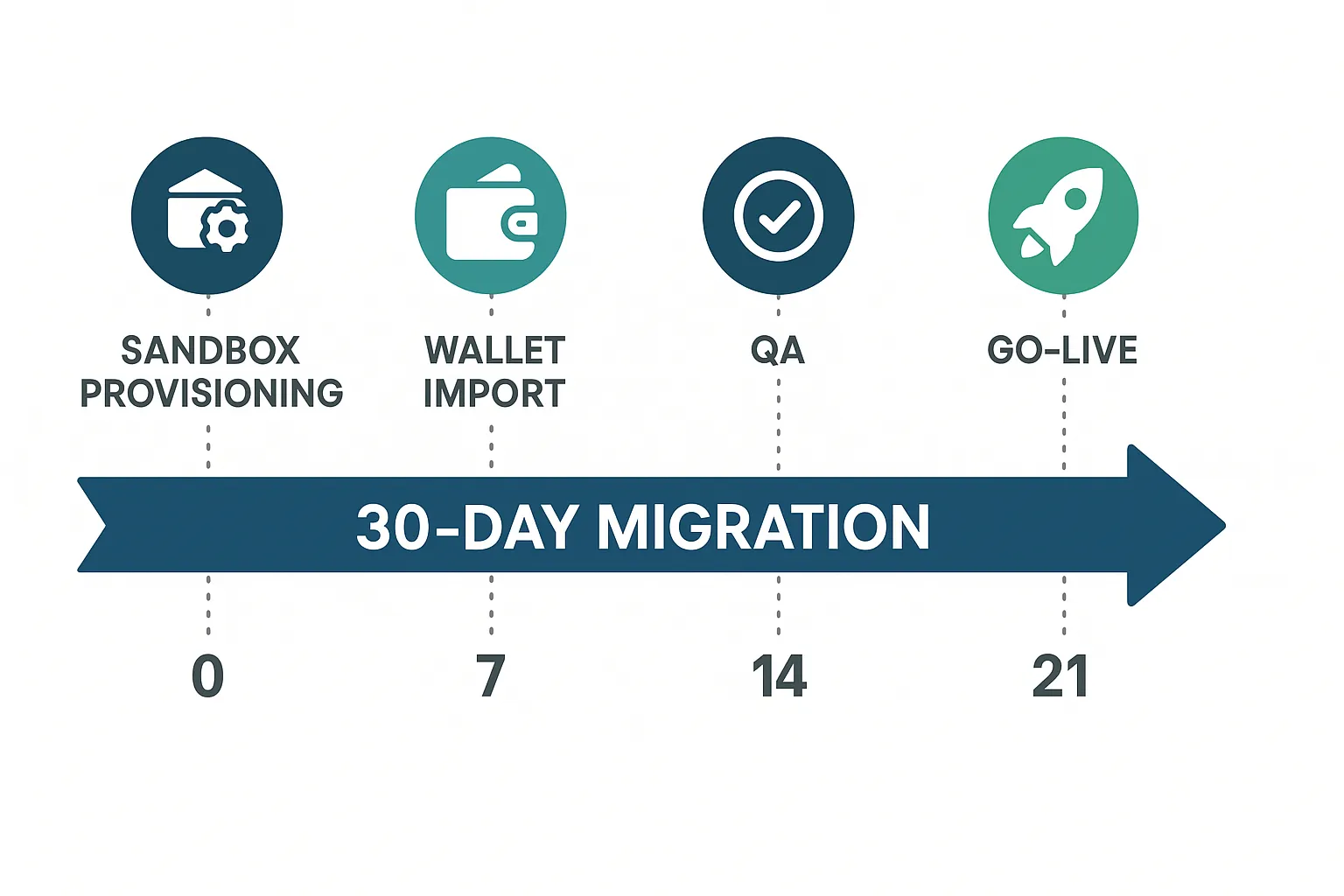
Implementation Roadmap: Migrating Five Casinos in 30 Days
Day 0–3 | Kick-off :———|:——— • Map existing integrations, payment providers, studios.
• Provision staging sandboxes for each brand.
Day 4–10 | Data & Wallet Migration • Spinlab scripts import historic player balances and transactions. • ID hashing reconciles overlapping player records to build the cross-brand graph.
Day 11–17 | Cashier & Content Switch • Configure fiat and crypto rails per brand (see our guide on Cashier Conversion Hacks). • Sync CMS assets; use the theme engine to match existing look-and-feel.
Day 18–24 | Compliance & QA • Brand-specific KYC/AML rule overrides activated.
• Parallel run with mirrored live traffic; validate ledger deltas <€0.01.
Day 25–30 | Go-Live & Debrief • DNS cut-over one brand at a time during off-peak windows.
• 24-hour hyper-care with automated error alerts.
• Post-mortem; de-commission legacy panels to avoid shadow IT.
Common Objections—and the Reality Check
“Won’t one dashboard create a single point of failure?” Spinlab deploys redundant admin nodes across three AWS regions with automatic fail-over. If one region goes down, admins switch seamlessly; player-facing sites are decoupled and stay live.
“My VIP managers need bespoke promo logic per site.” That’s supported. The bonus engine lets you inherit a global template and override any parameter—wallet type, wagering rules, eligibility list—on a per-brand basis.
“Integrating five different PSP contracts sounds messy.” The Payment Hub normalises PSP APIs to a uniform schema. You map each MID to one or more brands in the UI—no code.
Why the Cheapest Whitelabel Becomes the Most Expensive Without Consolidation
At first glance, running separate low-cost white-label instances seems cheaper than a single enterprise licence. But stack up the hidden costs—duplicate licence fees, compliance tooling, fragmented analytics, and staff hours—and you will often pay 2–3 × more over 24 months. (Our post on The True Cost of a Game Aggregator exposes a similar fallacy on content costs.) By switching to a unified Spinlab dashboard, operators typically recover migration costs within 4-6 months—before compounding the upside of faster launches and better player insight.
Ready to Put All Your Brands on One Screen?
If you’re juggling multiple logins—or worse, multiple tech teams—to answer simple questions like “What was our cross-brand GGR yesterday?”, it’s time to rethink your backoffice. Spinlab’s modular, crypto-ready platform treats multi-brand ops as a first-class citizen, not an afterthought.
Book a 30-minute walkthrough to see your five casinos—KPIs, promos, players, risk alerts—on a single screen. Visit spinlab.studio and click Schedule Demo, or reply to this article and our solutions team will be in touch within one business day.
Stop managing brands in silos. Start scaling them in sync.