

Why Loyalty Matters More Than Ever in 2025
Acquiring a new player for an online casino can cost anywhere from $200 to $500, depending on geo and channel. If you’re spending that kind of money, maximizing Lifetime Value (LTV) is non-negotiable. Two proven levers dominate the retention toolkit:
- Traditional loyalty (VIP tiers, rakeback, weekly reloads)
- Gamification (missions, quests, badges, leaderboards)
Both aim to keep players active and depositing, but which one actually moves the LTV needle further? Let’s look at the data, psychology, and real-world results—then map out an action plan you can apply on any modern iGaming platform, including Spinlab’s Fullhouse stack.
Traditional Loyalty Programs: The Comfort of Certainty
Classic loyalty schemes have existed since the first land-based casino put a players’ card in the slot machine. Online, they typically boil down to:
- Fixed VIP tiers based on wagering volume
- Cashback/rakeback percentages that increase per tier
- Birthday or anniversary bonuses
- Dedicated account managers for high rollers
Conversion to LTV: What the Numbers Say
A 2024 data set from H2 Gambling Capital across eight regulated markets showed:
- Average deposit frequency increased 1.4× when a player reached VIP Silver (roughly $5,000 lifetime stakes).
- Churn dropped from 32% to 18% in the first 90 days for users receiving weekly cashback.
- Incremental ARPU (average revenue per user) lift averaged 22% for every tier increase.
Why it works:
- Predictability – players know exactly what they’ll receive.
- Loss mitigation – cashback softens the blow after a losing streak.
- Status signaling – tiers trigger the universal desire for recognition.
Limits:
- Plateau effect once a player reaches the top tier.
- Hard to stand out—every casino has “10% Monday Reload.”
- Little emotional engagement; rewards feel transactional.
Gamification: Turning Play Into a Narrative
Gamification layers game design mechanics on top of wagering: XP points, progress bars, story arcs, time-boxed challenges. Done right, it taps into dopamine loops similar to the games themselves.
Conversion to LTV: What the Numbers Say
In 2025, Spinlab analyzed 17 operators running on its platform that enabled the built-in Quest Engine vs. a control group using only traditional bonuses.
Key findings over a six-month horizon:
| Metric | Gamification Cohort | Control Cohort |
|---|---|---|
| Average daily session length | 38.5 min | 25.9 min |
| Average number of deposits / month | 4.8 | 3.1 |
| Net Gaming Revenue (NGR) / player | +31% | baseline |
| 6-month churn | 14% | 23% |
Even more striking: mid-rollers (total deposit $200-$1,000) showed the highest lift—exactly the segment casinos struggle to re-ignite once early excitement fades.
Why it works:
- Progress visibility – a moving progress bar is addictive.
- Variable rewards – mystery loot boxes outperform fixed 10% bonuses in A/B tests.
- Community dynamics – leaderboards and guilds create social pressure to return.
Limits:
- Requires more content design and tech integration.
- Poorly calibrated missions can cannibalize revenue (players cherry-pick low-risk tasks).
Which Approach Drives Higher LTV? A Layered Answer
- Short-Term (0-30 days)
- Traditional welcome bonuses still win. A 200% deposit match is tangible and urgent.
- Mid-Term (30-180 days)
- Gamification pulls ahead. Progression systems replenish novelty without inflating bonus costs.
- High-Roller Nurturing
- VIP perks are unmatched: dedicated account managers, exclusive events, tailored credit lines.
- Casual/Low-Budget Players
- Missions with small-stakes thresholds keep them active without hurting your margin.
Result: Hybrid loyalty stacks outperform either model alone by up to 43% LTV lift in Spinlab benchmarks.
Designing a Hybrid Loyalty Stack on Spinlab
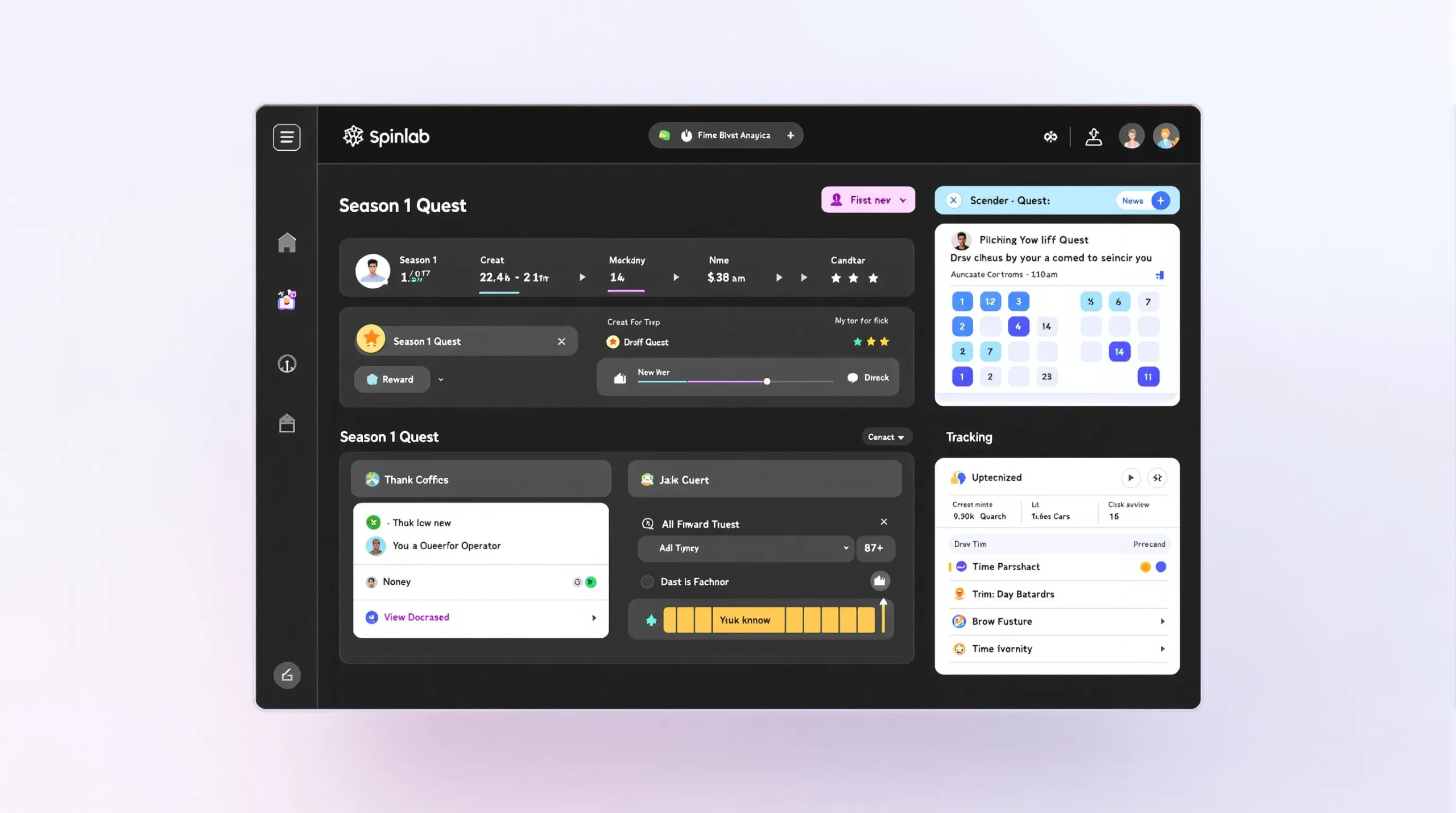
Spinlab’s platform bundles a Bonus & Quest Engine directly inside the back-office. Here’s a practical template you can implement in under a week:
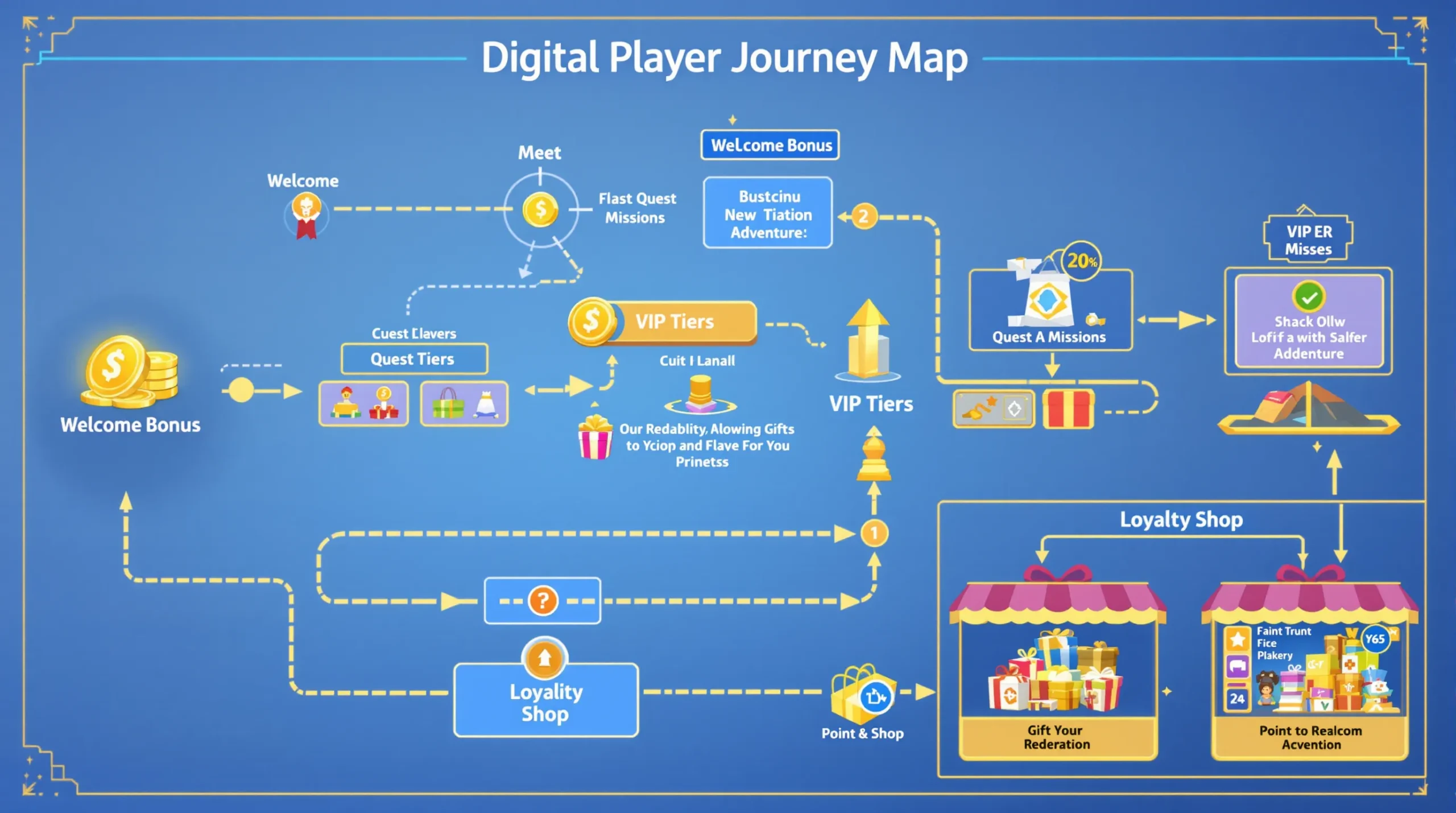
- Day 0–7: Traditional 100% deposit match + 50 free spins onboarding.
- Day 7–30: Auto-enroll player into Season 1 Questline:
- Mission 1: Wager $50 on any Pragmatic Play slot → 10 XP + 5 free spins.
- Mission 2: Hit 3 days of consecutive login → 20 XP + Bronze Loot Chest.
- Tier Bridge: Unlock Silver VIP at 500 XP or $5,000 wagered (whichever first).
- VIP Overlay: Cashback scales from 5% (Silver) up to 15% (Elite), stackable with quest rewards.
All missions, tiers, and loot tables are configurable via Spinlab’s Shopify-like UI—no dev sprint needed.
Measuring Success: The Five KPIs That Matter
- Effective Cost of Bonus (ECB) – rewards paid / incremental NGR. Keep under 25%.
- Quest Completion Rate – sweet spot is 55-65%; higher indicates missions are too easy.
- VIP Tier Migration Velocity – days to move from Tier 1 to Tier 2. Faster is better up to Tier 3; beyond that, slow it down to avoid bonus leakage.
- Retention Cohort LTV – track separately for gamified vs non-gamified groups using Spinlab’s real-time dashboards (see our post on real-time analytics for setup tips).
- Churn After Reward Expiry – if players bounce once a season ends, build a soft-landing mini-event.
Common Pitfalls and How to Dodge Them
- Over-gamification: When every spin triggers fireworks, fatigue sets in. Use micro-animations sparingly.
- One-size-fits-all quests: Segment by psychographic profile. Sports bettors hate slot missions.
- Reward inflation: If everyone is a “Legendary VIP,” nobody feels special. Maintain scarcity.
- Poor compliance hygiene: Remember that bonus terms interact with each jurisdiction’s rules. Spinlab auto-segments by geo to keep you safe.
Real-World Example: Fullhouse Casino’s 40% LTV Surge
You may have read our Fullhouse case study. What we didn’t publish then: the operator layered quests on top of an existing VIP ladder.
- Before: 6-month LTV $310, churn 26%.
- After (six months): LTV $433, churn 15%.
- ECB: 18%—below the industry average of 24%.
Gamification delivered most of the uplift for mid-rollers, while VIP perks preserved whales.
Frequently Asked Questions (FAQ)
Do quests violate bonus restrictions in regulated markets?
Not if structured correctly. Use wager-free XP points or cosmetic badges for EU jurisdictions where bonus caps apply. Spinlab’s rule engine lets you localize rewards per license.
Isn’t gamification expensive to build?
Spinlab ships ready-made widgets (leaderboards, progress bars, loot chests). Most operators go live in <10 days without extra dev cost.
What about fraud—can players exploit missions?
Yes, if you ignore risk signals. Spinlab ties quests to its real-time fraud suite, flagging bonus abuse patterns like collusion or chip dumping.
Can I run gamification for sportsbook too?
Absolutely. Missions can target bet slips, odds ranges, or events. Hybrid casino-sports quests deepen cross-sell.
How do I know when to refresh a season?
Monitor Quest Completion Rate and daily active users. A drop of >15% week-on-week signals it’s time for new content.
Ready to Level Up Your Retention Strategy?
Traditional loyalty and gamification aren’t rivals—they’re partners. By combining the predictable rewards whales love with the dynamic excitement mid-rollers crave, you can unlock double-digit LTV growth without blowing up your bonus budget.
Spinlab’s modular iGaming platform gives you:
- Drag-and-drop Quest & Bonus Engine
- Real-time analytics to track ECB and churn live
- Built-in fraud prevention and geo-compliance rules
- Flexible crypto and fiat cashier so rewards can be paid in USDT, BTC, or local currency
Book a 30-minute demo and see how quickly you can architect a hybrid loyalty stack that outperforms the industry—at a price point no other white label casino platform can match.