

The 12-Second Rule: Why Slow Cash-outs Kill Your Brand
According to SOFTSWISS’ 2025 benchmark, 72 % of players who wait more than 12 seconds before seeing a withdrawal confirmation switch tabs—and 38 % never come back. Good games and flashy promotions mean little if a player’s winnings take minutes (or hours) to hit their wallet.
On mainstream blockchains like Bitcoin or Ethereum mainnet, that speed is impossible: confirmations range from 1 to 60 minutes and gas fees fluctuate wildly. Enter Layer-2 (L2) networks—sidechains, roll-ups, and payment channels that sit on top of Layer-1 (L1) blockchains and settle back periodically. For iGaming operators chasing instant payouts, L2 is becoming the secret sauce behind VIP retention and lower operating costs.
1. What Exactly Is Layer-2?
Think of the L1 blockchain (Bitcoin, Ethereum, Polygon PoS) as a global settlement court. Every dispute eventually lands there, but routine transactions clogging the docket slows everyone down. Layer-2 is the “fast lane” where:
- Transactions are batched off-chain or in parallel.
- Proofs (Merkle or zero-knowledge) are posted back to L1 for finality.
- Fees are shared across thousands of batched operations, making each one cheap.
Common flavours you’ll hear in payments:
- Optimistic rollups (Arbitrum, Optimism) – assume transactions are valid unless challenged. 7–10 ¢ per 10kB batch.
- zk-rollups (zkSync, Starknet) – generate cryptographic proofs; finality in seconds with sub-cent fees.
- Lightning Network (Bitcoin) – peer-to-peer payment channels that settle only the net result on-chain.
- Sidechains (Ronin, Polygon Edge) – independent validators bridge assets back to L1 on demand.
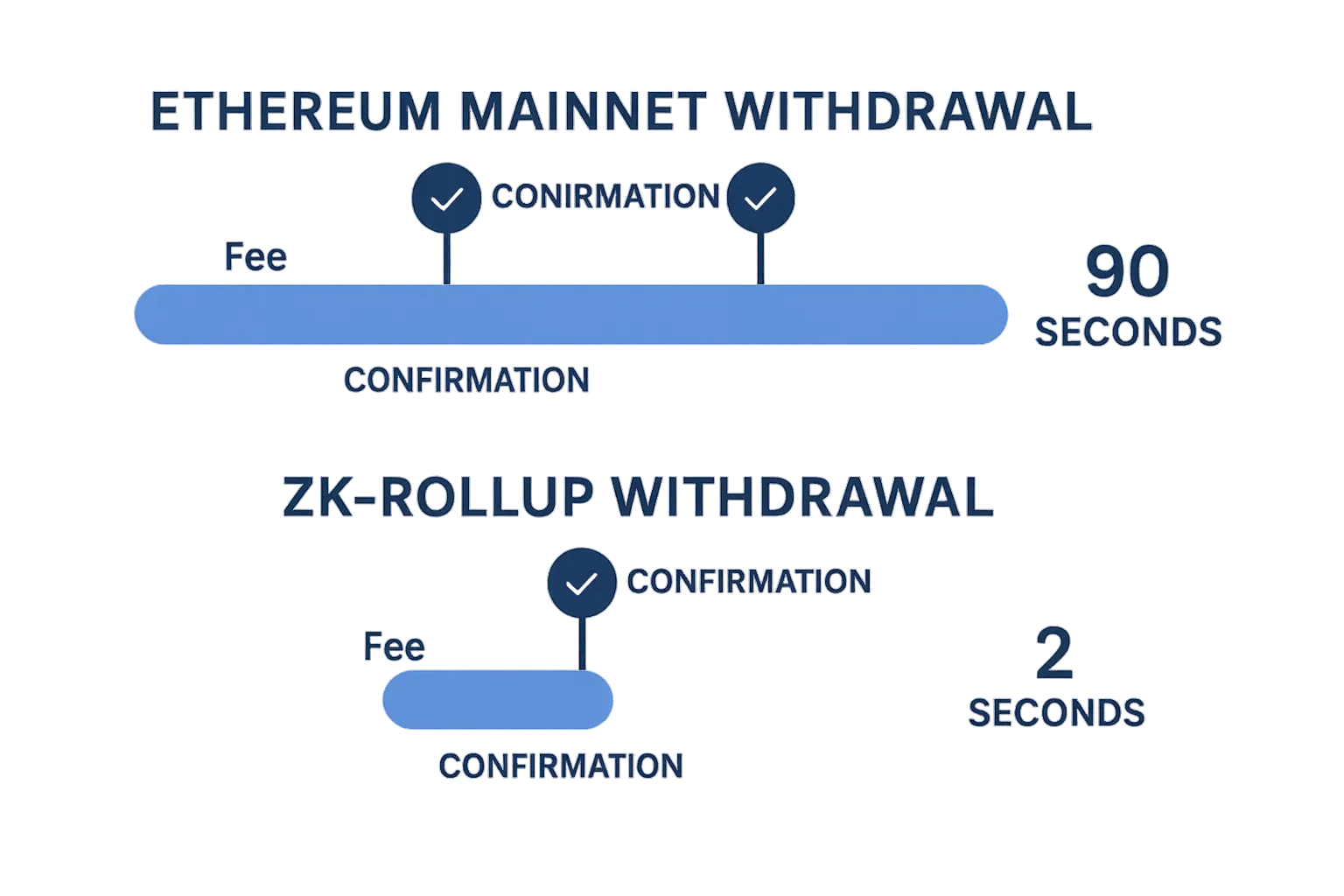
In user terms: L2 lets a $5 slot-table payout arrive in under 2 seconds at a network fee below $0.01—numbers L1 simply cannot hit.
2. Why Instant Payouts Are iGaming’s New North Star
- Retention – Players who receive funds instantly are 53 % more likely to redeposit within 24 hours (H2 Gambling Capital, 2024).
- Influencer marketing – Streamers showcase live cash-outs; “waiting for confirmations” ruins the on-camera thrill.
- Chargeback prevention – Crypto withdrawals can’t be reversed, eliminating claw-backs common with e-wallets.
- Operational float – Faster settlement means smaller hot-wallet balances and lower treasury risk.
But none of that sticks if you route every transaction through congested L1 rails.
3. How L2 Changes the Math
| Metric (June 2025 average) | L1 (Ethereum) | L2 (zkSync Era) | Card Rail (Visa) |
|---|---|---|---|
| Confirmation time | 5–15 min | 1.8 s | 3–7 s (auth) + 1–3 days (settlement) |
| Avg. network fee | $2.13 | <$0.01 | 2.2 % + interchange |
| Chargeback rate | 0 % | 0 % | 0.6–1 % |
| KYC overhead | Medium | Same as L1 | High (PSD2, 3-DS) |
Instant, cheap, irrevocable—that’s a trifecta no fiat rail can match.
4. UX Improvements You Can Actually Market
- One-tap cash-out – Players hit “Withdraw,” sign with a wallet, and see the transaction land before the next roulette spin.
- Micro-payouts – Run hourly slot tournaments with $0.50 prizes; fees stay negligible.
- Gas-less promos – Cover the L2 gas for first-time depositors at a cost of pennies, not dollars.
- Branded on-chain receipts – Each L2 withdrawal carries a memo field—perfect for provably fair marketing on X/Twitter.
For high-velocity crypto casinos, these touches separate a sticky brand from a forgettable clone.
5. Security & Compliance: Is Layer-2 “Safe Enough”?
Short answer: yes—if implemented properly.
- Bridging risks – The majority of L2 exploits target cross-chain bridges. Choose audited bridges (e.g., Hop Protocol, Polygon Bridge v2) and set withdrawal caps per player.
- Exit windows – Optimistic rollups require a challenge period (usually 7 days). Use instant liquidity providers (ILPs) to front payouts while finality settles.
- RegTech alignment – MiCA in the EU treats L2 tokens the same as their L1 equivalents. KYT (Know Your Transaction) tools like Chainalysis already parse roll-up proofs.
- Custodial safeguards – Store the majority of player funds in multi-sig cold vaults on L1; keep only real-time float on L2.
Done right, L2 offers the UX of a centralized rail with the audit trail of a blockchain—compliance teams love immutable logs.
6. Implementation Blueprint for Operators
- Pick your network – Prioritise TVL and exchange support. zkSync and Base both connect to major off-ramps like Coinbase and Binance.
- Use wrapped stablecoins – USDC.e or USDT on L2 removes volatility; peg is maintained 1:1 by the issuer.
- Integrate an on-ramp – Services such as Transak or MoonPay now support direct purchases to L2 addresses, bypassing bridge friction.
- Abstract the cashier – Let players deposit to a single address; your backend routes to L1 or L2 based on gas heuristics.
- Automate KYT – Stream L2 transactions through the same compliance engine used for L1 (see our article on crypto vs fiat LTV).
- Offer instant swaps – If a user insists on BTC, auto-convert USDC ↔ BTC using liquidity pools after the L2 leg clears.
With modular iGaming platforms—like Spinlab’s Fullhouse—most of these steps are pre-wired, reducing setup time to days.
7. Spinlab’s Take: How Fullhouse Handles L2 Under the Hood
- Unified Balance Ledger – Every deposit becomes an internal credit token; whether funds originate on Arbitrum, Visa, or bank wire is abstracted away.
- Smart Settlement Engine – A ruleset monitors mempool congestion and fee spikes, automatically switching withdrawals from Ethereum mainnet to zkSync when gas crosses 60 gwei.
- Merchant Custodial Wallets – Operators hold segregated L2 hot-wallets with programmable thresholds; excess balances sweep to cold L1 storage nightly.
- Open API – Want to build a leaderboard that pays prizes directly on Polygon? Call
POST /v1/payoutswith the player’s L2 address—done.
Because the same back-office already tracks RTP drift and VIP value in real time (see our post on live analytics), finance teams see instant cash-out costs right next to GGR.
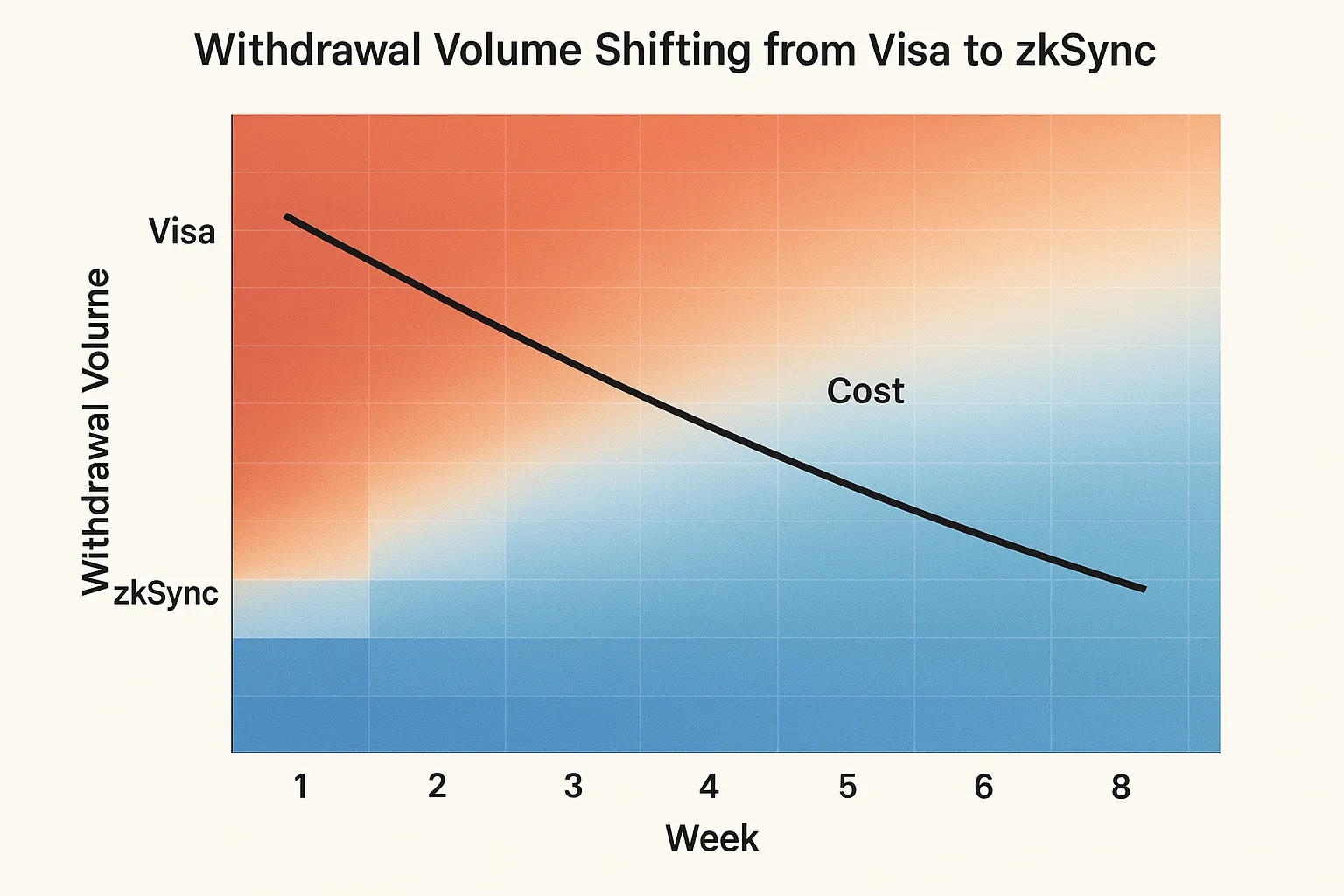
8. Case Snapshot: 48 % Cost Saving in LATAM P2P Sportsbook
A mid-tier operator targeting Brazil and Argentina piloted USDC withdrawals on zkSync for $20-and-under payouts.
- Before – Average cost per card withdrawal: $1.07 (fees + chargebacks). 24-hour wait time.
- After – Average zkSync fee: $0.006. Confirmation: 2.1 s. Chargebacks: 0 %.
In the first 60 days, their net saving was 48 % of total payment OPEX, funding two new streamer sponsorships without extra budget.
9. Quick-Start Checklist (2025 Edition)
- Choose one audited roll-up (zkSync, Arbitrum) and one sidechain (Polygon PoS) for redundancy.
- Enable stablecoin deposits first; add volatile tokens later.
- Set withdrawal floor at $5 to prevent spam.
- Cap hot-wallet exposure to 12 h projected withdrawals.
- Update T&C to explain roll-up exit windows.
- Train support agents: “Your funds are already in your wallet; Etherscan may show them after batch finality.”
Follow this tick-list and you can launch L2 payouts within a sprint cycle.
Frequently Asked Questions
Do players need a new wallet for L2?
No. MetaMask, Rabby, and Trust Wallet all add L2 networks with a single click.
What happens if an L2 stops working?
Funds remain withdrawable on L1 after the exit window. Always maintain an L1 fallback route in your cashier.
Can I cover gas fees for users?
Yes. Sponsor transactions via a relayer; Fullhouse exposes a gasless=true flag in the payout API.
Is this allowed under MGA/Curacao licences?
Both regulators treat L2 tokens the same as L1, provided AML checks cover source-of-funds. Always confirm with your legal counsel.
Final Thoughts: L2 Is Becoming Table Stakes
In 2023 instant payouts were a “nice to have.” By mid-2025, they’re the baseline expectation for crypto-savvy players. Layer-2 solutions deliver the speed, cost, and transparency edge that separates tomorrow’s market leaders from yesterday’s slow-paying brands.
Whether you build your own roll-up integration or leverage an all-in-one platform like Fullhouse, the message is clear: move your payouts to Layer-2—or watch your VIPs move to a competitor who already did.