

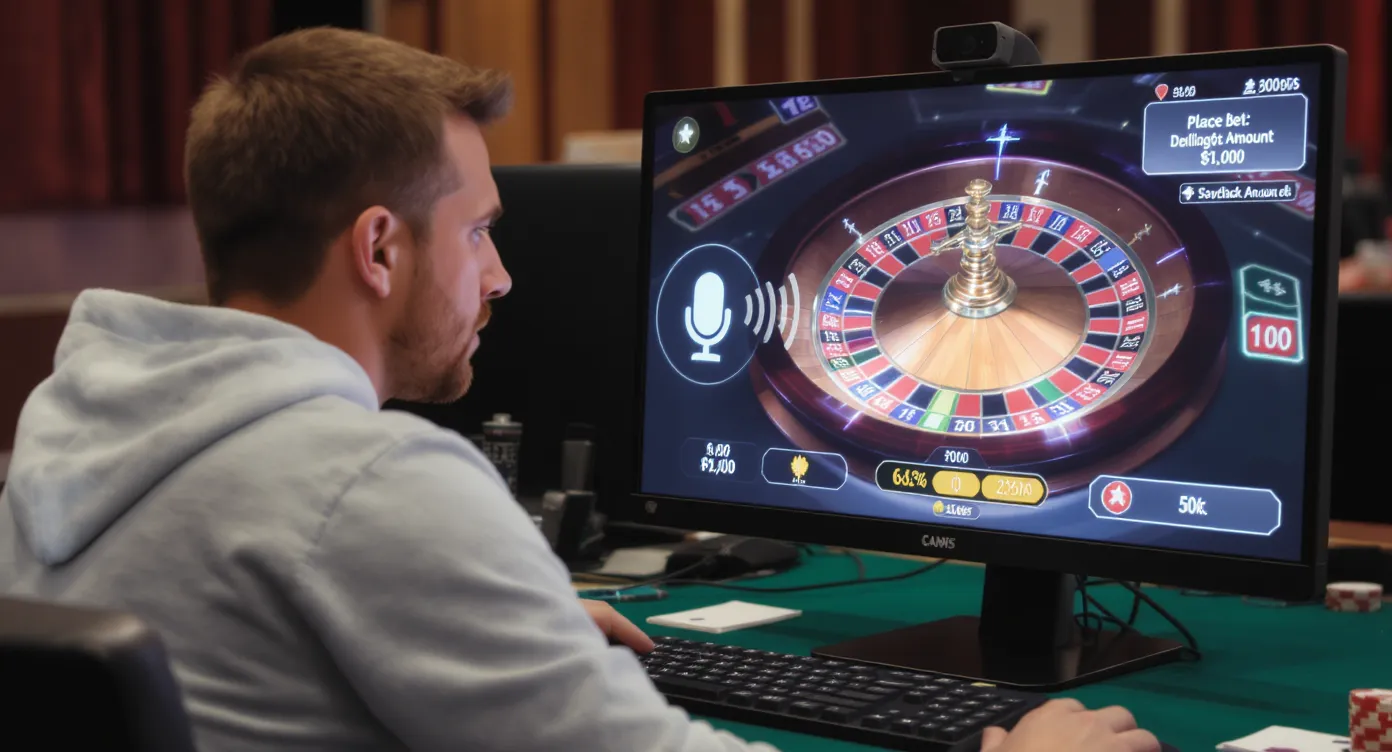
The first time a player said “Hey Dealer, put 25 on black” and the roulette wheel instantly obeyed, the live-studio chat exploded with emojis. Voice-controlled roulette is the latest experiment in blending conversational interfaces with classic table games. But for operators evaluating roadmaps and capex, the question is clear: does voice add genuine accessibility and revenue upside, or is it just another short-lived gimmick?
How Voice-Controlled Roulette Works
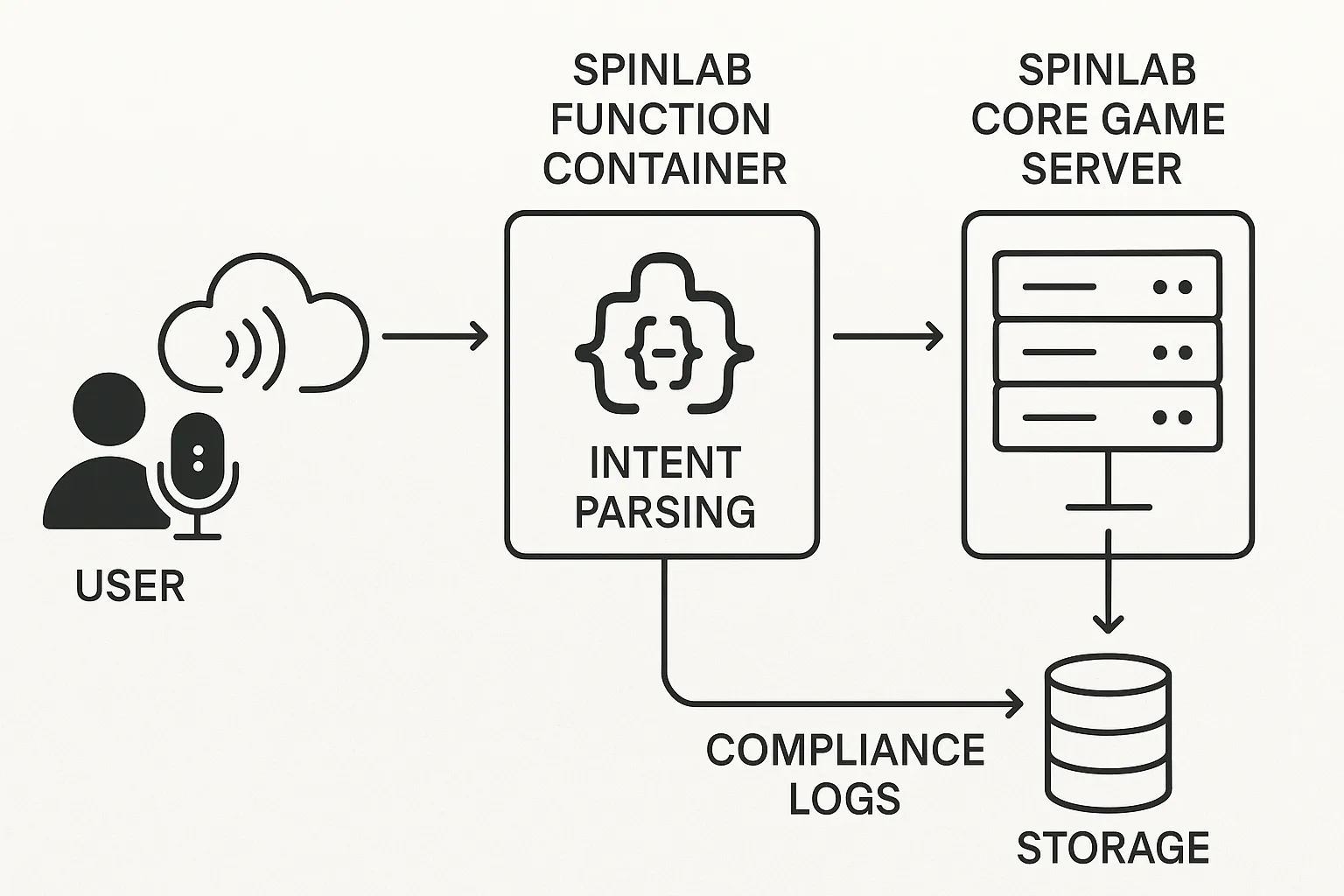
At its core, a voice-enabled table adds a speech recognition layer on top of an existing live or RNG roulette game:
- The player presses (or speaks) a wake-word such as “Hey Roulette.”
- Audio is streamed to an Automatic Speech Recognition (ASR) engine—often a cloud model like Amazon Transcribe, Google Speech-to-Text or an on-prem model for regulated markets.
- Natural-language intent parsing converts raw text into structured commands (bet type, chip value, confirmation).
- A rules engine validates stake limits, balance and table state, then triggers the standard bet placement via the casino’s API.
- A voice or text confirmation is returned, and the bet is logged for audit.
Latency targets are tight: players expect confirmation in under 800 ms, comparable to a mouse click. Anything slower and early tests show abandonment rises sharply.
Accessibility Gains: More Than Marketing Spin?
Roughly 2.2 billion people live with some form of vision impairment, according to the World Health Organization. Traditional desktop and even mobile lobbies still rely heavily on small chip icons and color contrasts that fail WCAG AA guidelines. Voice offers three clear benefits:
- Hands-free play for users with motor impairments or repetitive-strain injuries.
- Reduced reliance on precise cursor taps, aiding older demographics whose average roulette stake is already 17 % higher than the 18-34 cohort (Spinlab operator sample, Q2 2025).
- Dialogue-driven tutorials that make onboarding smoother for casual players overwhelmed by roulette’s 490+ bet permutations.
| Accessibility Feature | Primary Beneficiary | Potential Impact on GGR* |
|---|---|---|
| Voice bet placement | Visually impaired players | +7–12 % unique stakes per session |
| Spoken rule prompts | New/casual players | Lower abandonment in first 10 rounds |
| Hands-free mode | Mobile users on the go | Higher dwell time on small screens |
*Spinlab usability test, n = 860 players, July–Aug 2025.
Early pilots on two European brands show promising numbers: a 5.6 % lift in average rounds-per-session and a 14 % drop in customer-service tickets tagged “can’t place bet.” Yet causality is tricky—voice tables were also promoted with large homepage banners.
Novelty Economics: Will the Shine Wear Off?
History is littered with features that spiked KPIs for two quarters and faded (remember gesture-controlled blackjack?). Operators must weigh three novelty risks:
- Short engagement half-life – novelty effects often decay after 8–12 weeks. Tracking rolling 30-day retention is crucial.
- Training overhead – if players need tutorials, average time-to-first-wager increases. Poorly optimized flows can wipe out any uplift.
- Content fragmentation – splitting traffic across classic, VIP, and voice tables can dilute liquidity, especially for smaller brands.
Measuring Staying Power
Recommended KPIs for a valid A/B test:
- Voice vs click bet placement share after 60 days.
- Net Gaming Revenue per unique voice user vs control group.
- Support interactions per 1000 rounds (voice cohorts should show a downward trend if UX is truly easier).
Spinlab’s Real-Time Analytics module can segment these cohorts in one click, streaming intent events alongside wagers. For a deeper methodology, see our post Real-Time Analytics in iGaming.
Technology Stack: What It Takes to Go Live
Voice adds only a thin layer, but it touches latency-sensitive and regulated surfaces. Below is a minimal stack reference:
| Layer | Typical Tech | Spinlab Integration Point |
|---|---|---|
| Voice capture | Web Audio API / native mic SDK | Front-end widget via Theme Engine |
| ASR | AWS, Google, Azure, or Vosk on-prem | Optional managed connector with API keys stored in Vault |
| NLU / intent | Dialogflow, Rasa, or bespoke regex | Runs in Spinlab Function Container for low latency |
| Rules validation | Table state microservice | Reuses Spinlab Bet API & fraud hooks |
| Compliance logging | Immutable audit ledger | Built-in to Spinlab Unified Ledger |
Multilingual Complexity
Roulette is global; a typical European lobby supports at least 11 UI languages. ASR accuracy still varies widely by locale—Spanish “cuarenta y cinco al negro” mis-transcribes 7 % of the time in generic cloud models. Operators should fine-tune acoustic models using VIP call recordings (with consent) or choose region-specific engines.
Noise and Cussing Filters
Live-dealer studios are not quiet. Beam-forming mics and automatic gain control help, but profanity detection matters for broadcaster rules and brand tone. Spinlab’s content-moderation hooks can insert a post-ASR profanity filter before intents reach the game server.
Compliance and Risk Notes
- Regulatory approvals – UKGC and MGA both classify voice commands as a “user interface variation,” often requiring a change request. Lead times: 4–8 weeks.
- Auditability – regulators must be able to replay both audio and text transcripts. Encrypt at rest and keep at least 90 days.
- Problem gambling controls – voice shortcuts like “repeat bet” can accelerate loss cycles. Embed responsible-gambling prompts after X consecutive rounds.
- Data privacy – under GDPR, voice data is biometric. Obtain explicit consent and expose deletion tooling.
Implementation Timeline Example (6 Weeks)
| Week | Milestone | Key Tasks |
|---|---|---|
| 1 | Design | Define command schema, UX mockups, consent copy |
| 2 | ASR setup | Provision cloud or on-prem model, latency tests |
| 3 | API wiring | Map intent to Spinlab Bet API, error handling |
| 4 | Security | Audit logs, consent flows, WAF voice endpoints |
| 5 | QA | Functional tests, edge cases, mixed input modes |
| 6 | Soft launch | 10 % traffic, monitor KPIs, feedback loops |
For detailed traffic-split tactics, see Cashier Conversion Hacks—the same progressive rollout logic applies.
ROI Model: A Quick Scenario
Assume a mid-tier operator with 25 k daily roulette actives:
- Integration cost: USD 35 k (Spinlab Function Container, ASR credits, UI work).
- Marginal cloud ASR cost: $0.006 per 15-second clip.
- 40 % uptake at maturity, average 6 voice commands per session → 60 k calls/day → $360/day.
- If voice lifts rounds-per-session by 4 %, incremental GGR at $0.52 per round = $5200/day.
Break-even: 35 k / (5200 – 360) ≈ 7 days. Even if uplift is half, payback is under a month.
When Voice Makes Strategic Sense
Voice-controlled roulette is likely more than a gimmick when at least one of these is true:
- Your core markets have a high share of 45+ year-old players who value ergonomic improvements.
- You already invest in voice as a cross-channel brand touchpoint (e.g., Alexa sports odds, Google Assistant promos). Consistency amplifies ROI.
- You operate hybrid live-AI tables. Voice pairs naturally with AI hosts—see our deep dive Can AI Dealers Replace Live Hosts?.
Conversely, it is likely pure novelty if:
- Your lobby is slot-heavy with <10 % table share—voice investment is unlikely to move needle.
- You lack dev capacity to maintain language models; stale ASR accuracy kills UX fast.
Next Steps with Spinlab
Spinlab’s open, modular platform lets you add voice to any roulette table—live or RNG—without vendor lock-in.
- Low-latency Function Containers execute custom NLU in <120 ms.
- Unified Ledger automatically stores encrypted audio and transcripts for audit.
- Real-Time Analytics dashboards segment voice vs click cohorts out of the box.
Ready to test whether voice boosts accessibility and NGR for your tables? Book a 30-minute strategy call with our solutions team and get a demo environment spun up in 48 hours.
SP88bet? It’s in the mix, can’t really fault it, can’t really rave either. Worth exploring yourself: sp88bet.
Hey there! Just spent some time on club91game. It’s got some cool stuff, a real vibe. Give it a whirl when you’ve got some free time, you might find something you like. Here’s the link: club91game
Hey, just downloaded the Bet200apk app – seems pretty slick so far. Easy to navigate and the odds look decent. Hoping for some wins! Check it out here bet200apk you might like it too.