

For a new casino, the game library is one of the first things players judge. If the lobby feels thin, outdated, slow, or irrelevant to the market, acquisition spend gets wasted before your bonus engine, CRM, or brand story has a chance to work.
That is why game aggregation is not just a technical shortcut. It is a launch strategy. The right game aggregation features help a new online casino go live with a credible catalog, add new releases faster, manage provider rules, support promotions, and learn which games actually drive retention.
The challenge is that many new operators evaluate aggregators by asking one basic question: “How many games do we get?” A better question is: “How easily can we use the right games, in the right markets, with the right controls?”
Below is a practical checklist of the best game aggregation features new casinos should prioritize before signing with a casino software provider or choosing a white label casino platform.
Why game aggregation matters so much for new casinos
A game aggregator connects your iGaming platform to multiple game studios through one integration layer. Instead of integrating each provider separately, your casino can access slots, table games, live casino games, crash games, instant win games, and sometimes specialty or casino original games through a unified setup.
For new casinos, this matters because speed and focus are everything. A lean team should not spend months negotiating, integrating, testing, and maintaining dozens of direct provider connections before launch. Aggregation lets the brand focus on positioning, acquisition, payments, compliance, and player experience.
If you need the technical foundation first, Spinlab’s guide to casino game aggregation and what to check explains how catalog normalization, sessions, wallet callbacks, and jurisdiction controls work behind the scenes.
The best aggregation layer should help you launch quickly, but it should also give you enough control to avoid becoming a generic casino with a huge but poorly organized lobby.
1. Provider coverage that fits your launch market
Provider quantity is useful, but provider relevance is more important. A new casino does not need every possible studio on day one. It needs a balanced portfolio that matches the expectations of its first target markets.
For example, a slot-first brand may need strong access to high-performing video slots, jackpot titles, and new releases from recognized studios. A crypto casino may need fast, mobile-friendly games, instant-win titles, crash games, and original games that feel native to crypto players. A live casino-focused brand needs reliable live dealer coverage, localized tables where available, and clear information about which providers are approved for the intended markets.
The best game aggregation features make it easy to see provider availability by region, game type, language, currency, and device. New casinos should ask whether the aggregator supports the categories they need now, while leaving room to expand later.
A strong launch catalog usually includes a mix of recognizable slots, live casino games, table games, high-volatility games, casual instant games, and differentiated content. For a broader planning view, this casino game portfolio strategy for new brands can help operators think beyond raw game count.
2. Clean catalog normalization and metadata
Game aggregation is only useful if the catalog is manageable. Without clean metadata, your team may struggle to build categories, highlight new launches, filter unavailable titles, or create campaigns around specific player preferences.
A good aggregation layer standardizes provider data into a clean format. That includes names, thumbnails, game IDs, provider names, game categories, device support, languages, volatility where available, RTP versions where available, paylines, themes, and launch status.
This sounds operational, but it has a direct impact on revenue. Better metadata helps your team build smarter lobbies, create more relevant collections, and avoid promoting games that are not available to a particular player.
New casinos should look for a backoffice experience that makes catalog management simple. If every content update requires developer support, the team will move slowly and miss promotional windows.
3. Fast launch and provider activation workflows
Speed to market is one of the main reasons new operators choose a turnkey casino solution. But “we have the games” does not always mean “you can launch them immediately.” Provider activation can involve commercial approval, market restrictions, certification checks, wallet testing, bonus compatibility, and production sign-off.
The best game aggregation setup gives operators visibility into activation status. Your team should be able to understand which providers are live, pending, restricted, or waiting on configuration.
This is especially important for new casinos with pre-launch marketing already in motion. If affiliates, streamers, or paid campaigns promote a certain game category and the catalog is not ready, the brand loses trust at the exact moment it needs momentum.
Ask whether the platform supports sandbox testing, demo launch testing, provider-by-provider activation, and staged rollouts. A modular iGaming platform should let you start lean, then add content as commercial and compliance requirements are met.
4. Jurisdiction, compliance, and restricted-content controls
Game availability is not the same in every market. Studios may restrict certain jurisdictions, regulators may have specific technical requirements, and operators may need to prevent access based on player location, account status, or licensing scope.
A useful aggregator should support clear jurisdiction controls. At minimum, the casino platform should help prevent games from being shown or launched where they should not be available. This reduces operational risk and protects the player experience.
Regulated operators should also understand how game testing, reporting, and technical standards apply in their markets. The UK Gambling Commission’s remote gambling and software technical standards are one example of how detailed technical expectations can become in mature jurisdictions. Requirements vary by market, so operators should always take legal and compliance advice before launch.
For new casinos, the key point is simple: game aggregation should not create a compliance blind spot. It should make market control easier.
5. Wallet, payment gateway, and multi-currency compatibility
Game aggregation does not replace a payment gateway, but it must work smoothly with the casino wallet. Every real-money game session depends on accurate balance checks, bets, wins, refunds, rollbacks, and session closure.
This becomes even more important for multi-currency and crypto-ready casinos. If your online casino supports fiat and crypto payments, the gaming layer must interact cleanly with balances, exchange handling, settlement logic, and responsible limits. Poor wallet integration can create reconciliation issues, delayed sessions, or support tickets that damage trust.
New operators should check whether the platform supports the currencies they need, whether game sessions are stable on mobile, and whether failed transactions are logged clearly for operations teams.
Spinlab’s platform is built with crypto and fiat payment support, multi-currency capabilities, crypto onramp solutions, and merchant custodial wallets, which makes wallet compatibility a core part of the broader casino infrastructure rather than an isolated feature.
| Game aggregation feature | What to check before launch | Why it matters for new casinos |
|---|---|---|
| Provider coverage | Relevant studios, game types, market availability | Helps the lobby feel credible from day one |
| Catalog metadata | Categories, images, device support, RTP where available | Makes merchandising and filtering easier |
| Jurisdiction controls | Geo rules, restricted games, provider availability | Reduces compliance and operational risk |
| Wallet compatibility | Bets, wins, refunds, rollbacks, multi-currency support | Protects player balances and support workflows |
| Backoffice controls | Enable, disable, sort, tag, and feature games | Lets lean teams manage content without developers |
| Analytics | Game-level GGR, sessions, retention, conversion | Helps operators improve the lobby with data |
6. Lobby merchandising and personalization tools
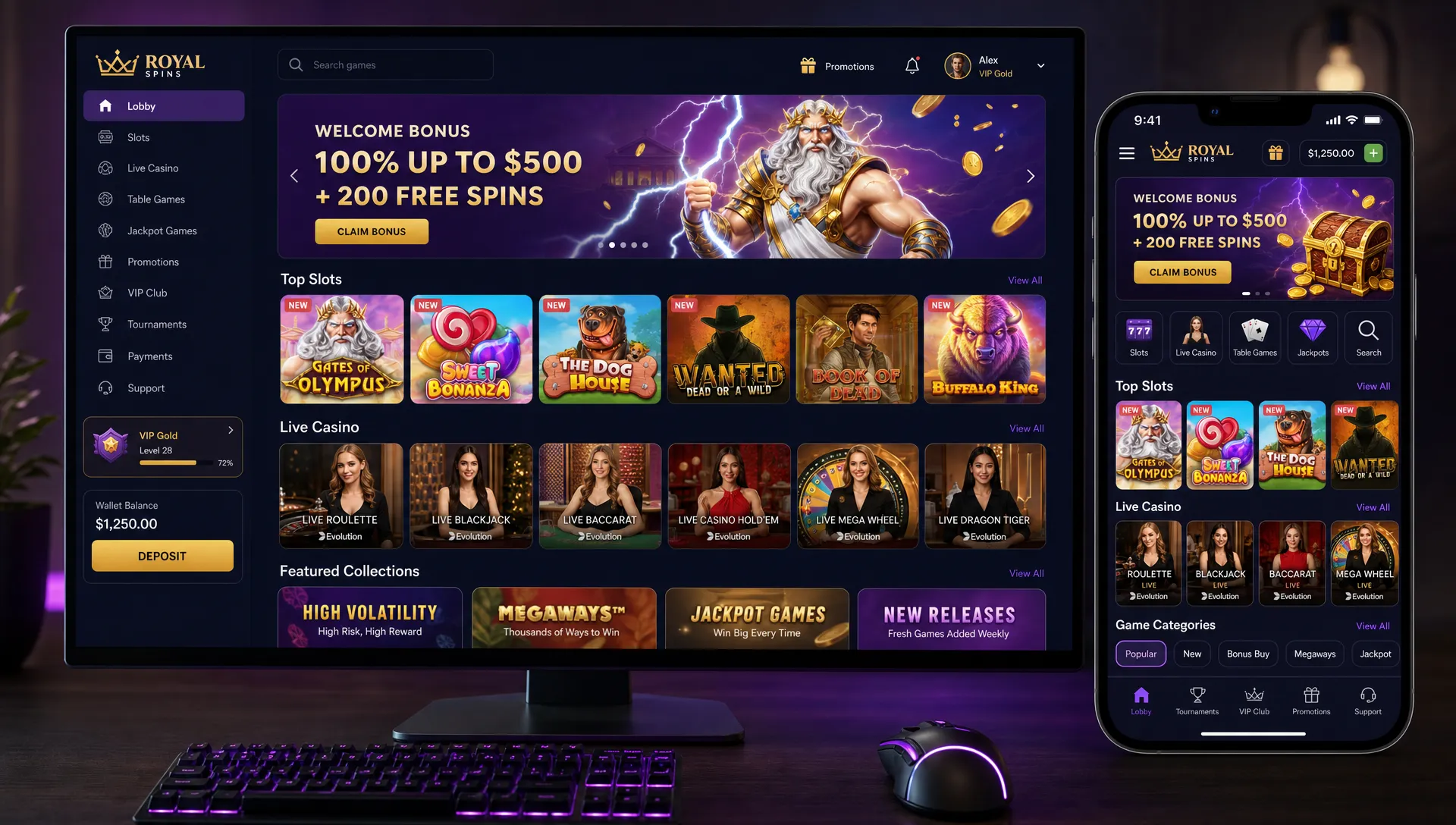
A large catalog can become a problem if players cannot find the right game quickly. New casinos often launch with hundreds or thousands of titles, then display them in generic categories such as “Popular,” “New,” and “Slots.” That is not enough.
The best game aggregation features support lobby merchandising. Operators should be able to create collections, tag games by theme, promote seasonal titles, highlight new provider releases, and adjust rankings based on market, device, or player segment.
Personalization becomes more valuable as traffic grows. A returning slot player should not necessarily see the same homepage as a live blackjack player. A mobile-first casual player may respond better to instant games and low-friction titles, while a high-volatility player may prefer feature-rich slots.
For operators ready to optimize beyond basic categories, Spinlab’s article on game lobby personalization and slot ranking explains how ranking decisions can influence gross gaming revenue and retention.
7. Bonus and promotion compatibility
Games and bonuses are tightly connected. A welcome bonus, free spins campaign, cashback offer, tournament, or wager-based promotion only works if the platform can apply rules correctly across the game catalog.
New casinos should confirm whether aggregated games can be included or excluded from bonuses at a granular level. Some providers may restrict bonus usage, some games may need different contribution rates, and some promotions may only apply to certain categories.
Strong promotion compatibility should support rules such as eligible games, provider exclusions, wagering contribution, free spin availability, max bet limits, country limits, and player segment targeting. These controls protect margin and reduce disputes.
This is also where game metadata matters again. If the catalog is poorly structured, bonus setup becomes manual and error-prone. If the catalog is well organized, promotions can be launched faster and measured more accurately.
8. Real-time analytics by game, provider, and player segment
New casinos need feedback quickly. Waiting weeks to understand which games convert, retain, or underperform is too slow, especially when marketing budgets are tight.
A strong aggregation setup should feed analytics into the wider casino backoffice. Operators should be able to monitor game launches, sessions, bets, wins, GGR, bonus usage, player retention, provider performance, device performance, and market-level trends.
The goal is not just reporting. The goal is action. If a new slot is getting high clicks but low real-money play, it may have weak positioning, poor loading performance, or a mismatch between player expectations and game mechanics. If a live casino provider performs well in one market but poorly in another, the lobby can be adjusted accordingly.
Real-time analytics are especially valuable for lean teams because they reduce guesswork. Instead of relying only on provider reputation, operators can make decisions based on actual player behavior.
9. Fraud prevention and risk visibility
Game aggregation should also support safe operations. Fraud risks can appear around bonus abuse, multi-accounting, suspicious betting behavior, chargebacks, payment abuse, and attempts to exploit technical edge cases.
The aggregator itself is only one part of the risk stack, but the casino platform should connect game activity with fraud prevention, KYC, AML, payments, and account controls. When game events and wallet events are visible together, operations teams can investigate issues faster.
This is especially important for crypto-ready solutions, where fast deposits and withdrawals can attract both legitimate high-intent players and bad actors. Operators need strong logs, clear transaction histories, and the ability to review suspicious patterns before they become major losses.
A good rule for new casinos is to evaluate aggregation features together with risk tooling. A huge game catalog is not useful if the platform cannot help protect bonuses, balances, and compliance workflows.
10. Mobile performance and session reliability
Most new casino traffic is mobile-heavy, especially when acquisition comes from affiliates, social channels, communities, and messaging apps. Game aggregation should therefore be evaluated on mobile experience, not just desktop demos.
Players expect games to load quickly, resize correctly, keep sessions stable, and return to the lobby without friction. If a game fails to open, freezes, or loses session state, the player may not contact support. They may simply leave.
Operators should test launch flows on real devices, across common browsers, with both Wi-Fi and mobile data. They should also check how the platform handles interrupted sessions, provider downtime, slow game loading, and wallet rollback scenarios.
For a new casino, reliability is a brand signal. Players may forgive a limited launch catalog if the experience feels smooth. They are less likely to forgive failed deposits, broken games, or missing balances.
11. Backoffice controls built for lean teams
Many new casinos start with a small team. That means the backoffice must be simple enough for operators, marketers, and support staff to use without constant developer involvement.
Useful game aggregation controls include enabling or disabling games, creating categories, changing sorting rules, adding tags, updating thumbnails where allowed, reviewing provider status, checking failed launches, and filtering the catalog by market or device.
A Shopify-like user experience can be a real advantage for new operators because it reduces training time and operational dependency. Spinlab is designed as an all-in-one modular platform with a customizable backoffice admin panel, integrated game aggregation, analytics, payments, KYC and AML workflows, and fraud prevention tools, which helps new teams manage core casino operations from one environment.
The best feature is not always the most advanced one. Sometimes it is the one your team can actually use every day.
12. Flexible APIs and room for differentiation
Aggregation helps new casinos launch quickly, but it should not trap the brand inside a rigid template. As the casino grows, the operator may want custom front-end experiences, unique game collections, special tournament formats, custom bonus journeys, or exclusive casino original games.
This is where open API integration and modular platform design matter. A flexible iGaming platform lets operators start with proven infrastructure, then differentiate over time.
New casinos should ask whether the aggregation layer can support custom lobbies, external analytics, affiliate tracking, CRM triggers, and future game integrations. They should also consider whether the provider can support custom-designed original games if the brand wants exclusive content later.
In competitive markets, differentiation rarely comes from having the same 3,000 games as everyone else. It comes from packaging, positioning, promotions, user experience, and exclusive reasons to return.
How new casinos should prioritize game aggregation features
If you are evaluating a white label casino platform or casino software provider, start with the features that reduce launch risk first. A beautiful catalog means little if market controls, wallet flows, or provider approvals are unclear.
A practical priority order looks like this:
- Confirm relevant provider and game coverage for your first target market.
- Validate wallet, payment, crypto, and multi-currency compatibility.
- Review jurisdiction controls, provider restrictions, and compliance workflows.
- Test mobile launch speed, session stability, and error handling.
- Check backoffice usability, analytics, bonus rules, and merchandising controls.
Once those foundations are strong, you can focus on personalization, exclusive content, advanced CRM, tournaments, and deeper optimization.
Common mistakes to avoid
The biggest mistake is buying game count instead of game quality. A new casino with 10,000 poorly organized titles can perform worse than a focused casino with a clear, relevant, fast-loading lobby.
Another mistake is ignoring the operational burden of content management. If your team cannot sort, filter, promote, disable, or analyze games easily, the catalog becomes a maintenance problem.
New operators should also avoid treating compliance as something to fix later. Game restrictions, provider approvals, KYC and AML workflows, and market rules should be part of the platform decision from the beginning.
Finally, do not assume that the same lobby works for every audience. Crypto players, slot enthusiasts, live casino players, casual mobile users, and VIP segments often respond to different content and navigation patterns.
Frequently Asked Questions
What is game aggregation in an online casino? Game aggregation is the process of connecting multiple casino game providers through one integration layer, allowing an operator to access many slots, live casino games, table games, and instant games without separate direct integrations for every studio.
What game aggregation features matter most for a new casino? New casinos should prioritize relevant provider coverage, clean catalog metadata, jurisdiction controls, wallet compatibility, mobile reliability, bonus compatibility, real-time analytics, and easy backoffice management.
Is a bigger game catalog always better? Not always. A large catalog can help, but only if it is relevant, well organized, compliant, and easy to navigate. New casinos usually get better results from a balanced portfolio with strong merchandising than from an oversized generic lobby.
How does game aggregation affect bonuses? Aggregation affects which games can be included in free spins, wagering offers, tournaments, cashback, and other promotions. The platform should allow clear eligibility rules, provider exclusions, contribution rates, and market-specific restrictions.
Can game aggregation work with crypto payments? Yes, if the casino platform supports crypto-ready wallet flows, multi-currency balances, and reliable game session accounting. The aggregation layer must interact cleanly with bets, wins, refunds, and rollbacks.
Build a stronger casino launch with the right aggregation layer
The best game aggregation features for new casinos are the ones that help you launch quickly without losing control. Provider coverage matters, but so do wallet reliability, compliance controls, analytics, mobile performance, and backoffice usability.
Spinlab offers an all-in-one, modular iGaming platform for building, launching, and scaling online casinos, with integrated game aggregation, crypto and fiat payment support, KYC and AML compliance, fraud prevention, real-time analytics, bonus and affiliate tools, and a customizable backoffice. If you want a flexible white label casino platform built for fast onboarding and lean operations, Spinlab gives new operators a practical foundation for growth.