

Starting an online casino? First, tame the budget monster
Your spreadsheet probably already lists hundreds of line items—from licence fees to streamer sponsorships. But grouping every cost into a single column hides the most strategic question you must answer before launch:
Which expenses should you lock in up-front (CapEx) and which can you leave flexible month-to-month (OpEx)?
Getting that split wrong can sink even well-funded ventures. Get it right and you’ll preserve cash, impress investors, and keep the door open for rapid pivots when regulation or player tastes change. In this guide we demystify CapEx vs OpEx for iGaming startups, attach real numbers, and show how a modern white-label platform like Spinlab turns yesterday’s fixed costs into tomorrow’s variable gains.
CapEx vs OpEx in one minute
-
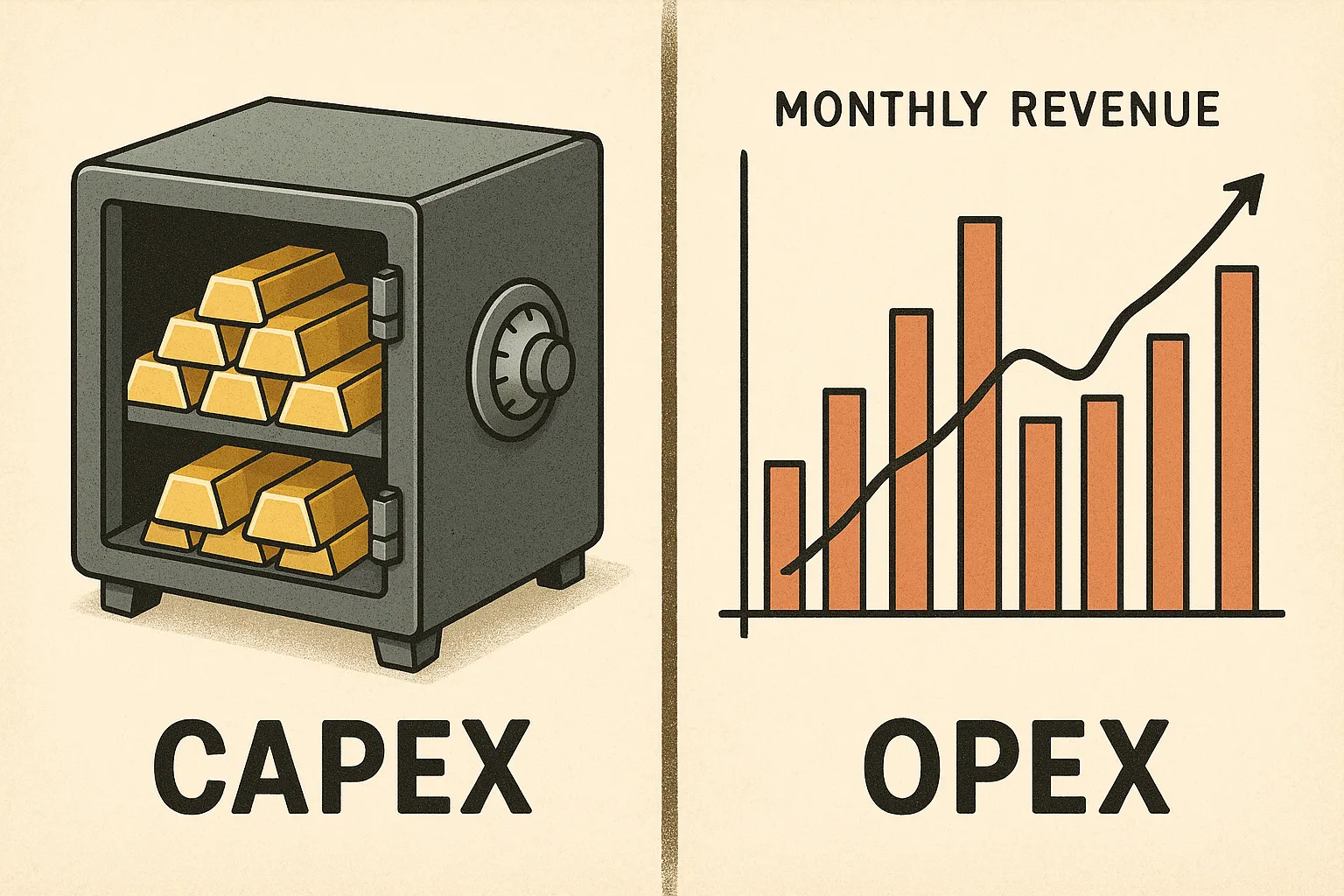
Capital Expenditure (CapEx): One-time or infrequent purchases that sit on your balance sheet and depreciate over years. Think platform source-code licences, dedicated hardware, or multi-year game contracts with hefty minimum guarantees.
-
Operating Expenditure (OpEx): Recurring costs you expense in the period they’re incurred. Examples include revenue-share fees, hosting bills, PSP commissions, salaries, and bonus budgets.
Why the distinction matters:
- Cashflow – CapEx drains cash long before revenue rolls in. OpEx spreads the hit over time.
- Tax treatment – Depreciation rules differ across jurisdictions; misclassification can invite audits.
- Investor optics – VCs love asset-light models. A lean CapEx plan signals agility and faster break-even.
Classic CapEx items for a casino startup (and 2025 price tags)
| Expense | Typical Cost | Why it was CapEx |
|---|---|---|
| Platform source licence (self-hosted) | $150 k–$500 k | One-off purchase, perpetual or multi-year |
| Server hardware & DC setup | $80 k–$200 k | 24/7 uptime demands redundant clusters |
| Game provider integration fees | $30 k–$100 k per studio | Flat SDK fee before any GGR flows |
| Regulatory licence bonds (Malta, Curaçao, Isle of Man) | $25 k–$200 k | Paid once, locked as collateral |
| Initial compliance tooling (KYC/AML engines) | $20 k–$60 k | On-prem deployments billed up-front |
| Brand & design package | $10 k–$40 k | One-off creative project |
Add conservative estimates and you’re staring at $350 k–$1 million before you accept your first deposit.
Why that model is fading
- Regulatory volatility – Germany’s GlüStV overhaul erased entire revenue streams in 2023. Fixed assets tied to one market became liabilities overnight.
- Tech obsolescence – Real-time analytics, crash games, and crypto on-ramps are table stakes in 2025. Hard-coded stacks age out in 12–18 months.
- Cloud economics – AWS, GCP, and Azure made hardware CapEx feel archaic; iGaming is following SaaS playbooks.
The modern OpEx mix (revenue-share and pay-as-you-grow)
| Category | Billing Model | Benchmark % of GGR |
|---|---|---|
| Platform fee (white label) | Rev-share (10–20 %) | 12 % avg. for crypto-ready stacks |
| Game providers | Rev-share (0–10 % per studio) | Net 7–8 % blended |
| Payment processing | % of transaction | 0.5 % (crypto) – 3 % (cards) |
| Cloud hosting & CDN | Usage-based | 1–2 % |
| KYC/AML API calls | Per verification | 0.50–2.50 USD per user |
| Marketing & bonuses | Variable | 20–40 % of NGR at launch |
| Support & staffing | Salaries or BPO contracts | 8–15 % |
OpEx lets you scale in sync with revenue. If Germany pauses slots tomorrow, your infrastructure bill shrinks next month instead of haunting you for five years.
Turning CapEx into OpEx: the Spinlab approach
Spinlab’s Fullhouse platform was engineered to flatten the traditional CapEx curve. Here’s how:
- Shopify-like SaaS licence – Pay a setup fee starting at $5 k and a revenue share from day one. No six-figure source code purchase.
- Game marketplace – Unlock Pragmatic, Hacksaw, or Evolution with a click. Fees stay variable and provider minimums disappear. (Related read: 15 Essential Features Every White Label Casino Platform Should Offer)
- Integrated payments – Fiat, crypto, and local APMs arrive pre-negotiated; you piggy-back on Spinlab’s volume tiers, turning gateway deposits from CapEx contracts into per-transaction OpEx. Dive deeper in our piece on Crypto vs Fiat Payment Gateways.
- Compliance as code – KYC, AML, and source-of-funds rules update weekly—no paid consultancy projects each time the UKGC tweaks guidance.
- Cloud-native hosting – Kubernetes clusters auto-scale; you fund compute only when players are spinning.
Real-world impact: Fullhouse Casino numbers
Before switching to Spinlab, Fullhouse budgeted $420 k in CapEx for 2024. Post-migration their initial outlay shrank to $27 k (setup + licence bond adjustments). Within 18 months they hit 1 million MAU on an OpEx model you can dissect in our case study.
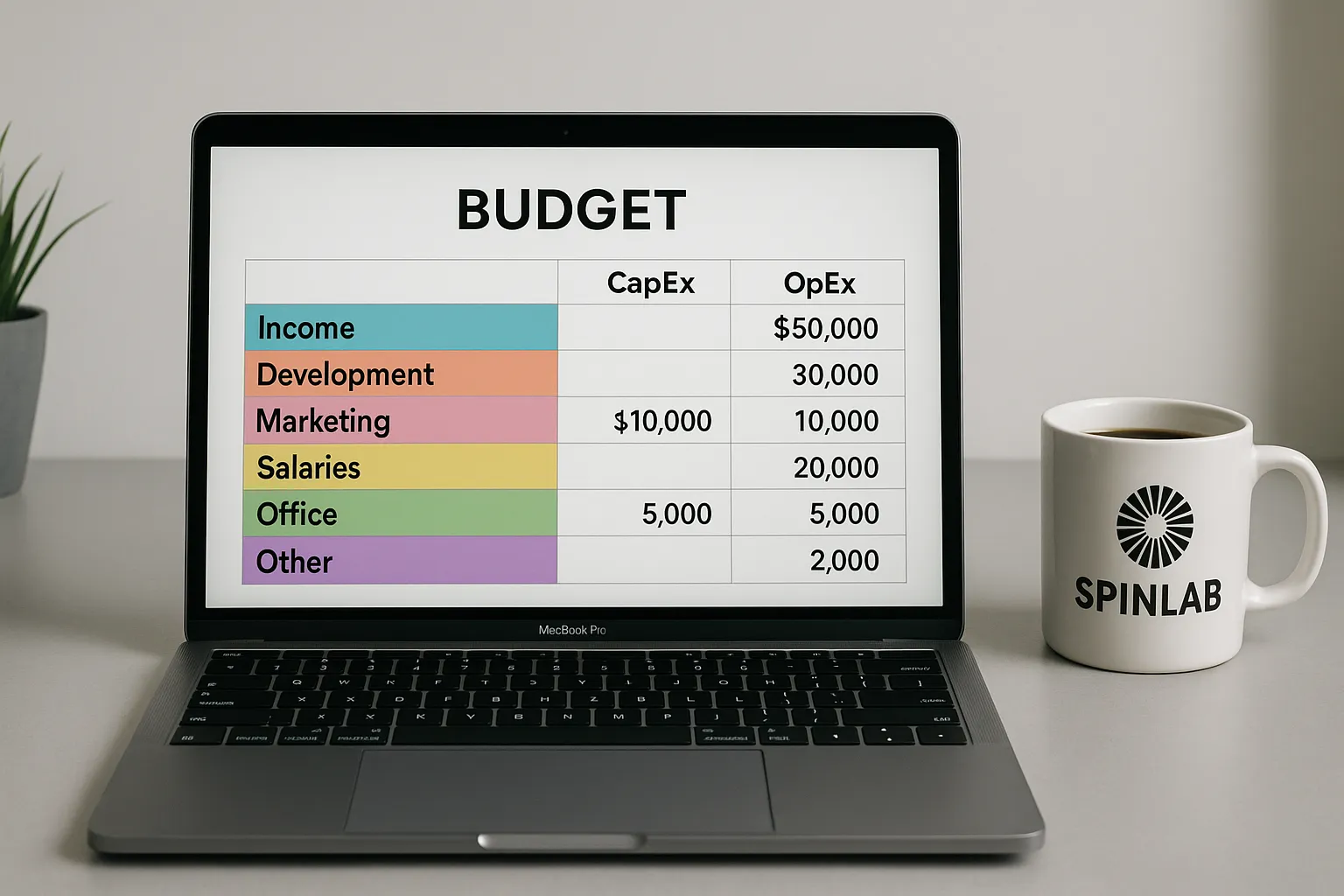
Sample budget worksheet (12-month forecast)
| Line Item | Month 1 | Months 2–12 (avg.) | Notes |
|---|---|---|---|
| Spinlab platform rev-share | – | 12 % of GGR | Scales with revenue |
| Game content rev-share | – | 7 % of GGR | Blended rate |
| Payment fees | – | 2.1 % of deposits | Mix of card & crypto |
| KYC checks | $4 k | $1 k | 2 k verifications month 1 |
| Marketing + bonuses | $25 k | $40 k | Aggressive growth curve |
| Staff (5 FTE) | $15 k | $15 k | Operations & support |
| Cloud & CDN | $2 k | $3 k | Autoscaling |
| Regulatory renewals | $12 k | – | Licence application fees |
CapEx outside this table? Maybe laptops and office chairs—items that won’t derail cashflow if revenues dip.
Three budgeting scenarios
-
Bootstrapped indie brand
- CapEx target: <$50 k
- Lean team, heavy use of revenue-share for all vendors
- Break-even aim: 6–8 months on 35 % NGR margin
-
VC-backed challenger
- CapEx target: $100 k–$200 k (licences in three jurisdictions, streamer studio build-out)
- OpEx dominated by marketing (50 %+ of NGR during hyper-growth)
- KPI focus: market share grab, not early profit
-
Land-based casino going online
- CapEx already sunk in brand + licences; main goal is rapid digital ROI
- Hybrid model: existing data-center assets plus SaaS platform for games & payments
- CapEx reserved for omnichannel loyalty tech
Spinlab slots neatly into all three by letting you dial features on or off—a true modular expense profile.
Hidden costs founders often underestimate
- Payment float – You may need to prefund PSP or crypto hot wallets. Forecast at least 3–5 days of expected turnover.
- Progressive jackpot reserves – Some regulators insist you escrow the top prize amount.
- Player verification backlog – If KYC fails, manual reviews add labour cost that scales with growth. Our real-time analytics guide shows how automation trims this.
- Currency volatility – Stablecoins curb risk, but holding BTC as house funds can distort P&L.
- Content localisation – Translators, voice-over for live dealers, and UX tweaks can reach five figures per language.
Accounting for these as contingency OpEx (5–10 % of budget) keeps surprises from blowing up the runway.
CapEx vs OpEx decision matrix
| Question | Lean toward CapEx if… | Lean toward OpEx if… |
|---|---|---|
| Regulatory certainty | You hold a multi-year licence in a stable market | You’re entering emerging or fluid jurisdictions |
| Tech roadmap | You have proprietary features that differentiate brand | You value speed-to-market over unique code |
| Cash position | You just closed a large equity round | You’re bootstrapping or preserving dilution |
| Control appetite | You want full source-code ownership | You’re comfortable with SLA-driven partnerships |
Most 2025 entrants land in the OpEx column on at least three of these four axes.
Five tips to keep budgets sane in 2025
- Negotiate rev-share tiers: As GGR grows, your take-rate should climb. Spinlab offers degressive slabs—ask for them.
- Automate retention early: Real-time bonuses cost less than re-acquisition campaigns. Read how in our analytics article.
- Separate marketing wallet: Ring-fence promo funds so ROI is transparent and spend doesn’t bleed into operations.
- Use open APIs: Need a sportsbook later? Integrate without fresh CapEx. Spinlab’s headless endpoints future-proof you.
- Run war-games: Model a 30 % revenue dip. Does your OpEx scale down fast enough? If not, renegotiate minimum guarantees.
Key takeaways
- CapEx drains runway and limits pivots; OpEx flexes with revenue.
- White-label SaaS platforms like Spinlab convert hardware, game, and compliance spend into digestible revenue-share.
- A realistic 12-month OpEx plan must include payment float, KYC overflow, and localisation.
- Investors favour asset-light casinos that can launch in weeks, not years.
- The smartest founders treat CapEx as a last resort—everything else is a service.
Ready to stress-test your own numbers? Book a 30-minute budget workshop with our solutions team and walk away with a tailor-made CapEx/OpEx model—no strings attached.
Your balance sheet (and your future CFO) will thank you.