

If you run an online casino, Core Web Vitals are not just an SEO checkbox. They influence deposit conversion, retention, support volume, and even how regulators view your player protections. As of 2026, Google evaluates page experience primarily through three Core Web Vitals measured on real users, at the 75th percentile, on mobile. Those are the signals most casino sites miss when heavy lobbies, third‑party scripts, and game iframes collide with real‑world networks.
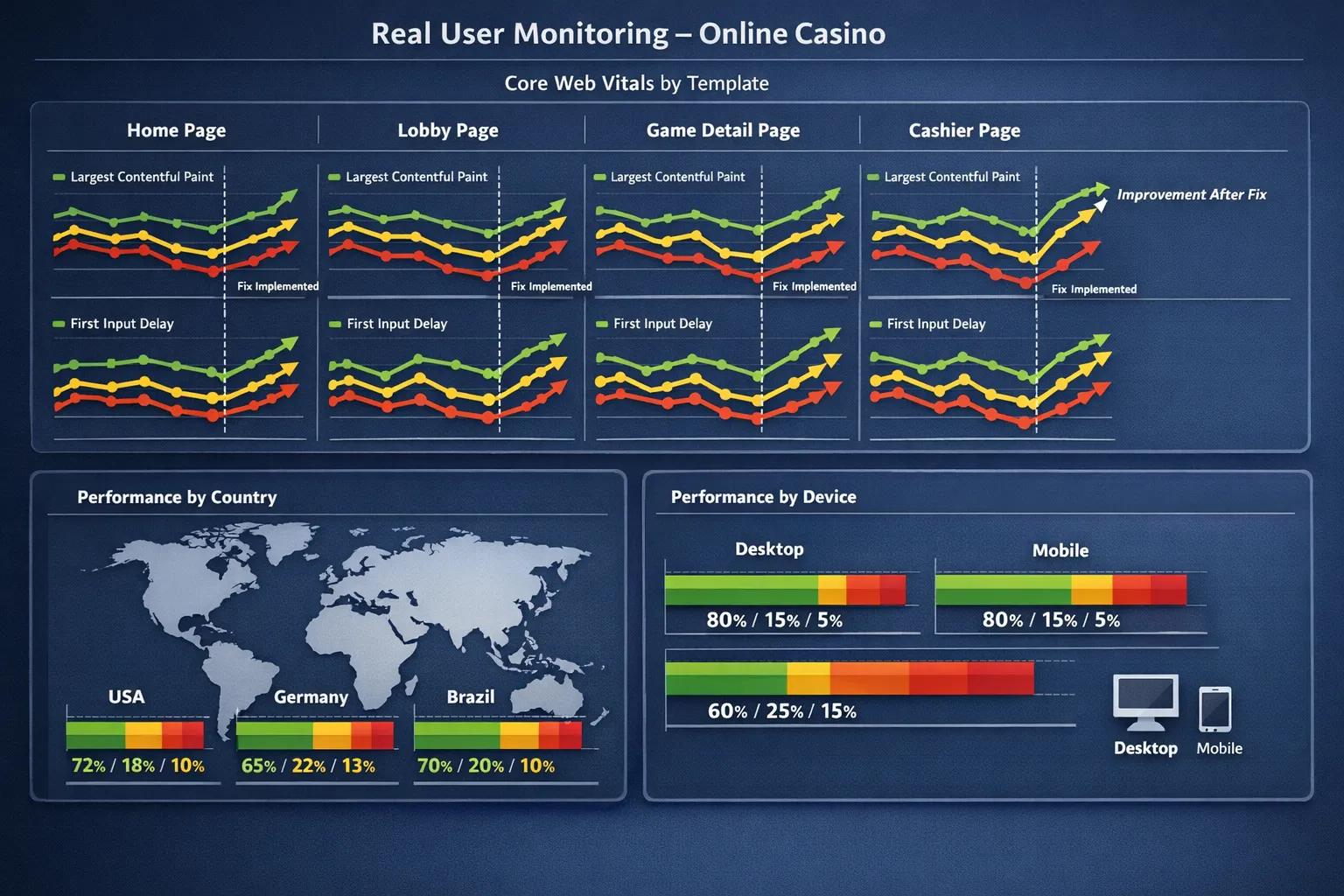
Core Web Vitals in 2026, what they are and the thresholds
| Metric | What it measures | Good | Needs improvement | Poor |
|---|---|---|---|---|
| Largest Contentful Paint (LCP) | Time to render the main content, usually hero image or heading | ≤ 2.5 s | 2.5 s to 4.0 s | > 4.0 s |
| Interaction to Next Paint (INP) | Overall responsiveness to user input across the page | ≤ 200 ms | 200 ms to 500 ms | > 500 ms |
| Cumulative Layout Shift (CLS) | Visual stability during load and interaction | ≤ 0.10 | 0.10 to 0.25 | > 0.25 |
Notes for iGaming teams:
- INP replaced FID in 2024, so focus on end‑to‑end responsiveness, not just the first input.
- Field data at the 75th percentile, on mobile, is what matters for Search. Lab tools help you debug but do not replace real‑user monitoring.
Why casino sites struggle with CWV
Online casinos are a perfect storm for performance issues. Common offenders include:
- Heavy lobbies filled with large slot tiles, live counters, animation, and carousels.
- Third‑party scripts for affiliates, analytics, A/B testing, PSPs, chat, and compliance overlays.
- Game detail pages that fetch manifests, art, and iframes late, then shift the layout.
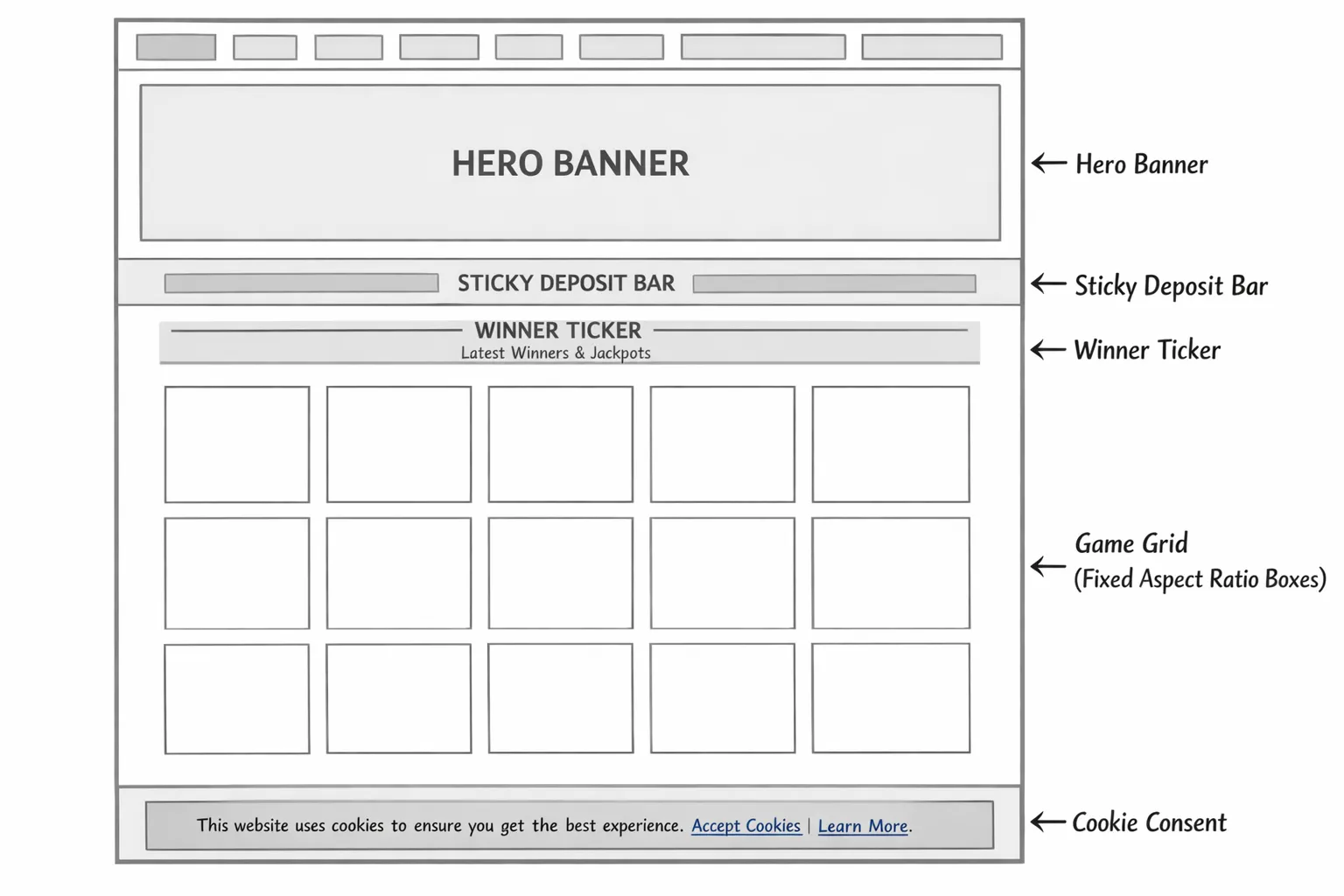
- Sticky banners, age disclaimers, cookie consent, and winner tickers that move content after first paint.
- Live streaming on game pages and WebGL slot engines that consume main‑thread time and hurt INP.
The good news is that casino templates are predictable. If you set budgets per template, then fix the top regressions, CWV improves fast.
Template‑level performance budgets for casinos
Use these pragmatic targets to guide engineering, SEO, and design reviews. They are realistic for modern iGaming stacks.
| Page template | LCP target | INP target | CLS target | Typical pitfalls to avoid |
|---|---|---|---|---|
| SEO blog and guides | ≤ 1.8 s | ≤ 150 ms | ≤ 0.05 | Oversized hero images, unstyled newsletter embeds, slow third‑party widgets |
| Marketing home and promos | ≤ 2.0 s | ≤ 150 ms | ≤ 0.10 | Auto‑rotating carousels, late web fonts, shifting CTAs |
| Slot lobby and categories | ≤ 2.5 s | ≤ 200 ms | ≤ 0.10 | Infinite grids without virtualization, live badges that mutate layout, heavy client rendering |
| Game detail page | ≤ 2.5 s | ≤ 200 ms | ≤ 0.10 | Late iframe insertions, manifest fetches on click, no poster images |
| Cashier and KYC | ≤ 2.5 s | ≤ 150 ms | ≤ 0.05 | PSP scripts booting synchronously, DOM reflows during validation |
For landing page UX that balances conversion with speed, see our guide on high‑performing casino landing pages.
LCP, how casino sites can win it
Your LCP element is usually the hero image or primary heading on home, promo, and game‑detail pages. On lobbies, it is often the first fold of slot tiles.
Do this first on every template:
- Serve modern formats and right‑sized images. Prefer AVIF or WebP, responsive srcset, and correct width and height.
- Prioritize the hero. Use fetchpriority and preload.
Example for a hero image:
<link rel="preload" as="image" href="/img/hero.avif" imagesrcset="/img/hero-720.avif 720w, /img/hero-1080.avif 1080w" imagesizes="100vw">
<img src="/img/hero-1080.avif" alt="Progressive jackpot banner" width="1080" height="640" fetchpriority="high" />
- Trim render‑blocking CSS. Inline only critical CSS for the above‑the‑fold, defer the rest.
- Preconnect early to domains that matter, for example your CDN and the game asset host.
<link rel="preconnect" href="https://assets.yourcdn.com" crossorigin>
<link rel="preconnect" href="https://games.cdn-provider.example" crossorigin>
- Server‑side render the lobby shell so the first fold paints without waiting for client hydration.
- Cache smartly. Use CDN caching and an HTML edge cache for anonymous pages. Avoid cache‑busting query strings on static assets.
If you compile slot engines to WebAssembly, you can materially reduce bundle size and time‑to‑interact on detail pages. See our WebAssembly slot engine benchmarks.
INP, responsiveness in a lobby full of scripts
INP punishes pages that block the main thread during real interactions, not just onload. Casino lobbies and cashiers are risky because they perform heavy work after taps and clicks.
Practical INP fixes that work on casinos:
- Audit long tasks. Break up anything over 50 ms using requestIdleCallback, scheduler.postTask, or by chunking loops.
- Virtualize lists. Only render visible slot tiles plus a small buffer. Use IntersectionObserver to hydrate offscreen tiles.
- Move work off the main thread. Heavy JSON parsing, bonus rules, image decoding, and RTP math belong in Web Workers. If you have WebGL or physics, OffscreenCanvas (where supported) can help.
- Make event handlers lean. Inline handlers should schedule work, not perform it. Mark passive listeners where appropriate.
- Kill noisy polling. Replace per‑tile setInterval calls with a single, debounced scheduler. Consider server‑pushed updates batched at a safe cadence.
- Use priority hints. Fetch manifests and promo JSON at low priority, elevate only what impacts the current interaction.
For animation heavy pages, these frontend animation optimizations help you keep frame budgets under control.
CLS, remove the visual jitters
Layout stability issues are common on casinos because so many elements arrive late. Focus on predictable sizing.
- Reserve space for everything that can appear. Winner tickers, cookie banners, sticky CTAs, and deposit bars must have fixed heights from the start.
- Add width and height to all images and embeds, or use aspect‑ratio boxes. For game iframes, set a minimum height before the manifest loads.
- Avoid inserting DOM above existing content. Append overlays near the end of the document and translate them into view with CSS transform, not layout shifts.
- Stabilize fonts. Use font‑display with size‑adjust so swaps do not move text.
@font-face {
  font-family: 'InterVar';
  src: url('/fonts/inter-var.woff2') format('woff2');
  font-display: swap;
  size-adjust: 98%;
}
- Coordinate A/B tests and tag managers. Experiment containers should not inject elements that reflow the header or first fold.
Third‑party scripts and game iframes, tame them
You need PSP widgets, affiliate tracking, CMPs, and chat, but do not let them control your main thread.
- Load third‑party scripts async or defer by default. Gate their boot behind a small scheduler that waits for first paint unless they are strictly required for compliance.
- Use a performance budget for tags. If a tag consistently adds more than 100 ms of scripting at the 75th percentile, remove or replace it.
- For game provider iframes, prefetch the manifest, poster, and first sprite set. Never inject the iframe without a reserved container and poster image.
- Audit winner tickers and live counters. Render them server side for the first frame, then hydrate.
Our article on metafields for casino CMS shows how structured content reduces payload and CLS on game and promo pages.
Real‑user monitoring, attribution, and bot filtering
Lab scores are a starting point. What improves rankings and revenue is field data tied to business outcomes.
Implement RUM with the web‑vitals library, then join metrics to route, market, and session outcomes:
import {onLCP, onINP, onCLS} from 'web-vitals/attribution';
function send(metric) {
  navigator.sendBeacon('/rum', JSON.stringify({
    id: metric.id,
    name: metric.name,
    value: metric.value,
    rating: metric.rating,
    path: location.pathname,
    country: Intl.DateTimeFormat().resolvedOptions().locale,
    brand: window.__brand,
    market: window.__market,
  }));
}
onLCP(send); onINP(send); onCLS(send);
Best practices for trustworthy field data:
- Segment by template, brand, and country. Casino traffic is heavily geo‑skewed and CWV will vary with latency and device mix.
- Exclude bots and abuse traffic. Do not pollute RUM with headless checkers or credential stuffing. Consider privacy‑preserving verification at key entry points.
- Keep an eye on the 75th percentile. That is the pass or fail threshold for Search.
To reduce abuse without harming CWV, evaluate frictionless verification and device checks. For broader context on modern verification patterns and preventing bots and credential stuffing, this overview highlights approaches you can adapt while keeping UX fast.
If you are evaluating CAPTCHA alternatives in iGaming funnels, our guide to Turnstile‑based verification shows how to block bad traffic without tanking your metrics.
A 14‑day action plan to lift CWV before your next SEO sprint
Week 1, measure and fix the biggest rocks
- Install field RUM for LCP, INP, CLS, with template and market tags. Backfill two weeks from CrUX and your analytics if possible.
- Ship image upgrades on top templates. AVIF or WebP, correct dimensions, and fetchpriority on the hero.
- Inline and minify critical CSS for home and lobby. Defer non‑critical CSS.
- Preconnect to CDN and game asset hosts. Verify no duplicate DNS or connection waste.
- Reserve space for sticky UI, banners, and winner tickers. Freeze CLS regressions in CI.
Week 2, harden scripts and interaction
- Move expensive code off the main thread with Web Workers. Chunk long tasks over 50 ms.
- Virtualize slot grids and delay hydration offscreen. Remove unnecessary carousels and animations above the fold.
- Audit tag manager and PSP scripts. Convert sync loads to defer, and gate non‑critical tags until after first paint.
- Add a game detail poster and preload manifest for top new releases. Verify iframe is inserted into a pre‑sized container.
- Set performance budgets in CI for HTML weight, JS weight, and LCP. Fail builds that exceed your budget.
Reassess at the end of week two. Your 75th percentile should already show movement within another 7 to 10 days as Chrome collects field data.
How CWV ties to casino revenue and risk
- Acquisition and SEO. Faster, more stable pages tend to rank and click better for high‑intent queries like new slot releases, live casino games, and brand plus bonus terms.
- Conversion. Players who reach a responsive cashier complete deposits more often and raise first‑time depositor rates. Our platform work on deposit flows shows the business impact of removing friction across registration and payments.
- Support and compliance. Fewer layout shifts and faster interactions reduce misclicks and tickets. Clear, stable responsible‑gaming banners also demonstrate good practice to regulators.
Common pitfalls unique to iGaming
- Launching new Pragmatic or Hacksaw slots without preloading the poster and reserving space, which creates a CLS spike on the detail page.
- Stacking sticky bars, for example deposit, bonus, and consent bars pushing content down progressively.
- Running three A/B frameworks at once across brand, VIP, and affiliate experiences.
- Allowing PSPs to inject synchronous inline iframes into the cashier.
- Using client‑only rendering for the lobby and first fold slot tiles.
Frequently Asked Questions
Do Core Web Vitals apply to game iframes from third‑party providers? Yes. CWV is measured per page the user visits. If your page injects a game iframe that shifts layout or blocks input, your page’s CLS and INP can suffer even if the game runs in an iframe.
Are SPAs disadvantaged compared to server‑rendered sites? No, not inherently. SPAs can pass CWV if the first paint is quick and interactions remain responsive. Server‑side render your shell, hydrate progressively, and keep client code lean.
Is TTFB a Core Web Vital in 2026? TTFB is not a Core Web Vital. It still matters because it correlates with LCP. Improving server response and CDN strategy often improves LCP.
How do live‑dealer pages impact CWV? Video decoding and overlays can pressure the main thread and GPU. Keep controls snappy, defer non‑essential widgets, and avoid layout changes around the player. HLS or WebRTC choice affects latency but should not degrade CWV if the UI remains stable and responsive.
How quickly do CWV improvements affect rankings? Field data stabilization usually takes a few weeks. You can see RUM improvements almost immediately, but Search uses aggregated data, so expect a lag before ranking changes.
Spinlab builds a modular, crypto‑ready iGaming platform designed for performance, fast onboarding, and growth. If you want a Shopify‑like admin, real‑time analytics, integrated compliance, and the flexibility to launch SEO content, lobbies, and cashiers that pass Core Web Vitals, we would love to help.
Request a walkthrough to see how operators use Spinlab to ship faster, measure CWV in real time, and scale with the market’s most cost‑effective white label casino software.