

Fumbling for a password on a TV remote is the fastest way to make a player abandon your casino lobby. In 2025, 82 percent of real-money gamblers use at least two devices per week (App Annie x H2GC, Q2-2025). Yet the average iGaming session ends every time the device changes, forcing another login, another MFA prompt, another KYC pop-up, and another chance for churn.
Cross-device session sync eliminates that friction. By treating the browser, native mobile app, and smart-TV client as satellites orbiting a single, secure identity core, operators can keep balances, bonuses, and gameplay states alive—no matter where the player taps “Play Now.” This article explains why session sync drives higher LTV, the technical and regulatory hurdles you need to solve, and how Spinlab’s modular iGaming platform lets you deploy a production-grade solution in days, not months.
Why Continuous Sessions Matter for Revenue
| Metric | Without Session Sync | With Session Sync | Uplift Source |
|---|---|---|---|
| Login-to-Deposit Conversion | 58 % | 74 % | Spinlab customer cohort, Jan–Jun 2025 |
| Average Daily Sessions/Player | 1.7 | 2.4 | App Annie x H2GC study |
| Day-30 Retention | 31 % | Forty-five % | Fullhouse case study, see Scaling from 1,000 to 1,000,000 Players |
| Support Tickets (Password Reset) | Baseline | –37 % | Spinlab help-desk analytics |
Eliminating re-authentication friction boosts time-to-first-spin, second-screen engagement (live scores on mobile while streaming blackjack on TV), and wallet stickiness—all direct LTV levers. It also reduces operational costs by slashing password-reset tickets and duplicate KYC checks.
Key Challenges You Must Solve First
-
Divergent Device Capabilities
• Browsers rely on cookies and localStorage.
• iOS/Android apps store tokens in Keychain/Keystore.
• Smart TVs often run custom WebViews with limited storage and outdated TLS stacks. -
Security & Compliance
Regulators demand short-lived tokens, device-level authentication, and auditable logs. Session sync must coexist with KYC/AML policies discussed in 10 Common KYC & AML Mistakes. -
Fraud & Account Sharing
Shared logins can mask multi-accounting, bonus abuse, or underage play. Real-time risk scoring and device fingerprinting are mandatory. -
Offline/Low-Bandwidth Scenarios
Token refresh flows must degrade gracefully when the TV loses Wi-Fi or a player’s phone swaps to 3G.
The Modern Session-Sync Blueprint
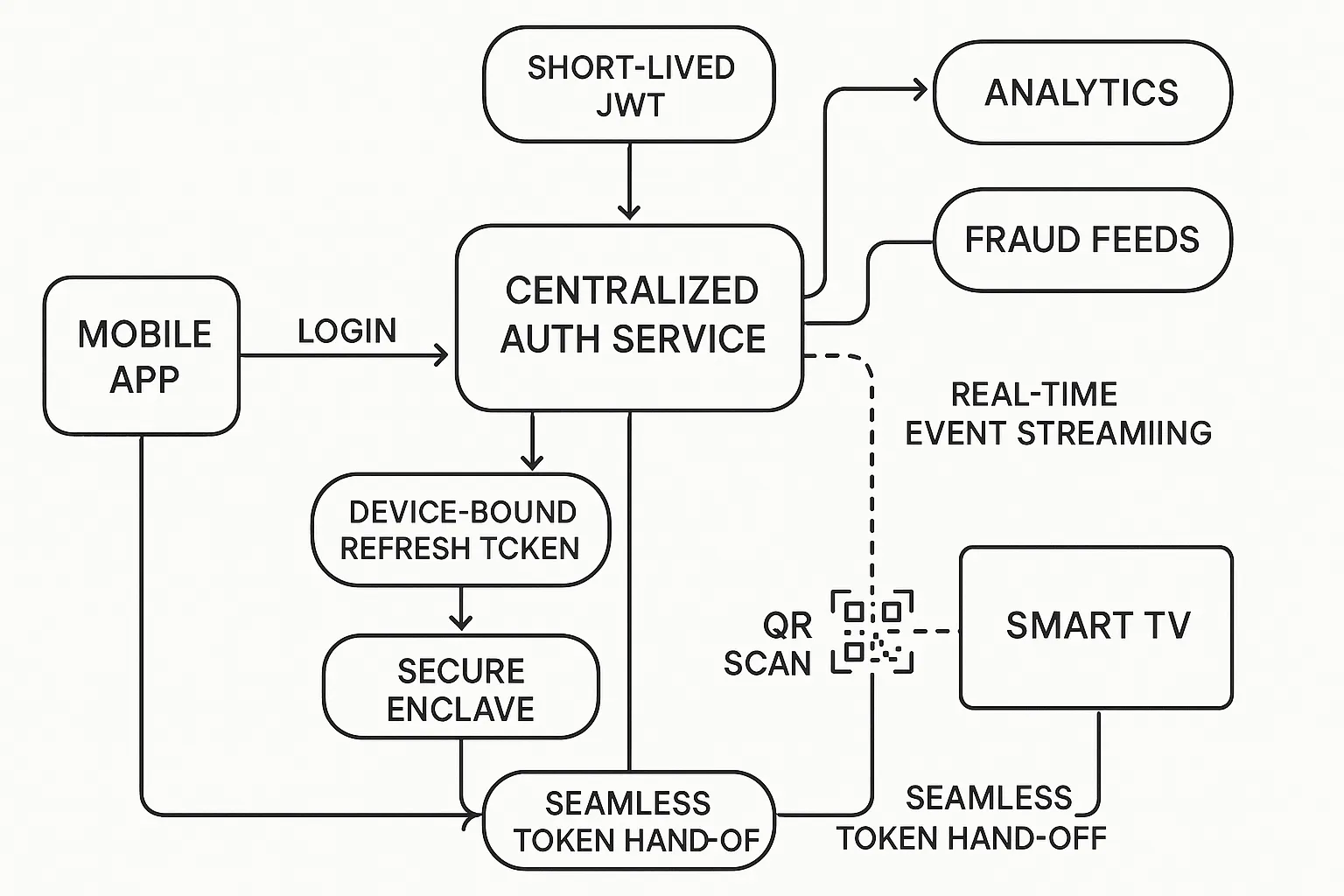
Below is a reference architecture used by numerous Spinlab operators. You can adopt it wholesale or integrate the individual modules with your existing stack.
-
Centralized OAuth 2.1 / OIDC Authority
Houses player credentials, MFA preferences, and KYC status. Issues 5-minute access JWTs and device-scoped refresh tokens. -
Device Binding & Trust Scores
Each refresh token is hashed with a device fingerprint (hardware ID + OS version + key material). New devices start with a low trust score and trigger step-up auth. -
Encrypted Token Vault
• Web:SameSite=Nonecookies + Web Crypto API sealing.
• Mobile: Secure Enclave (iOS) / hardware-backed Keystore (Android).
• TV: AES-GCM token encrypted at rest; fallback to PIN verification if hardware TEE is unavailable. -
Handoff Channels
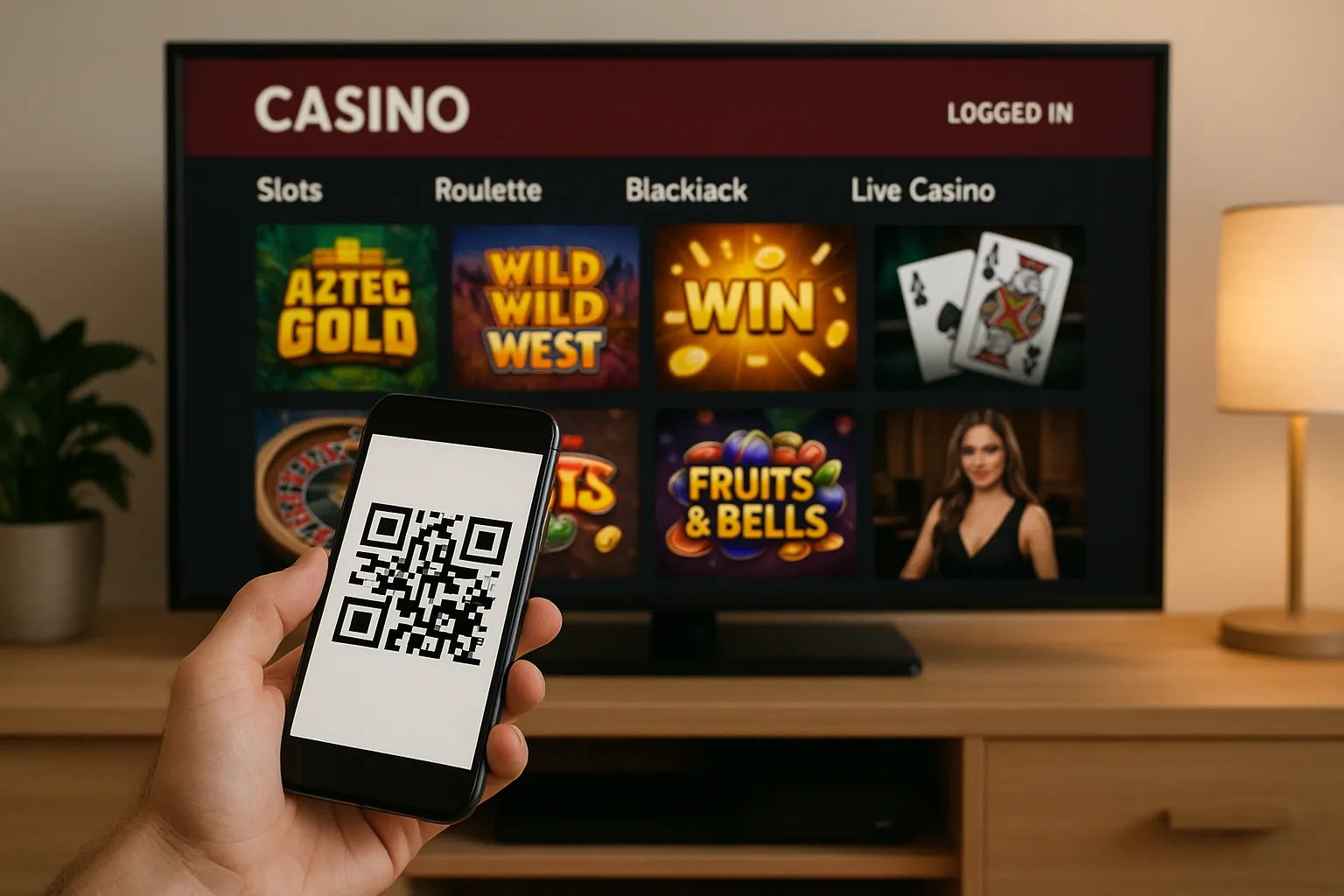
• QR Code: The TV renders a short-lived QR containing an OAuth Device Code. The mobile app exchanges it for a bound refresh token, instantly authenticating the TV.
• Deep Link: Email/SMS pushes a magic link that callsmycasino://auth?token=on mobile or launches the PWA.
• Push WalletConnect: For crypto-first casinos, session keys can piggyback on an existing wallet connection. -
Real-Time Analytics & Fraud Hooks
Every token lifecycle event streams to the Spinlab Event Bus, feeding dashboards described in Real-Time Analytics in iGaming. An anomaly service flags impossible travel, device spoofing, or concurrent logins beyond policy limits.
Implementation Walk-Through Using Spinlab APIs
Spinlab exposes a /sessions namespace in its Open API. Below is a high-level roadmap that most operators complete in under two weeks.
Day 1–2: Provision the Auth Service
- Enable the “Unified Identity” module in your Spinlab back-office.
- Upload your existing player ID digest or configure a zero-copy migration if you’re mid-flight (see sample script in Cashier Conversion Hacks).
- Set session TTL defaults (e.g., 5 min access, 14 day refresh), and choose OAuth scopes.
Day 3–5: Embed SDKs
- Web: Drop-in JS SDK auto-manages access/refresh cookies and silent renewal via
iframe+postMessage, avoiding double redirects. - iOS/Android: Add the Swift/Kotlin pods—40 KB each, no extra permissions. They wrap local secure storage and expose a
syncDevice()method for trust binding. - TV: If your smart-TV app is HTML5, reuse the Web SDK and add the QR Device Code component; for native Tizen or webOS apps, call the REST endpoints directly.
Day 6–8: Configure Handoff UX
- TV template: Insert the
<SpinlabQRCode />React component or copy the vanilla JS snippet. Customize brand colors and a countdown timer. - Mobile flow: Implement the universal link handler that exchanges the device code for a refresh token via
POST /sessions/device-token.
Day 9–10: Integrate Risk & Compliance Rules
- Navigate to Risk Engine › New Rule. Example: Block device-token grant if IP risk score > 70 or if country ≠ KYC country.
- Add a webhook to your live fraud dashboard, or hook into the rules detailed in Building a Risk Matrix.
Day 11–12: QA & Edge-Case Testing
| Test Case | Expected Outcome |
|---|---|
| Token expiry mid-game | Auto-refresh without interrupting the round |
| Device time drift ±15 min | Server authoritative, still validates |
| Rapid device switching (app→web→TV < 60 s) | Single wallet balance, no duplicate bonus triggers |
| Offline token refresh attempt | Graceful fallback to cached balance, offline mode UI |
Day 13–14: Soft-Launch & Rollout
Roll out to 5 percent of users, monitor:
- Login Success Rate (baseline +15 % typical)
- Duplicate Account Flags (should remain flat)
- Average Round Continuation Time (measure via Spinlab Real-Time Events)
Compliance Considerations
-
GDPR & CCPA
Short-lived tokens + purpose-bound scopes minimize data leakage. Players can revoke all device tokens from “My Account,” satisfying right-to-erasure. -
MFA Requirements
UKGC and MGA now recommend a re-auth every 24 hours on new devices. Configure conditional MFA rules accordingly (SMS, FIDO passkey, or email OTP). -
Responsible Gaming
Persist session time counters across devices to avoid circumventing cooldowns. -
PCI DSS v4.0
If you store card tokens client-side, apply the hardening steps in PCI DSS for iGaming.
Measuring Impact Post-Launch
Leverage the same metrics board Spinlab ships with its Real-Time Analytics module:
- Login Success Rate (LSR)
- Multi-Device Session Rate (MDSR)
- Time to First Spin after Device Switch (TTFS)
- Support Ticket Volume (Login-related)
- Incremental Net Gaming Revenue (∆NGR)
Operators who deployed cross-device sync see ∆NGR gains between 4 – 11 percent within 90 days, mainly due to higher session counts and fewer abandoned TV logins.
What’s Next: Passkeys, WalletConnect, and Beyond
Passkeys (FIDO2/WebAuthn) are shipping in iOS 18, Android 15, and most 2025 TV OSes. They replace passwords entirely and enable hardware-bound public keys for one-tap login. Spinlab’s roadmap includes a passkey-first flow with fallback to classic OAuth tokens.
For crypto-native operators, WalletConnect v3.0 offers a low-latency session channel that doubles as a payment rail—meaning a player can approve both login and deposit in the same interaction. Expect GA support across Spinlab cashier modules this winter.
Decentralized identifiers (DIDs) and verifiable credentials may soon allow portable KYC attestations, further smoothing cross-device onboarding—but regulators need to catch up.
Ready to Kill Device-Switch Churn?
Spinlab’s white-label iGaming platform lets you activate secure cross-device session sync with a toggle—backed by crypto-ready payments, integrated game aggregation, and real-time risk controls. Schedule a 30-minute demo to see how quickly you can move players from mobile to TV to web without ever losing a spin.