

Cryptocurrency has breathed new life into one of the oldest gambling formats: the lottery. Instant global settlement, transparent prize pools, and on-chain provably-fair draws have turned what used to be a once-a-week ritual into a 24-hour, border-agnostic product. Yet the very attributes that make crypto lotteries appealing—permissionless payments and pseudonymous wallets—also put regulators on alert.
If you are planning to operate or white-label a crypto lottery in 2025, the biggest roadblock is not the math or the marketing; it is licensing and compliance. This article maps the viable regulatory paths, highlights critical compliance checkpoints, and proposes a tech-stack blueprint that meets modern lottery requirements while remaining crypto-ready.
1. Is It a Lottery, Raffle, or Sweepstakes?
Before you even think about jurisdiction shopping, define your product through a legal lens. Most regulators classify lotteries as games that combine:
- Consideration: the player pays to enter.
- Chance: winners are drawn randomly.
- Prize: winners receive something of value.
Alter or remove one element and you might slip into a different regulatory bucket (e.g., free-to-play sweepstakes in the United States). Clarity at this step saves months of re-drafting policies and re-writing code later.
2. Primary Licensing Paths for Crypto Lotteries
Below is a 2025 snapshot of the most common regimes crypto-first operators pursue. Costs reflect application fees plus year-one licence and compliance overheads, converted to USD.
| Jurisdiction | Crypto-Specific Guidance | Typical Licence Class | Time to Approval | First-Year Cost | Notes |
|---|---|---|---|---|---|
| Curaçao (new 2024 regime) | Yes – Digital Asset Gaming addendum | B2C Remote Gaming | 3–5 months | $45k–$65k | Accepts stablecoins, mandatory monthly AML reports |
| Anjouan | Yes – explicit VASP carve-out | Interactive Gaming | 2–4 months | $35k–$45k | Lower cost, but some PSP friction |
| Isle of Man | Yes – Designated Business under VASP Act | Network Services / B2C | 6–9 months | $120k–$160k | Globally respected, bank-friendly |
| Gibraltar | Case-by-case crypto approval | RGL (B2C) | 8–12 months | $150k–$200k | Stringent solvency tests |
| Philippines (CEZA) | Yes – Financial-technology gaming licence | IGL | 4–6 months | $90k–$110k | Regional marketing restrictions |
| Free-to-Play US Model | N/A – sweepstakes law | No gambling licence | Depends on state filings | $15k–$25k | Must remove consideration element |
Key takeaways:
- Curaçao’s 2024 overhaul created a clear crypto addendum and higher compliance bar but remains the fastest path to market.
- Anjouan is cost-lean but offers less reputational weight with banks and large affiliates.
- Tier-1 hubs like Isle of Man or Gibraltar still command a premium yet unlock better payment rails and B2B distribution.
- A sweepstakes approach can sidestep gambling law in the US but forces you to abandon pay-to-play mechanics unless you add an alternative, no-purchase entry channel.
For a side-by-side deep dive on two of the most popular starter licences, see Spinlab’s comparison of Curaçao vs Anjouan licensing.
3. Non-Negotiable Compliance Pillars
Regardless of jurisdiction, every modern licensing body demands evidence that you can detect fraud, protect players, and audit randomness. Plan for the following controls from day one.
KYC & AML
The Financial Action Task Force (FATF) updated its Virtual Asset guidelines in 2023, and most regulators now apply Travel-Rule style record-keeping to crypto lotteries. Best practice includes:
- Tiered KYC that escalates on deposit and withdrawal thresholds.
- On-chain risk scoring for inbound wallets (e.g., sanctions, darknet proximity).
- Real-time name screening against PEPs and adverse media.
New operators often underestimate the dev lift here—check Spinlab’s checklist of 10 common KYC & AML mistakes.
Randomness & Game Fairness
Classic lotteries can get away with physical draw machines. Crypto lotteries typically rely on:
- Off-chain cryptographically secure RNGs (CSPRNG).
- On-chain VRF (Verifiable Random Function) services like Chainlink.
- Emerging Quantum RNG feeds for higher entropy (see Spinlab’s look at Quantum RNG).
Whichever path you choose, regulators expect third-party certification and transparent player verification (e.g., downloadable seed + hash pairs).
Responsible Gambling & RG Data Feeds
Lotteries have historically faced fewer RG requirements than casino games, but crypto adds volatility risks. Minimum expectations now include:
- Deposit and spend limits tied to real-time wallet exposure.
- Automated cooling-off periods.
- 24/7 links to counselling resources inside the ticket purchase flow.
Secure Treasury & Player Fund Segregation
Most crypto-friendly regulators mandate a ring-fenced custody model. Options include:
- Self-custody with multi-sig HSMs.
- Third-party qualified custodians.
- Platform-level pooled wallets with sub-ledger accounting (Spinlab’s Payment Hub follows this model).
4. Building the Right Tech Stack
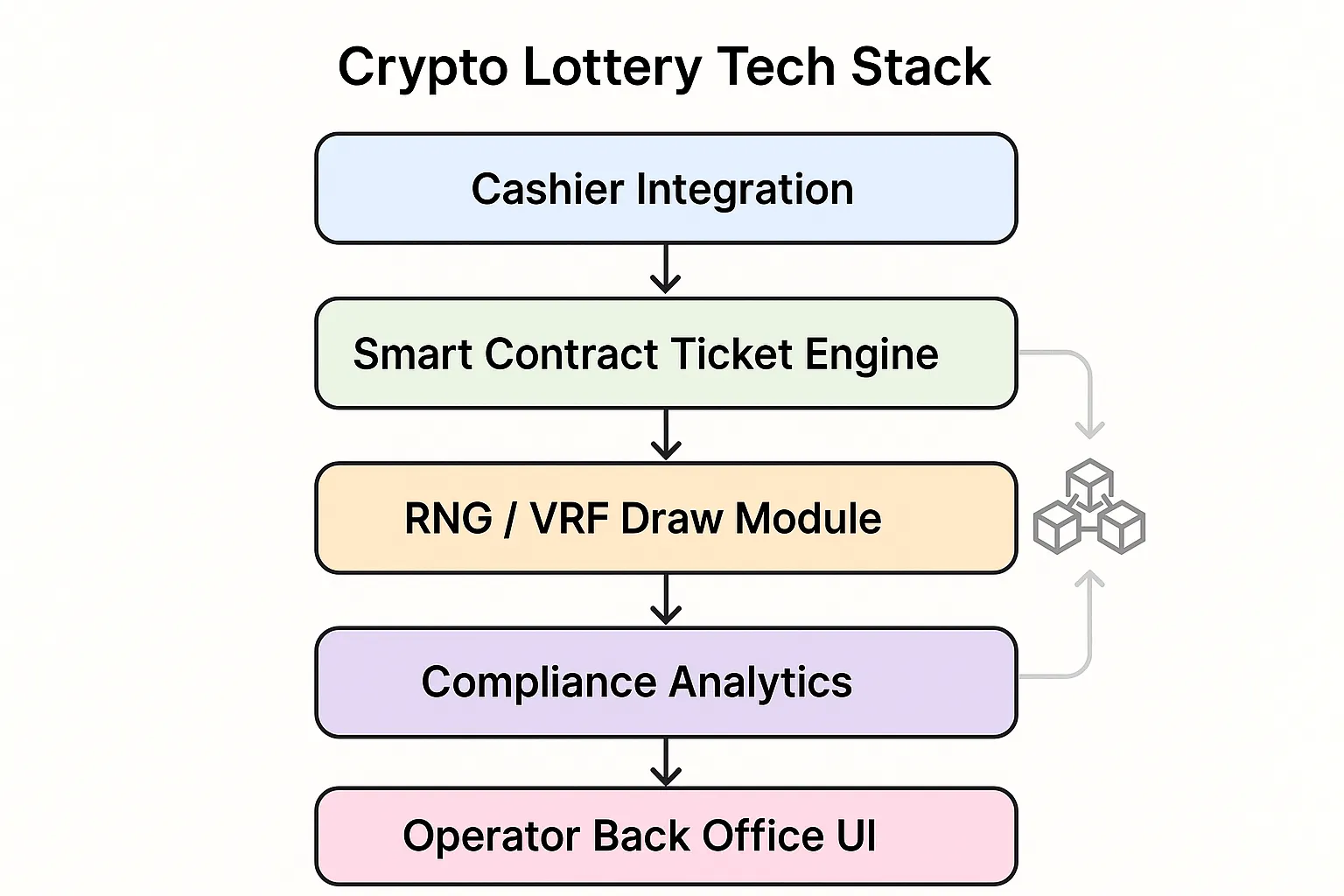
A lottery sounds simple: sell tickets, draw numbers, pay winners. Scaling that to 100,000 concurrent on-chain players while meeting the controls above is anything but. A robust stack covers four layers.
4.1 Transaction Layer – Cashier & Wallets
- Multi-rail cashier supporting cards, APMs, and major crypto coins.
- Onramp integrations to convert fiat users directly into stablecoins.
- Instant pay-ins and automated pay-outs via Layer-2 networks for fee efficiency (review why L2 matters here).
4.2 Ticket Engine & Smart Contracts
- Ticket issuance logic records player picks, odds, and timestamp on-chain.
- Pooling contract that escrows prize funds and self-executes distribution.
- Event hooks to analytics and bonus engines (e.g., auto-redeposit of micro-wins).
4.3 RNG & Draw Orchestration
- Hybrid approach: off-chain CSPRNG seeds the contract, on-chain VRF finalizes winning numbers.
- Scheduled cron jobs or block-height triggers.
- Fail-over draw node to guard against oracle downtime.
4.4 Compliance & Analytics Layer
- Real-time event streaming into a data lake for live fraud models.
- KYC status and transaction history piped into an AML rule engine.
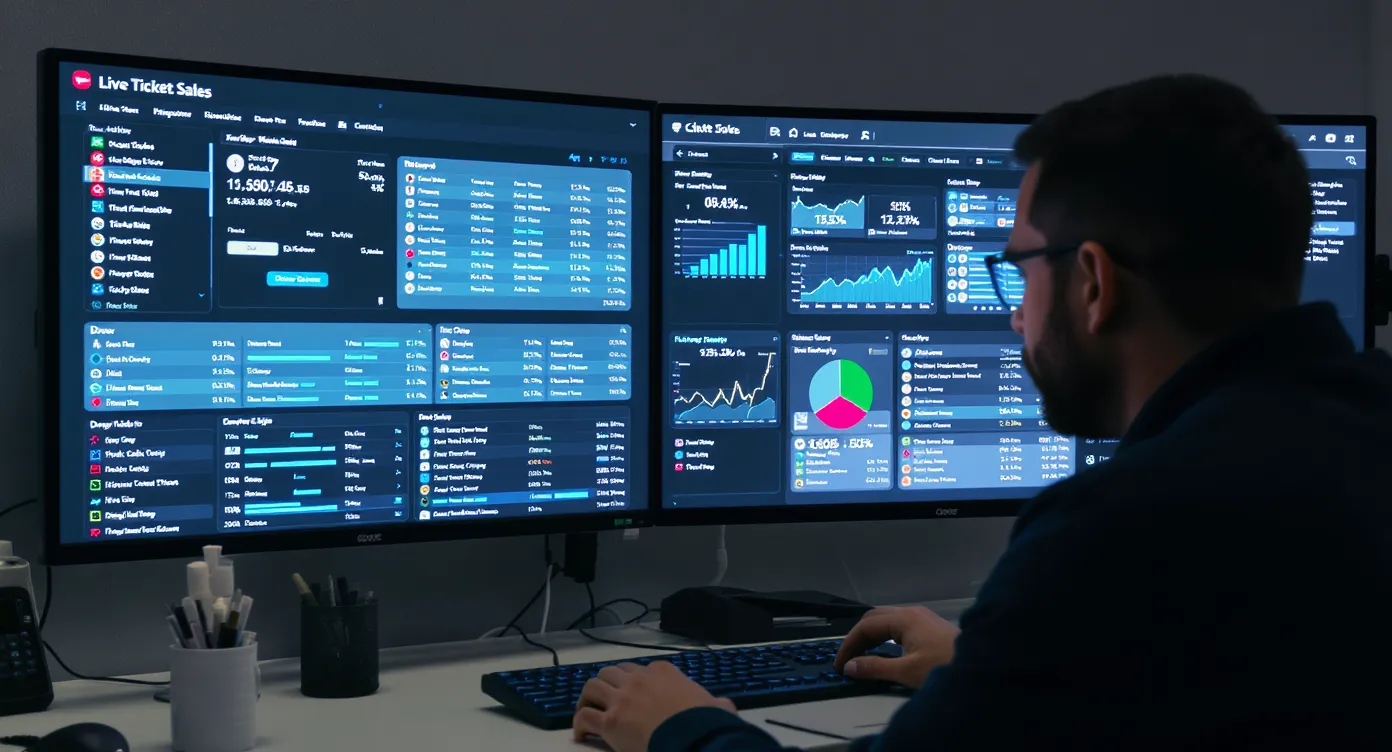
- Out-of-the-box dashboards for regulator reports (Spinlab offers a no-code template in its back office).
5. Build vs Buy: Why a Modular iGaming Platform Saves Time
Custom-coding the above stack can exceed $400k in dev spend and 9–12 months to MVP—a lifetime in crypto terms. A white-label provider like Spinlab compresses this timeline because its core modules are already audited and battle-tested across casino verticals:
- Hybrid crypto-fiat cashier with 75+ payment rails and custodial wallets.
- Provably-fair RNG gateway with certificate vault.
- Real-time analytics and fraud shield streaming every ticket, deposit, and draw result.
- Open APIs and Webhooks that let you plug in a bespoke smart-contract ticket engine without reinventing the back office.
Because Spinlab prices its platform at the lower end of the market and bundles compliance tooling, many operators shift CapEx into predictable rev-share OpEx. For a deeper cost analysis, see the post on CapEx vs OpEx for casino startups.
6. Launch-Ready Checklist
Use this 12-point list as a pre-launch sanity check. Each item maps to either a licensing requirement or a player-experience must-have.
- Company incorporation and local authorised representative.
- Player T&Cs vetted for lottery-specific clauses.
- RNG certification letter from an approved lab.
- Multi-sig custody wallet activated and documented.
- Tiered KYC flows live with automated sanctions screening.
- Responsible Gambling limits configurable per jurisdiction.
- On-chain ticket contract published and source verified.
- Draw schedule and fail-over process logged in SOP manual.
- Data-retention policy aligned with GDPR or local equivalent.
- 24/7 support scripts for prize claims and dispute resolution.
- Regulator reporting API credentials tested in staging.
- External penetration test and smart-contract audit passed.
7. Final Thoughts
Crypto lotteries sit at the intersection of fintech, gaming, and securities law. Navigating that maze requires more than a glossy front-end and a Metamask button; it takes a licence that regulators respect and a stack built for real-time compliance.
If you want to shorten the distance between idea and first on-chain draw, consider leveraging Spinlab’s modular iGaming platform. Our crypto-ready cashier, certified RNG gateway, and pre-built compliance dashboards let you focus on game design and player acquisition—while we handle the plumbing regulators care about.
Ready to see how fast you can launch a fully licensed crypto lottery? Book a 30-minute discovery call with Spinlab’s team today.