

You pull the handle, the reels spin, and—if luck is on your side—symbols line up for a win. That familiar pattern has dominated slot floors for decades. Yet younger audiences conditioned by esports and mobile gaming are demanding more agency than a random number generator alone can offer. Enter skill-based slots: hybrid games that fuse arcade-style mechanics with wagerable outcomes. In 2025, these titles are no longer experimental novelties. They are a serious revenue line, a regulatory talking point, and a math challenge for every casino operator.
From Concept to Critical Mass
First prototypes appeared in Nevada around 2016, but uptake was slow due to unclear compliance pathways and conservative content strategies. The inflection point arrived in 2023–2024 when New Jersey and several tribal jurisdictions released formal testing standards for skill elements, unlocking larger US distribution. According to Eilers & Krejcik Gaming quarterly data, skill-influenced games now represent about 6 percent of new slot cabinet shipments in North America, up from 1.8 percent two years ago. Online adoption is catching up even faster thanks to easier A/B iteration, lower certification time, and instant content updates.
Defining Skill-Based Slots
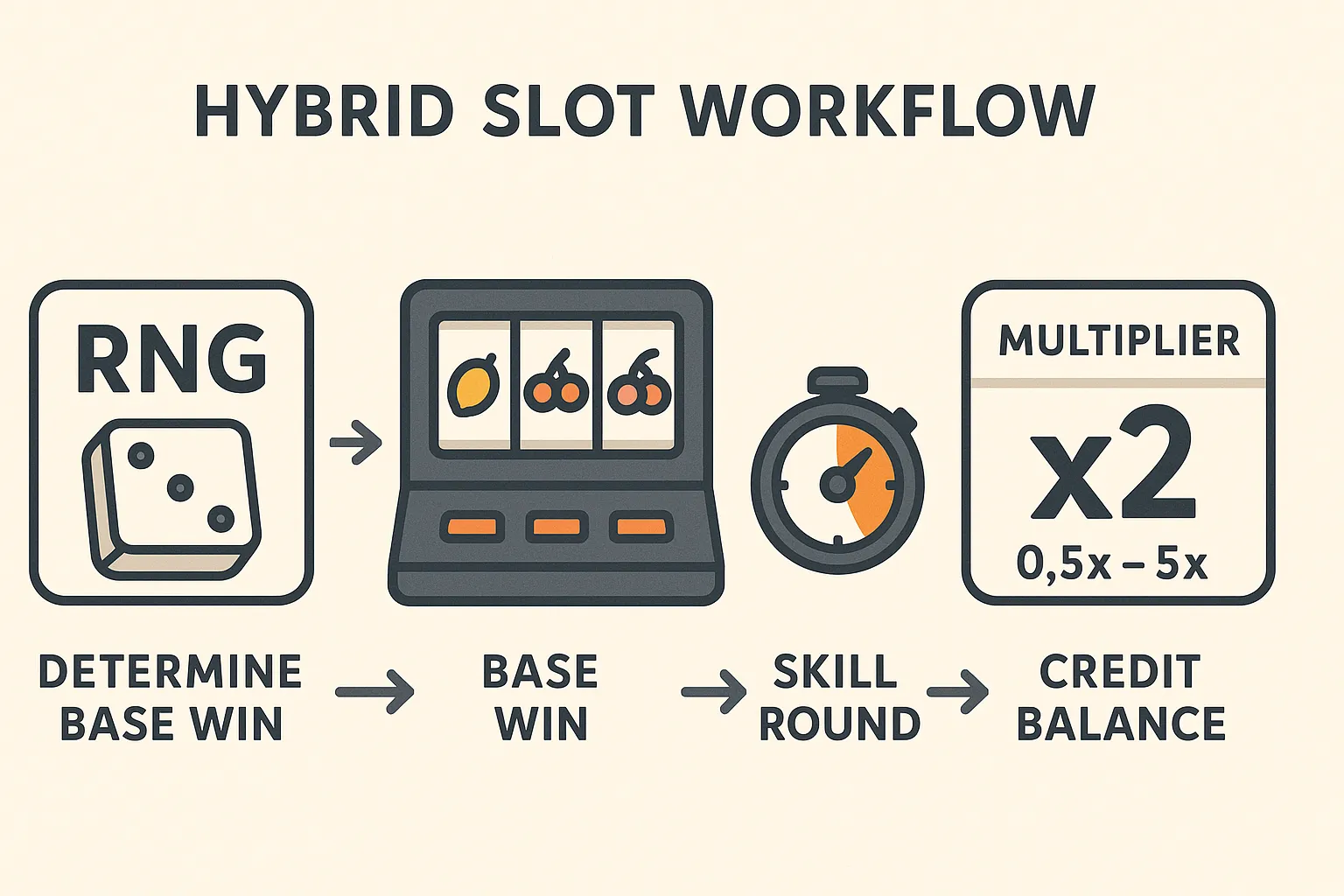
A skill-based slot blends chance and player input. The RNG still determines a base outcome, but a post-RNG skill layer lets players influence the final payout within predefined limits. Examples include:
- Timed puzzle rounds where matching more symbols upgrades the prize.
- First-person target shooters that multiply a coin win based on accuracy.
- Memory games that add bonus spins proportional to the success rate.
Regulators classify these products under terms such as Variable Payback Percentage (Nevada) or Partial Skill Games (New Jersey). The most common design pattern is RNG anchor plus skill modifier. That structure keeps compliance audits straightforward while giving designers freedom to craft engaging mechanics.
2025 Regulatory Snapshot
| Region | Testing Standard | Skill Rules | RTP Disclosure | Notable Updates |
|---|---|---|---|---|
| Nevada | NGCB Tech Bulletin 2023-02 | Player skill can change payout within certified bounds; skill range must be disclosed | Aggregate RTP only | Mandatory adaptive difficulty logs by Oct 2025 |
| New Jersey | DGE SK-1 Guidelines | Max 4x base win modulation; game must publish minimum and maximum achievable RTP | Min & max RTP | Q3 2025 consultation on loot-box-like drop odds |
| UK | UKGC Section 36 Consultation | Skill elements allowed if statistical advantage does not exceed declared range | Single RTP or range | Pending white paper recommendations expected 2026 |
| Malta | MGA Skill & Hybrid Directive | Operator must cap top 1 percent skill group RTP at 110 percent | Range | Updated XML reporting schema live Jan 2025 |
| Curaçao / Anjouan | No explicit framework yet | Follows GLI-11 unless local ordinance states otherwise | Single RTP | Draft legislation in progress |
Source: Official regulator bulletins and consultations, compiled August 2025.
Key takeaways:
- Almost all major licensing hubs now accept hybrid math, but each sets different disclosure rules.
- Auditors require richer telemetry—input timings, success rates, difficulty curves—than for purely random titles.
- Operators must prepare dynamic reporting pipelines or risk certification delays. Real-time event streaming, as discussed in our guide on turning live data into bigger profits, becomes mission-critical.
Inside the Math: Designing for Skill Curves
Traditional slots boil down to four parameters: paytable, hit frequency, volatility, and fixed RTP. Skill-based titles add three more layers:
- Skill distribution of the target audience (often modeled as a Beta distribution).
- Difficulty scaling curve across game sessions.
- Skill-to-payout translation function.
Weighted Average RTP
Regulators certify the Expected Payout Percentage (EPP) averaged over the entire skill population. Suppose:
- Baseline RNG outcome: 88 percent RTP.
- Skill round modifier: 0.5x to 5x based on performance.
- Simulated player pool mean multiplier: 1.14x.
Weighted RTP = 88 percent × 1.14 = 100.3 percent – clearly non-viable. Designers therefore trim the RNG baseline to, say, 84 percent, yielding 95.8 percent weighted RTP, comfortably within market norms.
Volatility Management
Skill elements tend to widen variance: top performers realize bigger multipliers, while low performers sometimes dampen wins below nominal payback. To prevent bankroll shock, math teams often:
- Cap maximum skill multipliers.
- Introduce consolation pay lines ensuring a minimum return.
- Spread high multipliers across time-boxed bonus meters.
Risk of Advantage Play
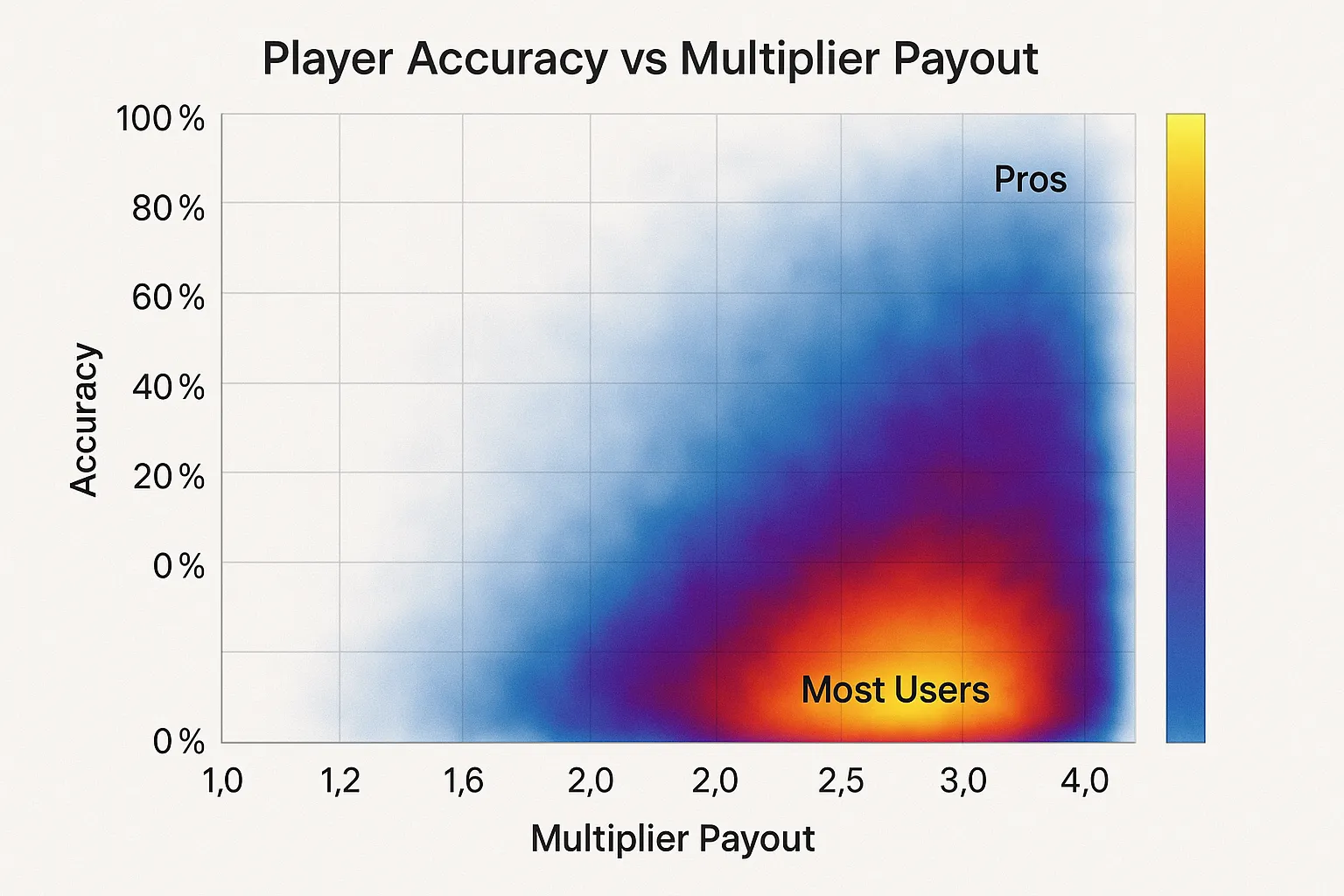
When a truly expert subset exceeds 100 percent RTP after fees, a game becomes vulnerable to advantage play groups similar to video poker sharks. Operators can mitigate with:
- Adaptive difficulty that nudges accuracy thresholds upward.
- Session-based cap on total bonus earnings.
- Anomaly detection via real-time analytics and risk matrices.
Monetization Impact: More Than Just A New Theme
Data from seven Spinlab operators piloting skill slots in 2024–2025 shows:
| Metric | Traditional Slots | Skill-Based Slots | Delta |
|---|---|---|---|
| Average Session Length | 11.2 minutes | 15.9 minutes | +42 percent |
| Spin Wager Velocity | 6.8 spins/min | 5.1 events/min | –25 percent |
| Net Gaming Revenue (NGR) per Session | €4.60 | €6.21 | +35 percent |
| Chargeback Rate | 0.42 percent | 0.37 percent | –12 percent |
Longer sessions offset slower wager cycles, producing higher NGR. Lower chargebacks suggest that perceived control may reduce buyer’s remorse. Pairing these games with gamified quests increased retention even further, echoing findings from our comparison of gamification vs traditional loyalty.
Implementation Blueprint for Operators
-
Select a Certified Math Model
Engage an independent lab early. Provide full simulation files covering at least one billion rounds to prove stability across skill tiers. -
Integrate Advanced Telemetry
Stream granular input events—tap coordinates, reaction times, win pickups—to your analytics pipeline. Spinlab’s event bus emits these as schema-validated JSON within 200 ms of occurrence. -
Align Cashier UX
Skill rounds last longer, so bankroll top-ups must be frictionless. Follow the 3-second deposit principles in our cashier conversion hacks guide. -
Build Segmented Bonusing
Offer leaderboard or streak challenges catering to skill enthusiasts. Keep wager requirements transparent to avoid regulatory pushback. -
Monitor and Mitigate Advantage Play
Configure risk rules that flag RTP above threshold per player ID, device fingerprint, or affiliate source. Tie these alerts to automated bet-limits or KYC escalations. -
Educate Customer Support and Marketing
Provide clear scripts explaining how skill affects outcomes to avoid misleading claims. Disclose min and max RTP ranges where regulation demands.
How Spinlab Supports Skill-Based Innovation
Spinlab’s modular platform was built for emerging formats like crash, mines, and now hybrid skill slots. Key enablers include:
- Open Math SDK that lets studios plug custom probability curves and post-RNG logic into a secure sandbox.
- Real-time Analytics Dashboard streaming 120 Hz input metrics for live balancing.
- Fraud Shield with skill outlier detection, linked to automated bet resizing and session reviews.
- Crypto-Ready Cashier so players can reload instantly mid-round without abandoning gameplay.
- Original Games Program where operators can commission bespoke skill titles, following the procurement steps in our game IP checklist.
Because these modules are API-first, you can experiment with low-stakes pilot launches and reconfigure math params on the fly—no full redeploy required. Pricing follows the same flat-fee white-label model that made Spinlab the most cost-effective option in the market.
Looking Ahead
Regulators are still calibrating how much skill is too much, and whether variable RTP ranges confuse consumers. Meanwhile, Gen-AI is opening new frontiers for procedural puzzle generation, and quantum-grade randomness (see our outlook on quantum RNG) could soon coexist with skill layers for unparalleled fairness claims.
For operators, the window of opportunity is now. Early adopters are capturing a younger, higher-LTV audience and commanding premium positioning in app stores and affiliate listings. The math and compliance hurdles are real, but with robust telemetry, smart risk controls, and agile platform infrastructure, they are entirely solvable.
Ready to level up your content portfolio with certified skill-based slots? Schedule a discovery call with Spinlab’s solutions team, and we will map out the game math, compliance, and launch timeline tailored to your jurisdiction and budget.