

To remove casino games safely, stop accepting new play without cutting off the systems that settle existing wagers. Hiding a title from the lobby is a merchandising change. Disabling its provider connection can interrupt winnings, refunds, unfinished bonus features and transaction retries.
For an online casino operator, the objective is controlled retirement: close entry points, preserve outstanding obligations, reconcile the money and only then decommission what is no longer needed. This requires coordination between casino operations, engineering, finance, support and the game provider or aggregator.
The process below separates those responsibilities so removing a game does not leave accepted bets unresolved.
Separate Delisting From Financial Shutdown
A game can disappear from search results while still owing a player money. It can also have no active browser sessions while an interrupted feature or delayed provider transaction remains outstanding.
Lobby visibility, permission to place wagers and permission to process settlement must be separate controls. Treating them as one enabled/disabled switch creates avoidable risk.
A useful retirement model looks like this:
| Retirement stage | New sessions and wagers | Existing obligations | Integration status |
|---|---|---|---|
| Active | Available under normal rules | Process normally | Fully operational |
| Delisted | Removed from discovery; direct access needs separate control | Process normally | Still operational |
| Draining | New play blocked; continuation follows documented provider rules | Complete or resolve outstanding obligations | Financial processing retained |
| Retired | Blocked | Reconciled, with exceptions explicitly tracked | Only necessary settlement, support and record-access paths retained |
These are recommended operational states, not an assumption about any particular platform's built-in features.
For each removal, assign a change owner and identify who can approve financial adjustments. Record the affected game IDs, providers, brands, jurisdictions and currencies. A provider-wide shutdown needs a broader inventory than removing one slot from one brand.
How to Remove Casino Games Without Stranding Open Bets
Establish an Authoritative Acceptance Boundary
Define exactly when the platform stops admitting new wagering activity. A scheduled timestamp is useful for coordination, but timestamps alone do not resolve requests already in flight.
The acceptance boundary must be enforced where the relevant wagering decision becomes durable. Depending on the integration, that may involve the operator wallet, the provider or both. Document what constitutes acceptance and how uncertain transactions are investigated.
Consider a debit request that times out during the cutover. The provider may have recorded acceptance even though the operator has not received a complete response. That request belongs in an exception queue, not an automatic rejection or refund batch.
Use a versioned game status or equivalent concurrency control so a stale launch service cannot admit play after retirement begins. Coordinate this with the provider's round lifecycle rather than relying on a browser session expiring.
Block New Play Without Blocking Legitimate Settlement
Remove the title from lobby categories, recommendations, search results and promotional placements. Separately address direct launch URLs, favorites, recently played lists, mobile clients and cached catalog responses.
Then apply admission controls at the server-side wagering boundary. A hidden tile does not prevent an old session from submitting another request.
Do not use a blanket provider shutdown as the default removal mechanism. Depending on the integration, the same connection may carry winnings, reversals, balance requests and delayed transaction messages.
Some providers require additional messages to complete an existing feature. Define which continuation actions remain permitted and how they are tied to known outstanding rounds. Do not accidentally authorize fresh paid wagers under a broad “existing session” exception.
If an emergency security or regulatory issue requires immediate isolation, switch to an incident process. Preserve evidence and agree on an alternative settlement procedure rather than assuming normal draining remains possible.
Inventory Obligations Across Systems
Build the outstanding-items register from provider records, wallet transactions and game-session data. None of these sources is sufficient alone.
Include accepted but unsettled wagers, uncertain debit requests, unresolved reversals, interrupted features and promotional entitlements. Capture game, round, transaction, account, currency and provider references wherever available.
The register should distinguish financial states clearly:
| Recorded state | Operational treatment |
|---|---|
| Accepted wager awaiting result | Await or retrieve the provider's authoritative outcome |
| Debit outcome unknown | Investigate acceptance before adjusting funds |
| Result received but wallet credit incomplete | Repair or replay through controlled, idempotent processing |
| Cancellation or rollback pending | Follow the provider's documented reversal flow |
| Round financially settled but feature unresolved | Check remaining feature obligations before closure |
| Unused promotional entitlement | Resolve under applicable terms and requirements |
Give every exception an owner and next review time. An elapsed deadline should trigger escalation, not an invented game result.
Handle Different Game Types According to Their Lifecycle
Slots and Interrupted Bonus Features
A slot's visible spin animation is not necessarily the full financial lifecycle. A paid spin may trigger free spins, a pick feature or another sequence whose result is finalized later.
Confirm whether the provider supports resuming the interrupted round and whether completion requires a special launch path. If continued access is necessary, restrict it to the eligible player and outstanding feature rather than reopening the title generally.
When resumption is impossible, obtain the provider's supported resolution procedure. Do not substitute the original stake for an unknown entitlement or estimate a win from the game's return-to-player percentage. Neither establishes what the player is actually owed.
Live Casino Games
Live casino games follow table and betting-window rules. A player can close the interface after a wager is accepted while the relevant hand or round continues.
Stop entry into new wagering opportunities, but preserve delivery of results for accepted bets. Where a provider table serves other operators, removing it from your casino does not mean the underlying table stops operating.
Agree with the provider how to handle delayed results, disputed acceptance and official cancellations. A local maintenance deadline does not itself authorize voiding a valid bet.
Free Spins, Promotions and Jackpots
Separate provider-run free-spin features from unused promotional free-spin awards. The former may be part of an accepted round; the latter may be an unconsumed entitlement governed by promotional terms.
Before removal, stop issuing new awards for the affected title and identify existing awards. Do not silently substitute a different game, introduce a new expiry date or change wagering conditions without checking the applicable terms and requirements.
For progressive jackpots, establish whether there are outstanding awards, contribution reconciliation requirements or other contractual obligations. The treatment depends on the jackpot arrangement, so a generic instruction to “refund contributions” is not appropriate.
Reconcile the Wallet Before Closing the Change
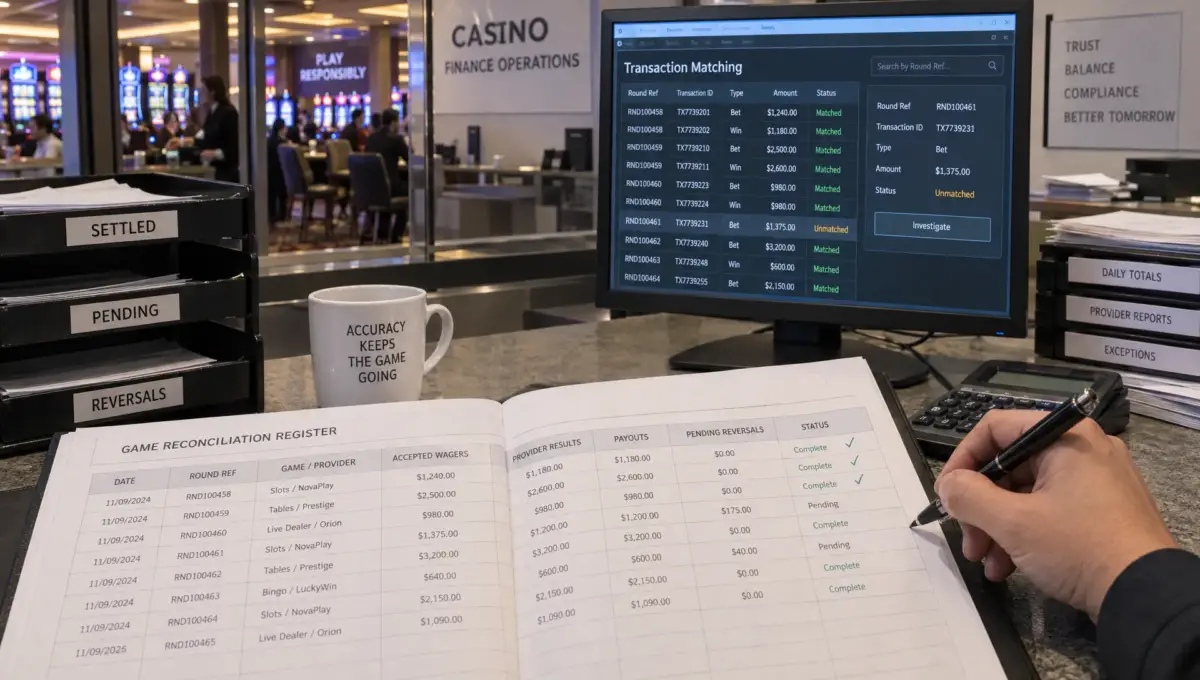
To remove casino games cleanly, reconcile at transaction and round level rather than comparing only aggregate provider totals. Matching daily totals can conceal an unpaid win offset by an unrelated duplicate credit.
Match accepted stakes, results, payouts, reversals and manual adjustments using stable identifiers. Preserve currency and amount precision, including crypto denomination where relevant. Do not combine balances across currencies and treat the converted total as proof of settlement.
Retries must not create repeated financial effects. Use idempotency keys scoped to the provider's identifier guarantees. If the same transaction reference arrives with a different amount or currency, flag the conflict instead of treating it as a harmless duplicate.
Acknowledge transactions according to the integration contract, with durable processing or durable receipt as that contract requires. A successful network response should not conceal a lost financial instruction.
Keep manual corrections traceable and check them against later provider retries to prevent double payment. Spinlab's guide to casino ledger audit trails and settlements explains the accounting foundations behind this reconciliation work.
Test the Cutover, Not Just the Lobby
A successful test must demonstrate that new wagering stops while valid financial obligations still complete. Checking that the game tile disappears proves only one part of the change.
Use provider-supported test environments and documented scenarios. Where a failure cannot be reproduced reliably, agree on a recovery procedure before production removal.
Include these cases in the release test plan:
- A wager request races with the retirement status change.
- A debit times out and its final acceptance status is initially unknown.
- A valid winning result arrives after the game has been delisted.
- A provider retries a transaction already processed successfully.
- A known round needs to resume an interrupted bonus feature.
- A reversal arrives after a manual financial adjustment.
- An old mobile client or direct URL attempts a new launch.
For each test, record the expected admission decision, wallet effect, provider response and audit evidence. Verify that support can retrieve the round after the game is no longer searchable in the public lobby.
Also test operational rollback. Re-enabling catalog visibility should not erase the retirement register, reset transaction deduplication or alter existing settlement records. Restoring an integration and reopening wagering are separate decisions.
Set Closure Criteria and Keep a Late-Message Path
“No active sessions” is not a sufficient closure criterion. Neither is “no callbacks received in the last hour.” Session counts measure connections, not outstanding financial liability.
Define closure evidence with the provider or aggregator. It should cover terminal round states, reconciled financial transactions, resolved promotional obligations and documented handling of any remaining exceptions.
Measure operational progress through unresolved accepted wagers, uncertain debits, unmatched payouts, pending reversals and the age of the oldest exception. These measures are more useful than the number of hidden games.
Retention and late-message handling must reflect provider contracts and applicable regulatory requirements. There is no universal waiting period after which all delayed transactions can safely be ignored.
Retain the identifiers, mappings and credentials needed for the agreed settlement path. If credentials must be revoked for security reasons, establish a secure alternative with the provider. Maintain a minimal retired-game record so historical transactions still resolve to the correct title and integration.
Archive records under the applicable retention policy, with appropriate access controls and data minimization. Retiring a game should not erase evidence, but it should not become a reason to retain all player data indefinitely either.
Communicate What Changes for the Player
Player communication should distinguish unavailable future play from the status of an existing wager. Avoid saying “all bets refunded” unless that outcome has been authorized, completed and verified.
A useful message explains that the game is unavailable for new play, states how existing rounds are being handled and gives the player a support route. Do not promise a settlement time the provider has not confirmed.
For example: “This game is no longer available for new play. If you have an unfinished round, contact support so we can check its status with the game provider.” Adapt the wording to the actual incident and available resolution process.
Give support staff access to retirement status, round references and approved explanations. Spinlab's guidance on communicating casino game downtime offers a complementary approach to availability messaging.
For operators serving Great Britain, check the applicable UK Gambling Commission remote gambling and software technical standards, including requirements relevant to interrupted gambling. Other jurisdictions may impose different obligations.
Frequently Asked Questions
Can we remove a game immediately if it has open bets? You can restrict new play immediately, but accepted wagers still need a valid resolution path. If an emergency requires disconnecting the provider, preserve records and coordinate settlement through an alternative process.
Should every unfinished round be refunded? No. An accepted round may have a valid outcome or an outstanding feature entitlement. Refunds, cancellations and reversals should follow the provider's supported process, applicable terms and regulatory requirements rather than a blanket rule.
What if the provider says a round settled but the player was not paid? Compare the provider's transaction evidence with the wallet ledger. Establish whether a credit was missing, rejected, duplicated or posted elsewhere before applying a correction. Use a documented process for investigating game-round disputes when the records disagree.
How long should settlement processing remain available? Base the decision on the provider's retry and settlement rules, outstanding obligations and applicable retention requirements. A fixed generic window is not a substitute for reconciliation and an agreed late-message procedure.
Does removing a game justify blocking withdrawals? Not by itself. Identify the specific affected transactions and apply only justified account controls. A game-retirement task should not automatically become a casino-wide withdrawal restriction.
Make Safe Retirement a Platform Selection Requirement
Before choosing a casino software provider, ask it to demonstrate game retirement with an open round, a delayed payout and a duplicate callback. Establish who owns each step across the platform, aggregator and game studio.
Spinlab offers a modular iGaming platform with game aggregation, an open API and a customizable backoffice. When discussing your integration, ask how those components support separate admission controls, outstanding-round visibility and post-removal reconciliation. Verify the workflow against your providers and markets before launch, not during the first forced delisting.
